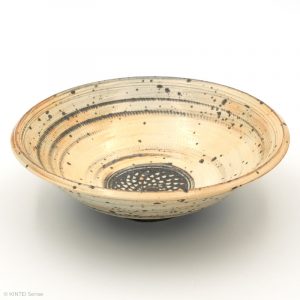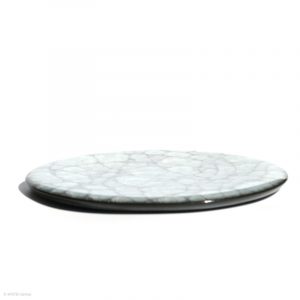
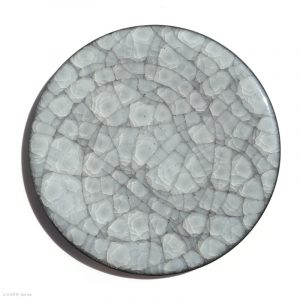

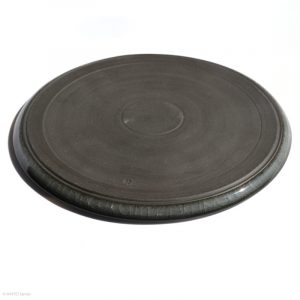
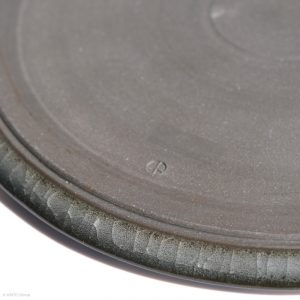
KŌBŌ DAIDAI Shiraji Celadon Plate
139,00 €
incl. 19% VAT plus shipping
KŌBŌ DAIDAI – SUZUKI Takashi
Nebukawa, Japan
Ceramics – Handmade
Shiraji Celadon Plate
As each piece is handmade, every creation is unique and may vary slightly in shape, colour, size, and weight from the item shown in our gallery.
We would be pleased to provide you with a photo or video of your selected piece for confirmation prior to purchase. Please feel free to contact us before placing your order. We look forward to hearing from you.
Delivery Time: Approx. 4–5 business days.
Out of stock
Description
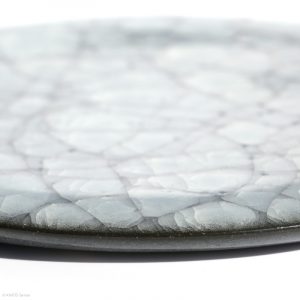
Minimalism taken to its peak — that is how one might describe Suzuki Takashi’s flat Shiraji celadon plates. Their form, reminiscent of round tiles, provides a perfect stage for any delicacy presented upon them.
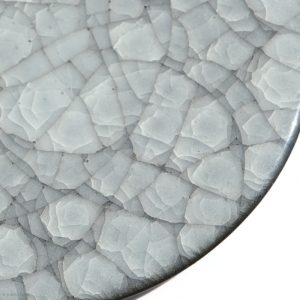
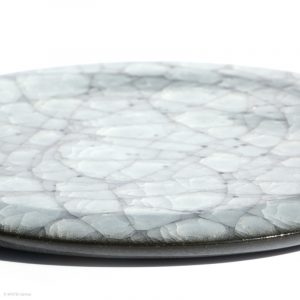
Here too, Suzuki Takashi’s love of precision is evident: the lightness of the Shiraji celadon plates and their elegant, restrained form make the snowflake-like kan’nyū crackle patterns in the celadon glaze appear almost to float in the air.
Shiraji Seladon Kan’nyū Glaze:
Celadon is one of the most refined types of ceramics, originating in China and renowned for its smooth, jade-like glaze. The kan’nyū (貫入) technique, masterfully employed by Suzuki Takashi, is created by temperature differences during firing, which cause fine cracks to form in the glaze. These cracks produce a distinctive, snowflake-like pattern and a fascinating colour gradation. The process requires extensive knowledge and patience, as even the smallest variations can affect the final quality.
Suzuki Takashi refers to his celadon creations as “Shiraji,” a variation of “Seiji” (青瓷), the Japanese term for celadon, which is typically associated with blue-green celadon ware. “Shiraji” (白瓷) in this context points to the white-toned coloration.
Suzuki Takashi, a talented career changer, founded his studio Kōbō Daidai in Nebukawa in 2006. His refined celadon works are distinguished by their captivating depth of colour and subtle variations in tone.
The shimmering Mikan Kaiyū ash glaze, made from the ash of citrus trees, is a tribute to his roots and creates a striking contrast with the light clay of the ceramics.
Related products
-

RYUTA GAMA Large Mishima Bowl
349,00 € Add to cartincl. 19% VAT
plus shipping
Delivery Time: Approx. 4–5 business days.
-
TAO Akira Sitting
1.400,00 € Add to cartincl. 19% VAT
plus shipping
Delivery Time: Approx. 4–5 business days.
-
TAO Akira Walking on a Ridge
2.300,00 € Add to cartincl. 19% VAT
plus shipping
Delivery Time: Approx. 4–5 business days.
-
KIMURA HAJIME Ko-Mino Cup
39,90 € Add to cartincl. 19% VAT
plus shipping
Delivery Time: Approx. 4–5 business days.