What makes Japanese ceramics so special?

The phenomenon of Japanese ceramics can be seen as a mirror—or as a kind of history book—reflecting geographical, sociological, philosophical, economic, and religious dimensions. Whether considered art or craft, Japanese ceramics trace one of the longest continuous histories, spanning more than 11,000 years.
Long before agriculture led humans to settle, the remarkable Jōmon pottery tradition had already emerged in Japan. Local conditions, as well as influences from China and Korea, continued to shape and inspire Japanese ceramics over time. Political and cultural shifts have also played their part, contributing to the development of ceramics as an important economic factor.
Ultimately, it is this ongoing dialogue between tradition and innovation that has shaped Japanese ceramics into the technically and aesthetically compelling craft—and art form—that is so widely admired today.
There are many factors that explain the importance of ceramics in Japan. But what, ultimately, defines the phenomenon of Japanese ceramics?
- Unique aesthetics: respect for nature
Japanese ceramics can be divided into several categories, which are more or less clearly defined. From porcelain to stoneware and earthenware, all types can be found in Japan. However, the importance of stoneware and earthenware is particularly notable.
Within these categories, both glazed and unglazed ceramics are present, offering a remarkable diversity that is strongly shaped by local conditions and resources.
Japan’s inherent respect for nature is reflected here as well. Local earth is transformed into clay, local wood is used both for ash glazes and kiln firing, and kilns themselves are often shaped by economic necessity. In this way, ceramics are naturally formed by their environment.
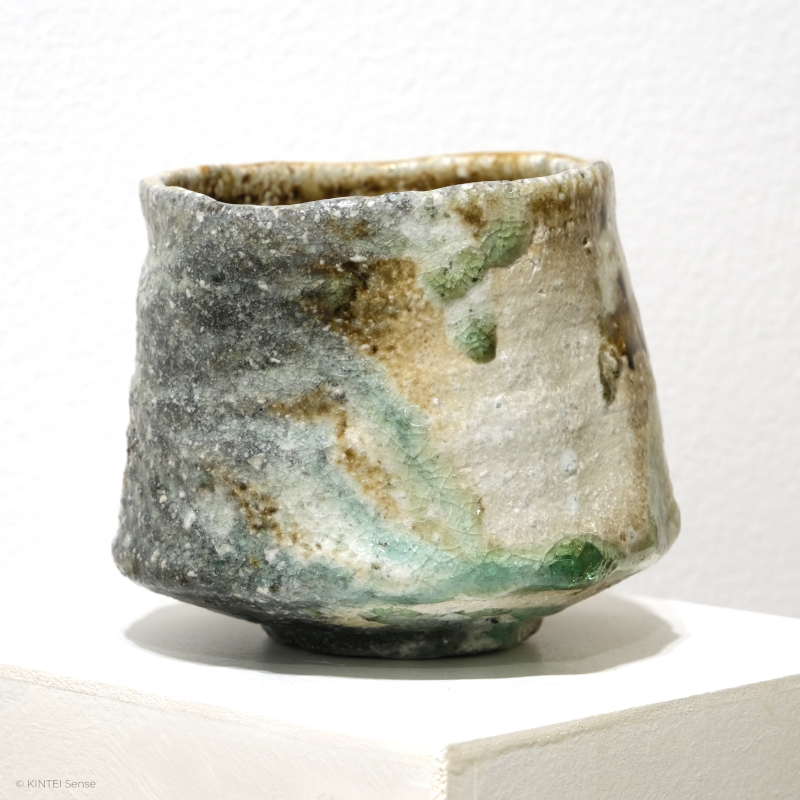
Beyond that, however, every potter strives to bring out the very best in the local materials and to let nature speak as clearly as possible through their work. In Japan, therefore, it is not only the form and decoration of a ceramic piece that matter, but above all tsuchi-aji—the “taste of clay”—which shapes and defines the character of an object.
These local conditions—or limitations—have contributed to the development of distinct regional styles across Japan, each closely aligned with the local clay and available firing methods.
Today, thanks to modern logistics, there are hardly any restrictions on what a potter can produce in a given place. Nevertheless, different pottery families continue to cultivate their savoir-faire and technical knowledge in dialogue with their surroundings, while also introducing innovation and change with each new generation.
As a result, an extraordinary diversity of styles and movements has emerged—each grounded in its own lineage and historical context.


-
Influence of culture and religion
Influence of culture and religion
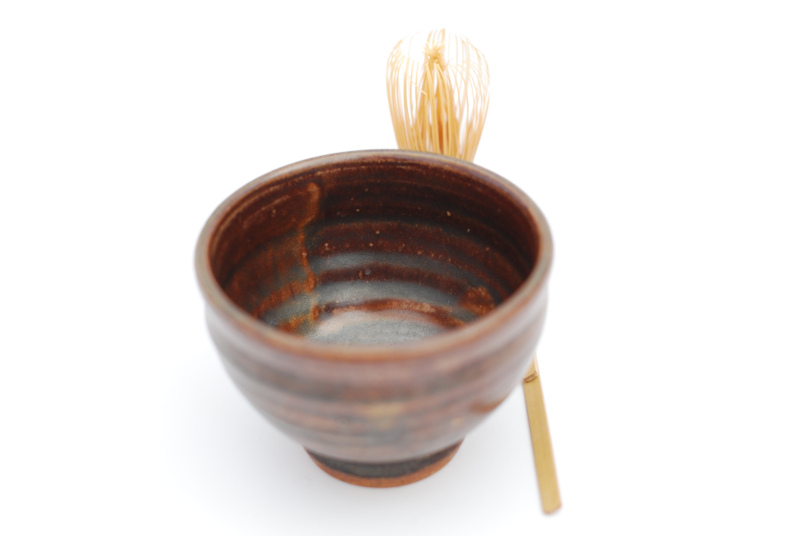
Buddhism and the tea ceremony
As in Europe, religion has also played a formative role in the development of pottery in Japan—most notably Buddhism and the tea ceremony, particularly from the 15th century onwards.
From the very beginning, ceramics were used primarily as vessels for preparing and storing food. At the same time, they also served as objects and containers for religious purposes, such as burials and ceremonial rites.
The rise of the tea ceremony in the 15th century—as a refined art of hospitality—and the profound influence of tea masters such as Sen no Rikyū on Japanese culture led to the elevation of simple, natural ceramics into a true art form.
The Momoyama period is therefore often regarded as a golden age of Japanese ceramics, marking the emergence of a distinct aesthetic identity rooted in Buddhist principles such as simplicity, restraint, and the appreciation of natural imperfection—wabi-sabi.

Food culture and omotenashi
Japanese food culture also very likely contributes to the unparalleled creativity found in the forms and surfaces of Japanese ceramics. In fact, dishes are typically served in small, individual portions across a variety of bowls, plates, and vessels.
Great care is given to the diversity of materials—lacquerware, stoneware, porcelain, glass, and earthenware—as well as to the coordination of colours, shapes, and sizes of tableware, all with the aim of enhancing the presentation of the food itself.
This emphasis on variety and presentation naturally calls for an equally rich diversity of ceramics.
Seasonality plays an extremely important cultural role in almost every aspect of life in Japan. From festivals and clothing—particularly kimono—to sweets, everything is shaped by the four seasons.
Ceramics are no exception. Seasonality influences their making, their decorative motifs, and their use at the table. Depending on the time of year, certain colours, motifs, or materials are favoured and brought into focus.
Ultimately, the aim is to offer guests an exceptional experience by enhancing culinary creations through both visual and tactile means. This attention and care—omotenashi—expresses deep respect for the guest.

-
Economy and savoir-faire
Economy and savoir-faire
International influences and innovations
Japan has not only one of the longest but also one of the richest ceramic histories. From the earliest Jōmon (c. 14,500–300 BCE) and Yayoi (c. 300 BCE–300 CE) earthenware creations, as well as the world-famous Haniwa terracotta figures of the Kofun period (c. 300–710 CE), stoneware also began to develop in Japan from the 5th century onwards.
Sue ware, for example, emerged thanks to new innovations introduced from China and Korea, such as the potter’s wheel and anagama kilns, which enabled higher-temperature, reduction firings. The development of glazes can likewise be traced back to foreign influences.
The Momoyama period (1568–1615) was a pivotal era for Japanese ceramics. Influential tea masters such as Sen no Rikyū (1522–1591) helped define Japan’s aesthetic canon at the time, elevating Japanese wares over the previously preferred karamono (Chinese imports), which had long been regarded as superior.
This shift in taste gave Japanese ceramics a fundamentally new direction and a decisive creative impulse.

New institutions and economic support
With the decline of the feudal system in the Meiji period, ceramics could have lost much of their importance and diversity, as many kilns were deprived of their traditional patrons. However, the new government quickly recognized that Japanese ceramics could serve as a representative cultural asset—both at international world fairs and as an export product showcasing Japan’s high level of craftsmanship.
At the same time, through various institutions, the state took on an active role in cultural support. Ceramics were given a national platform through exhibitions, competitions, and new educational opportunities such as ceramic schools, often informed by the latest technical developments[1].
With the Industrial Revolution and the wars at the beginning of the 20th century, ceramics in Japan gradually lost some of their former importance. In the 1920s, however, the Mingei (folk craft) movement sparked a renewed appreciation of the country’s rich traditional heritage.
Individual potters, such as Arakawa Toyozō (1894–1985) in Tajimi and Kaneshige Tōyō (1896–1967) in Bizen, revived ancient techniques from the Momoyama period and reinterpreted them for a new era.
In order to sustain interest in ceramics and crafts more broadly in a post-war, consumer-driven society—and to preserve both tradition and knowledge—new systems of recognition were introduced. Among the most important are the designations of “Important Intangible Cultural Properties,” commonly known as “Living National Treasures”[2][3].
Political support through awards, exhibitions, and education continues to structure the Japanese ceramics market to this day and has undoubtedly contributed to the economic importance of ceramics as a representative cultural asset.
Together with aesthetic sensitivity, philosophical depth, and knowledge rooted in tradition, these factors have helped sustain both the diversity and the exceptionally high quality of Japanese ceramic art.

Japanese ceramics – a complex (art) craft
In very few countries does the history of ceramics read so closely like the history of the nation itself. The complexity of the many factors that have shaped the development of ceramics—its styles, and above all its place within society—cannot be captured in just a few lines. Yet it is precisely this complexity that defines the uniqueness of Japanese ceramics.
Whether it is the terroir—the local conditions that shape clay, water, and fire—or the philosophical sensibilities rooted in a respect for nature, the aesthetic principles of the tea ceremony, food culture, or even the economic support of the industry, each element adds another layer.
Together, these factors transform a fundamentally elemental material into something remarkably rich, diverse, and deeply meaningful.
https://www.bunka.go.jp/english/policy/cultural_properties/introduction/intangible/
3] Ceramics and Modernity in Japan – Meghen Jones & Louise Allison Cort, Chapter 10: “Koyama Fujio’s View of Modern Japanese Ceramics and His Role in the Creation of ‘Living National Treasures’” – Kida Takuya
Le grès japonais - Christine Shimizu
Exhibition Dō – The Way of Clay 2026
Kintei Sense
Sake Ceramics
Kintei Sense

Tea Ceremony and Japanese Ceramics
Kintei Sense
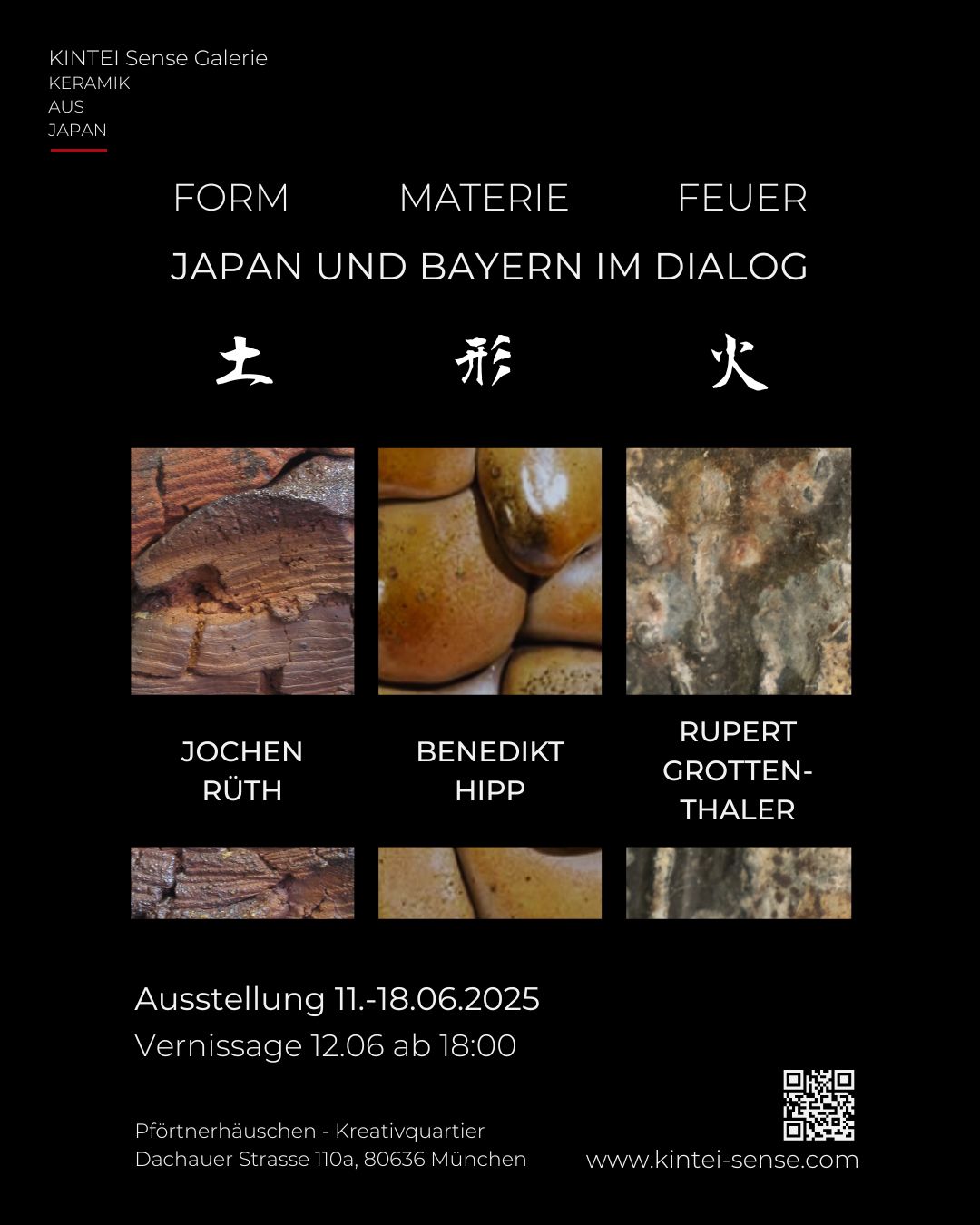
Exhibition Japan and Bavaria in Dialogue 2025
Kintei Sense
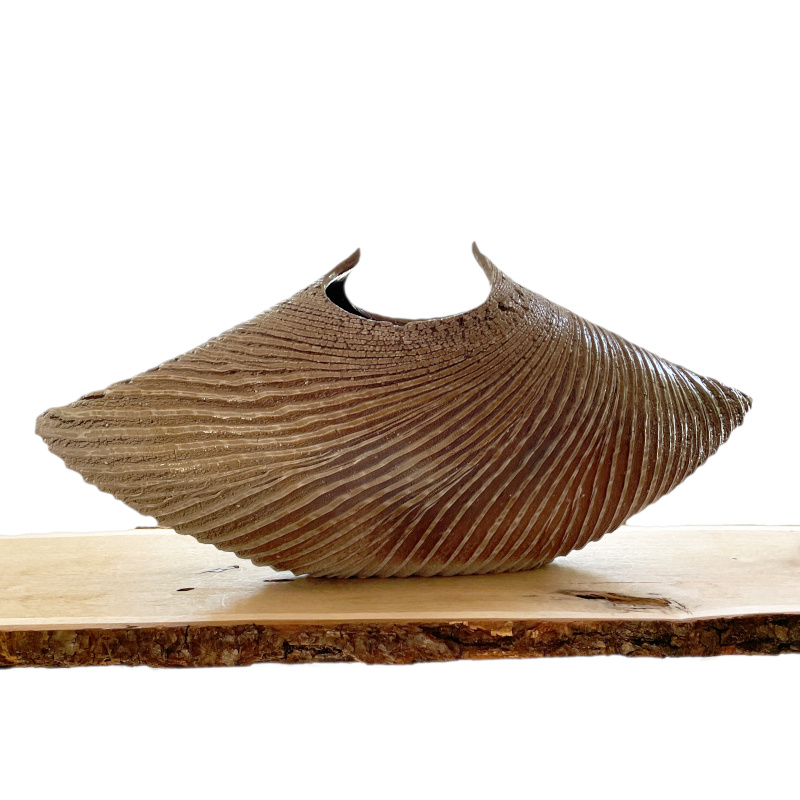
Exhibition Nature in Motion 2025
Kintei Sense