How playing with fire gives ceramics their soul
A brief introduction to the world of Japanese kilns
Insights into ceramic firing processes
Ceramics is an art that demands patience, diligence, and perseverance. It is through countless trials, errors, and accumulated experience that potters develop the understanding of the elements and tools required to practise their craft.The complexity of ceramics lies in its fundamental materials: clay and fire. Beyond the technical act of throwing clay, it is the ability to understand and sense the material—to truly feel it—that allows for the creation of expressive vessels and objects. This requires both sensitivity and a degree of subjectivity.
The firing process is even more complex. Once the pieces have been skilfully thrown or constructed and carefully glazed according to precise recipes, they must ultimately be entrusted to the kiln and to fire itself. In the end, the firing becomes the decisive moment—the make or break, quite literally, of the final result.
With experience and perhaps a little help from the “gods of the kiln,” the pieces usually emerge as intended—sometimes slightly better, sometimes slightly worse than expected.

True magic—the kind that produces truly extraordinary pieces—only happens when, through a deep understanding of the kiln, one is able to surrender to the fire’s unpredictable yet brilliant outcomes. Or, more precisely, to let go.
Let’s discover this magical world together!
- A brief overview of different types of kilns today
Types of kilns
With technological progress, potters today can draw on a wide range of firing techniques. Each type of kiln has its own advantages and disadvantages and is more or less suited to particular styles and effects.
Some potters even use multiple types of kilns, depending on their creative intent.
However, choosing a kiln is far from the end of the process. In fact, it is only the beginning of a lifelong pursuit: mastering the kiln, almost like a sacred grail to which every true potter dedicates themselves.
The most common types of kilns today are the following:
- Electric kilns and gas kilns
- Coal-fired kilns / kerosene kilns / oil-fired kilns
- Wood-fired kilns
- Alternative kilns such as Raku kilns


Electric kilns and gas kilns
Electric and gas kilns offer the greatest level of control and predictability, as they are equipped with advanced technical features such as electronic temperature regulation throughout the different firing stages. Thanks to these innovations, results are more consistent and reliable.
For beginners in particular, this provides the advantage of being able to test and reproduce glaze recipes more systematically. Since much of the process is automated, the firing also requires less hands-on effort—no night shifts to tend the fire.
While these kilns offer greater stability, they also come with limitations: special effects such as those achieved in wood-fired kilns are difficult to reproduce (though not entirely impossible). In fact, electric kilns typically fire in oxidation, which somewhat narrows the range of possible glaze effects.
Gas, kerosene, and oil kilns offer similar advantages to electric kilns in that they provide a high degree of control and, consequently, greater reliability.
However, compared to electric kilns, they also allow for a wider range of creative effects, such as reduction firing, making them more flexible in terms of surface and glaze outcomes.

Wood-fired kilns
Wood-fired kilns are the most unpredictable and labor-intensive type of kiln, as many environmental factors come into play. The construction of the kiln, the type of wood used, humidity levels, and the placement of pieces inside the kiln—all of these details matter and directly influence the final outcome.What is particularly striking are the accidental effects that can emerge, such as natural ash deposits or colour transformations (yōhen) caused by fire and smoke. It is only through experience that potters learn how long to fire, when to stoke it, and when to reduce heat in order to achieve the desired results.
Some potters know their kilns so intimately that they do not even rely on pyrometric devices to monitor temperature changes. Instead, they listen to the fire and observe how its colours evolve—trusting these signs more than any instrument.

Raku kiln
Raku kilns are another highly creative alternative. Interestingly, the understanding of raku firing differs slightly between Japan and Western countries.Introduced in the 16th century by Chōjirō, Raku ware also became popular among tea enthusiasts and amateur potters, as these small, easily manageable kilns could be fired in an urban context in Kyoto and used for firing individual tea bowls.
The hikidashi technique—removing the bowl at peak heat and rapidly cooling it—produces a particularly deep, intense black glaze surface, which has long been highly prized by tea connoisseurs. In Western practice, however, the process often differs: vessels are placed in airtight containers with materials such as straw immediately after removal from the kiln, where they undergo post-firing reduction through smoking.
Raku firing offers a wide range of creative possibilities, particularly thanks to its immediacy and short firing cycles, which make small-scale production possible. Marie Juges’ distinctive silhouettes, for example, were created using this method.
- A brief history of kiln development in Japan
A bit of history...
With a history spanning more than 15,000 years, Japan’s ceramic tradition is extraordinarily rich. While many innovations were developed domestically, exchange with other countries—above all Korea and China—has repeatedly been a source of groundbreaking developments. One such example is the introduction of the potter’s wheel and tunnel kilns (anagama) in the 5th century [1].
Earlier firing methods—mainly pit firing or open bonfires—could only reach relatively low temperatures. With the introduction of the anagama, new standards were established: its larger scale and improved firing conditions enabled the production of higher-quality ceramics, including more watertight vessels, thanks to higher firing temperatures. This marked a significant step forward in the development of ceramic production.
Over time, further technical refinements were introduced, such as the central pillar in the 10th century, which divided the kiln and helped regulate the movement of fire, ash, and smoke. At the beginning of the 17th century, the first noborigama—multi-chambered climbing kilns built along hillsides—became standard. These kilns were more efficient, as they made use of the natural slope of the terrain and allowed for better temperature control across the different chambers.
This type of wood-fired kiln remains one of the most widely used in Japan to this day [2].
[1]Inside Japanese Ceramics: An Introduction to Materials, Techniques, and Traditions – Richard L. Wilson, pp. 142–144
[2] Inside Japanese Ceramics: An Introduction to Materials, Techniques, and Traditions – Richard L. Wilson, pp. 142–144

Historical kilns in Bizen
In Bizen, I had the opportunity to explore the remains of the great Ogama (‘large kilns’ in Japanese), which are thought to have been built towards the end of the Muromachi period in the 16th century. Their sheer scale gives an impression of just how significant the ceramic industry already was at the time.The largest ōgama measured 53.8 meters in length and could fire up to 35,000 small pieces in a single firing cycle, which lasted as long as 35 days.

Communal use
While professional potters today typically have their own kilns, this was not always the case. Wood-fired kilns were often used collectively by closely connected communities of potters or pottery families. Kawai Kanjirō, one of Japan’s most renowned potters, also made his noborigama kiln available to other craftsmen.
In the remarkable publication Listening to Clay, Hayashi Yasuo offers an insightful account of the challenges of running a pottery when relying on a communal kiln. He describes the difficulty of securing one’s place in the kiln—not just any position, but the right one to achieve the desired effects—of estimating the appropriate quantity and size of production for the next firing, and of organising production schedules. Not least, he also recalls the physical demands of transporting the unfired pieces to the kiln (by bicycle!) and preparing them on site [1].
These accounts highlight the complexity of the craft, while also revealing the many possibilities it offers—or could offer.
[1]Listening to Clay: Conversations with Contemporary Japanese Ceramic Artists – Alice North, Halsey North, Louise Cort & Monika Bincsik, chapter on Hayashi Yasuo


3. Where the magic happens
You may be wondering why I am writing all of this. Beyond the striking figures and the fascinating insights into complex techniques, my aim is to offer a deeper understanding of how the works in our gallery come into being.
Japan is known for the diversity of its ceramic styles. However, if there is one type of pottery for which it is particularly renowned—and which best reveals the magic of the kiln—it is high-fired, unglazed ware from Shigaraki or Bizen.
The essence of wood firing in Japan: yakishime
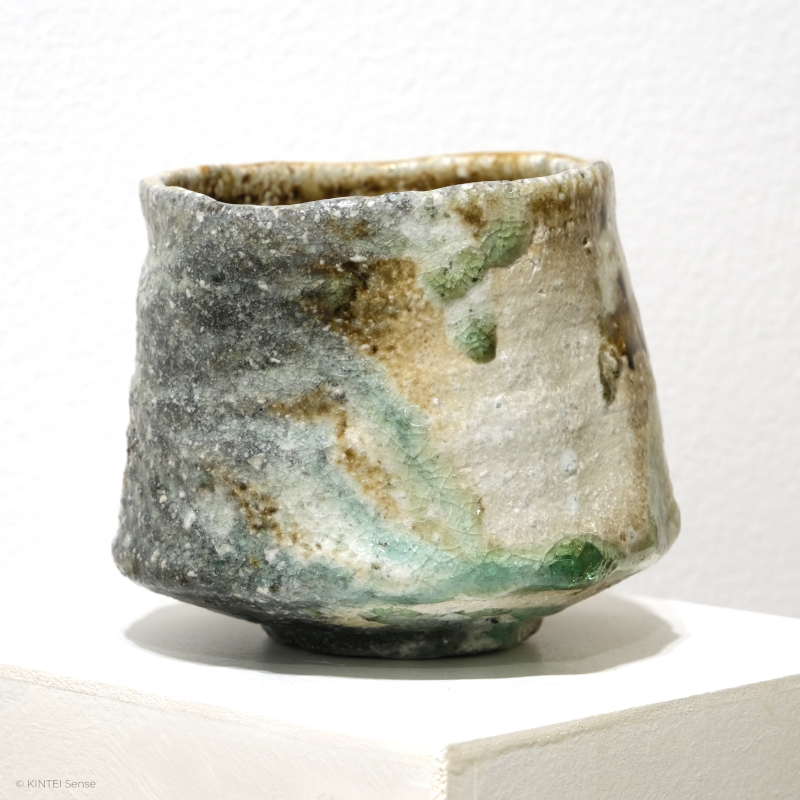
The style of these pottery regions is known as yakishime, which can be translated quite literally as “firmly fired.” The local clay becomes watertight at high firing temperatures of up to 1500°C and is particularly well suited to the natural ash-glaze effects produced in wood-fired kilns.During firing, the wood creates ash that is carried through the kiln by the airflow. At high temperatures, this ash melts and vitrifies on the surface of the vessels, forming beautiful, spontaneous patterns and markings. Additional techniques such as hidasuki—red cord markings created by wrapping straw around the pieces, which then react with the iron in the clay during firing—bring this interaction with fire to its expressive peak.

When Magic happens...
These remarkable effects are influenced by countless variables: the type of wood used, the length of the firing, the placement of the pieces within the kiln, and even the number of times a kiln has been fired. The more intimately a potter understands their kiln, the better they can harness these natural processes.
A deep knowledge of how fire, heat, and ash move through the kiln allows the potter to anticipate where ash will settle and how it will affect the surface of each piece. With this understanding, vessels can be carefully positioned to encourage specific effects while still leaving room for the kiln’s own creative contribution.
It is fascinating to see how potters spend days and nights beside the kiln during a firing, and how the anticipation steadily grows as the process unfolds. Every decision has an impact on the final result: the choice of when to begin the firing, the type of wood selected, the placement of the pieces within the kiln, whether to continue stoking the fire or, conversely, allow a chamber to cool.
Throughout the firing, the potter remains in constant dialogue with the kiln. Each adjustment influences the movement of heat, flame, and ash, making every firing a delicate balance between knowledge, experience, and the unpredictable nature of fire.

Every stage of the firing process requires experience, concentration, and, not least, the cooperation of nature itself. For in the end, with so many variables at play, it is nature that ultimately determines the success of a firing.
Given the power of these natural forces, it is perhaps no surprise that many firings begin with a small prayer to the kiln gods—and a sip of sake offered to the kiln.
Kampai!
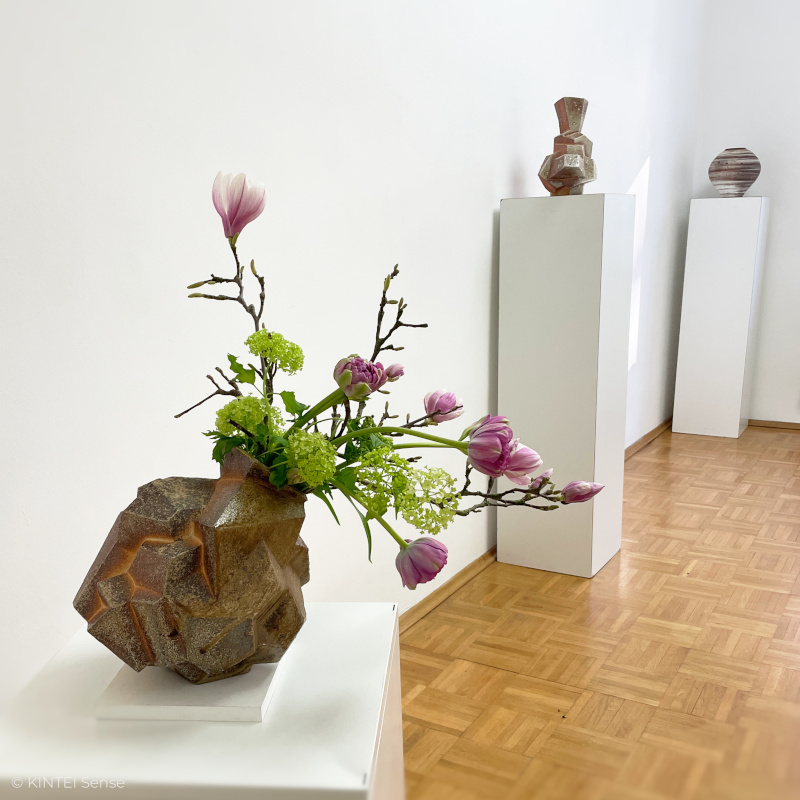
Exhibition Dō – The Way of Clay 2026
Kintei Sense
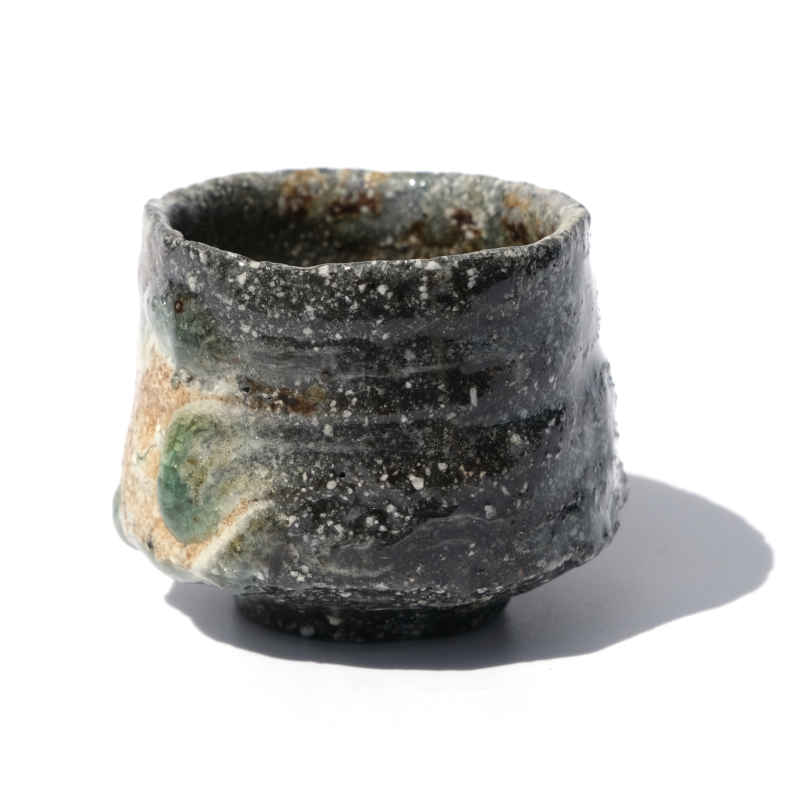
Sake Ceramics
Kintei Sense

Tea Ceremony and Japanese Ceramics
Kintei Sense

Exhibition Japan and Bavaria in Dialogue 2025
Kintei Sense
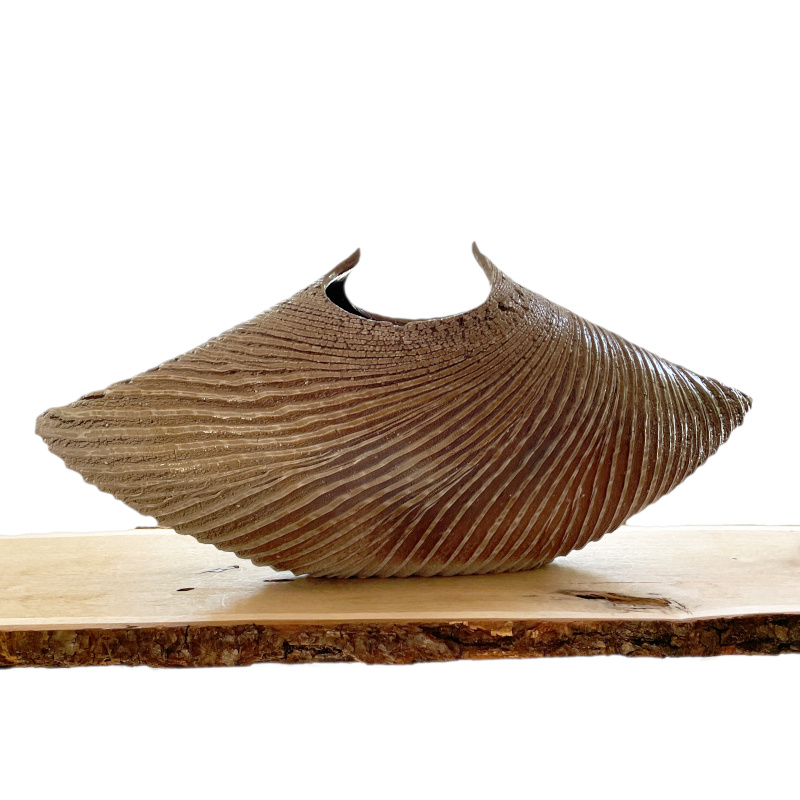
Exhibition Nature in Motion 2025
Kintei Sense