


Wabi-Sabi and the onion vase

Wabi-Sabi – what is the best way to explain this elusive concept, and what does it have to do with ceramics?
After doing some research about Wabi-Sabi, I am sitting at my computer, with a vessel in sight that I made a long time ago and call the onion vase... Unglazed, it actually looked like a red onion, made of fine purple-grayish clay with a very subtle grain that made the surface appear slightly cracked. Glazed, it looks completely different again... Not perfect, not regular, not extraordinary either, rather subdued... so why do I like it so much?
Because I made it myself! Sure, but many of my creations are not nearly as appealing to me. So what is it then?
I think it's the simplicity, the endless possibilities of the random patterns in the glaze, the lip, which, due to the small chip on the side (carelessness on my part when placing it in the kiln...) suddenly doesn't feel static but dynamic, telling a story. Also the shape of the neck, which I struggled with at the time, now appears successful to me thanks to the irregularity of the form and the gloss and richness of the glaze.
What if the onion vase were perfect?
Let's assume in our onion case that the neck was perfectly turned on the potter's wheel, the glaze even, the lip regular, the glaze perfect and flashy... would my onion still have the same charm? It would definitely be more perfect and probably perceived as more beautiful by many. I would probably admire it too, or rather admire its perfection.
But would it move me, draw me into a kind of contemplation or conversation when I look at it? Perhaps—but most likely not—because its perfection would raise no questions and spark no imagination.Thus, the vase would lose its power of presence, no longer holding me at its lip—literally— to continue telling its story in my mind.
And this is how, in my own way, I understand Wabi-Sabi. This onion vase, through the sensitivity of its imperfections and its simplicity, opens up the possibility for a kind of conversation. The concept of Wabi-Sabi is fundamental to understanding Japanese art and ceramics, and more broadly, Japanese culture in general. Defining Wabi-Sabi precisely, however, is a greater challenge, as it is more a matter of subjective sensibility than a formally fixed definition or philosophy.
- Wabi-Sabi: an outline of sensibility
Wabi-Sabi is considered an aesthetic concept in which the imperfection, transience and incompleteness[1] of life are taken as a basis. These words have a negative connotation, yet Wabi-Sabi is not negatively charged. This is because it comes from the non-duality of Buddhism. But first, back to the definition of Wabi-Sabi:
Literal definition
Wabi-Sabi consists of two words, which are defined in the dictionary[2] as follows:
- Wabi 侘び
Simple, rustic, plain, quaint, subtle, sober, unpretentious refinement
- Sabi 寂び
Transience, patina, antique, elegant simplicity

The basic concept
As a fundamental idea in Japan, there is nature: Nothing in nature is perfect and nature cannot be tamed. Therefore, the pursuit of perfection, as we know it in Europe from classical antiquity, is not the goal of Wabi-Sabi.
Rather, it is about finding the unusual in the ordinary, or the beauty, the worth seeing in the imperfect, in the transient[3].
Like therapy, Wabi-Sabi should help us to accept and celebrate these facts of life.
-
Wabi-Sabi Origin: Zen Buddhism and Tea Ceremony
Wabi-Sabi Origin: Zen Buddhism and Tea Ceremony
Zen Buddhism
Wabi-Sabi has its origin in Zen Buddhism and in Taoism[1]. Even earlier, the native Shinto religion fostered a close connection with nature. In a land both feared and revered for its powerful natural elements, nature itself provides the foundation for Wabi-Sabi. Naturalness, simplicity, impermanence shape this aesthetic. Beauty is thus seen and honored in the transient, the imperfect, and the incomplete. Beyond this, the idea of moderation and humility also spreads through the philosophy.
Another concept of Zen Buddhism that is closely related is non-duality. Beauty and ugliness are two dual concepts. Non-duality, i.e. the absence of duality or the non-separate distinction between beautiful and ugly, allows one to be free according to Zen Buddhism, and thus to achieve satisfaction[2] (this is a very simplified representation, this topic alone fills centuries of books!). Thus, the philosopher Yanagi Sōetsu[3] writes that true beauty can only arise when there is no further intention behind it, i.e. the ego of the artist does not interfere. So, in harmony with oneself and nature. Puuuhhh... not easy to understand, and probably even more difficult to implement. But intuitively it makes sense somehow, doesn't it?

Tea Ceremony
Back to history...
The history of the tea ceremony – Chanoyū – is complex and deeply intertwined with the political history of medieval Japan. Here, however, we shall concentrate exclusively on its aesthetic dimension."
In the 15th century, the tea ceremony was cultivated by Japan’s elite as an important social and aesthetic gathering, engaging all the senses and arts. In the beginning, the high-priced "Karamono", imported, "perfect" Chinese tea utensils were celebrated for their flawlessness. By the end of the 15th and early 16th century, tea masters such as Murata Jukō (1423–1502) and the most renowned of all, Sen no Rikyū (1522–1591), introduced a new aesthetic orientation grounded in the principles of Zen.[1].
With the emergence of Wabi-Chanoyū, the focus of the tea ceremony shifted away from the celebration of flawless objects towards an appreciation of the beauty inherent in simplicity. In ceramics, Korean and Japanese wares that had originally been made for everyday use, and not conceived as works of art, came to be highly prized. Their value was found in an intrinsic beauty born of imperfection, restraint, and the patina acquired through use and age.
Wabi-Sabi Aesthetics
Sen no Rikyū thus established a new canon for Japanese aesthetics. Another example is the architecture of the teahouses. They were no longer to be lavishly adorned, but simple, close to nature, and unobtrusive, designed to blend harmoniously with their surroundings. These small, dimly lit spaces, through their restrained Wabi-Sabi aesthetic, were intended to provide a place of retreat.
The tea ceremony thus evolved into more than just a networking event, as we might call it today, with an aesthetic background. It unfolded into a meditative, contemplative gathering, which fosters reflection and contentment through appreciation and acceptance of nature and of the beauty that surrounds us - even in the simple things.
Later came the influence of Oribe Furuta, a warrior and tea master who followed in Sen no Rikyū's footsteps and contributed his own ideas... but that is another story.
Armed with all this theoretical and historical background (sorry, maybe I've gotten a little too nerdy), we can now turn to Japanese ceramics in this context.

-
Wabi-Sabi and Ceramics
Wabi-Sabi and Ceramics
Wabi-Sabi: Focus on the Essential
Representative of Wabi-Sabi taste are, for example, Shigaraki, Iga or Bizen unglazed ceramics, which are predominantly fired in wood kilns. This preserves their naturalness and simplicity through earthy, natural tones. Perfection is not imposed; instead, nature and the elements are granted a certain freedom, which makes the resulting work all the more profound.
True Wabi-Sabi ceramics are also defined by simplicity of form and decoration. Everything unnecessary is omitted - as Frank Llyod Wright wrote: “Eliminating the insignificant”[1]. However, a balance must be struck to evoke a certain poetry or sensitivity, rather than leaving something sterile.
Wabi-Sabi: Form and Deformation
Deformations in form caused by the natural properties of the materials or by the creation process — such as sagging during firing or small explosions of feldspar — are technically imperfections that, within the framework of European aesthetics of perfection, might be considered unacceptable. From a Wabi-Sabi perspective, however, these are seen as imperfections or incompleteness that constitute the true charm of the object, reflecting nature and the world itself.
However, if these imperfections are forced or contrived, we move outside the realm of Wabi-Sabi. Such an object, with its artificiality and lack of sensitivity, is unlikely to resonate with us[2].

Wabi-Sabi: Patina and Transience
Finally, transience, as an essential element, is also found in ceramics in various forms. A new bowl develops a patina over time, which intensifies through years of use, giving it a new appearance. Since we are so accustomed to the new, this patina may seem a little off-putting at first, yet the signs of use also bear witness to our lives. Embracing impermanence allows us to discover beauty in the patina as a record of time. Or perhaps the beauty of the patina helps us more easily accept transience itself?
It is therefore not surprising that the art of Kintsugi came from Japan, an art that breathes new life into broken ceramics using lacquer and gold or silver powder. Not only is a ceramic saved from the landfill in this way, it also gains another layer of complexity, history and character. Sometimes completely new works of art are even created from them, which would have been forgotten before.
Ceramics are born, not created
In conversations with potters in Japan, one often hears that the clay itself dictates what vessel or form will take shape. One might almost say that, in the Wabi-Sabi philosophy, objects are born rather than made[1].
And just as personal as the process of creation is, so is the “conversation” between the object and the viewer. Everyone has their own sensitivity, and each of us responds to certain elements, colors, shapes, and textures. Nowadays, in the jungle of visual stimuli—where everything seems to compete to be louder, bigger, higher, or more extraordinary just to be noticed—it can be difficult to find a moment of calm and connect with oneself.
This is exactly what the Wabi-Sabi sensibility offers: a chance to pause and, in nature and even in the seemingly unremarkable things around us, find beauty and contentment through appreciation. The understanding of Wabi-Sabi presented here is my personal interpretation, drawn from experience and from the books that have explored it in greater depth.
Ultimately, it remains a personal experience and with that I would be back to my onion vase!

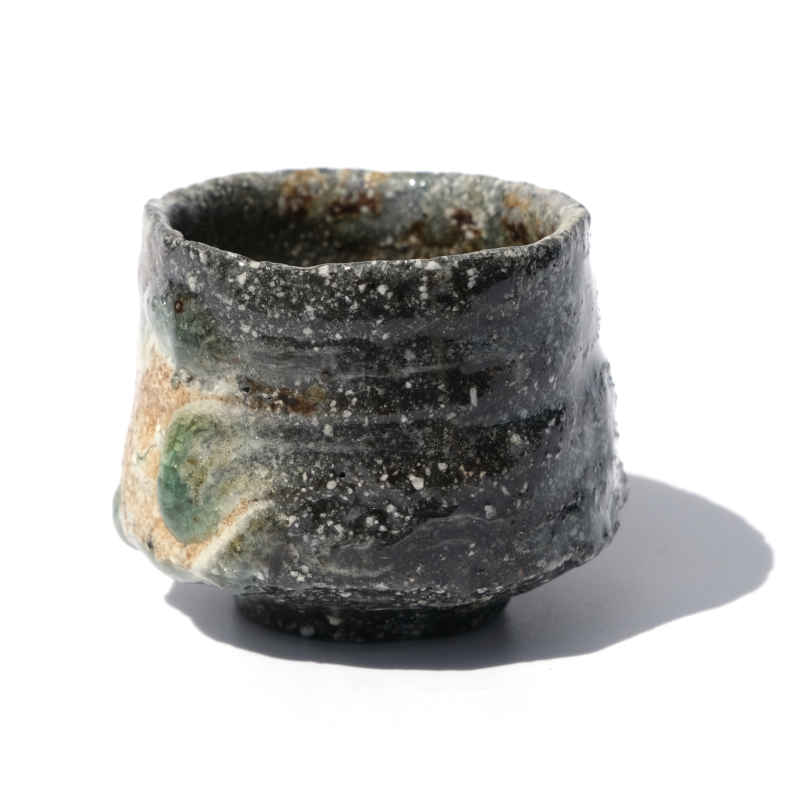
Sake Ceramics
Kintei Sense

Tea Ceremony and Japanese Ceramics
Kintei Sense
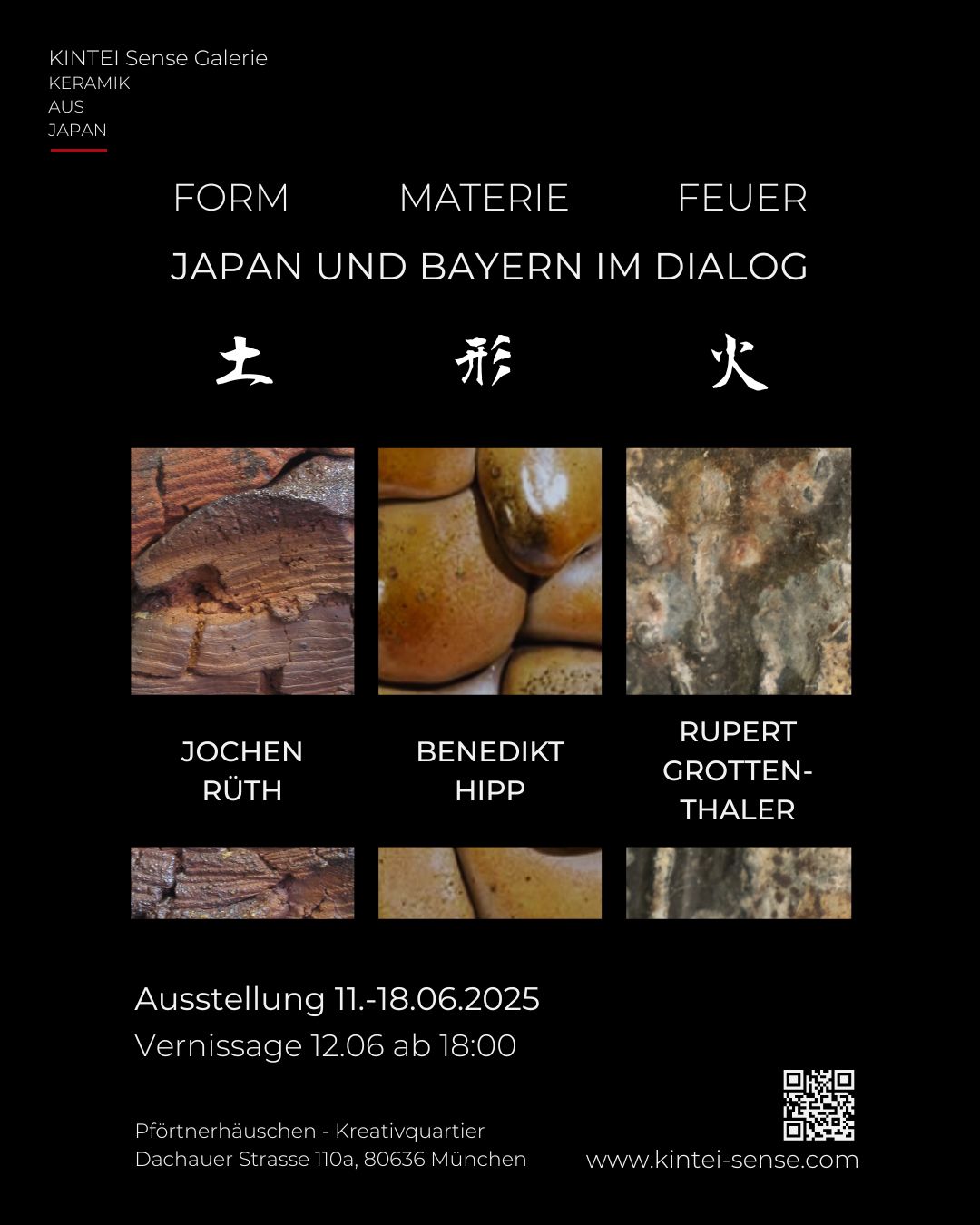
Exhibition Japan and Bavaria in Dialogue 2025
Kintei Sense
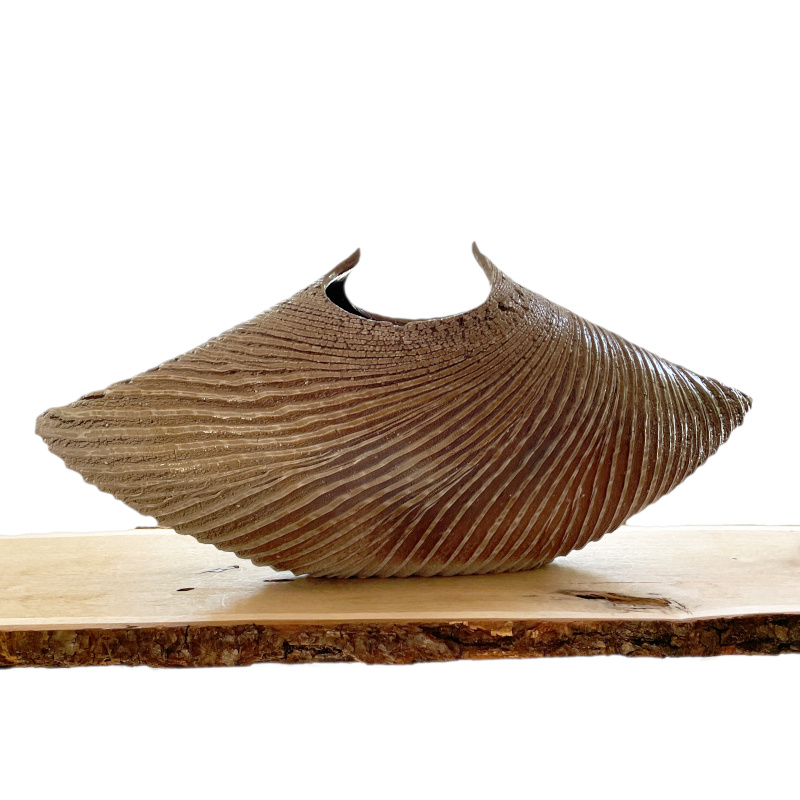
Exhibition Nature in Motion 2025
Kintei Sense
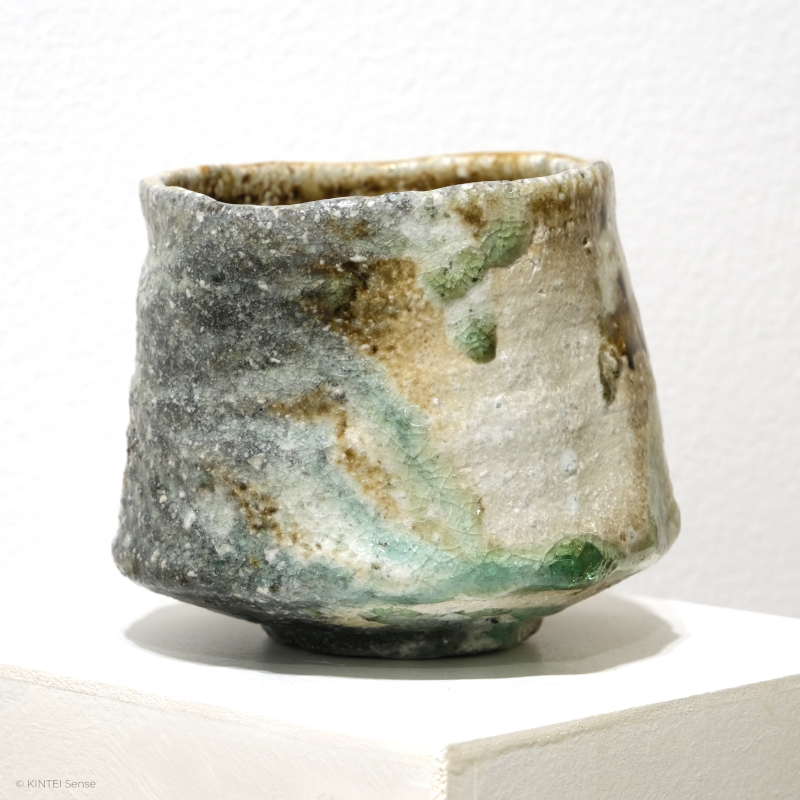
Shigaraki Ceramics
Kintei Sense
