Stumbling upon happiness – how I unexpectedly found my way into it
There are certainly more than five good reasons why ceramics can make people happier. But what led me to ask this question in the first place?
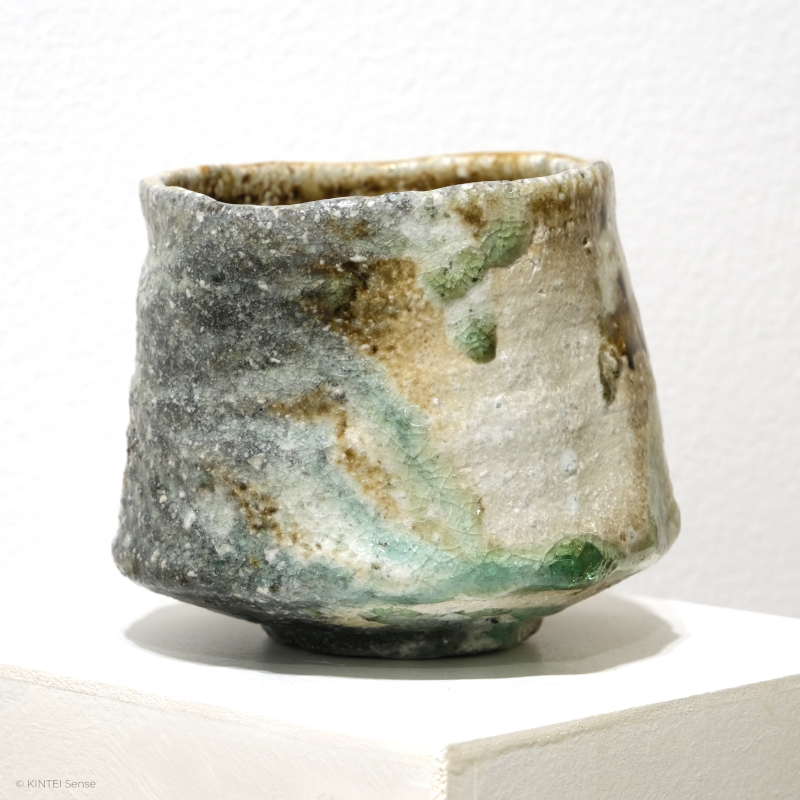
My first piece of art ceramics was a beautiful small celadon tea bowl. The crackle glaze was extraordinary, and both the glaze and form were simply perfect. At the time, I had no real knowledge of the ceramic world—I just knew I had to take this bowl with me. Of course, I was surprised by the price, as I had never spent that much on anything before. Still, I soon walked proudly out of a small gallery on a quiet street in Kyoto, which I had quite literally almost stumbled upon. Since then, this bowl has travelled with me halfway around the globe, always lovingly displayed and sometimes even put to use.
I have often wondered why that bowl—and so many other ceramic pieces since then—makes me so happy. Art collectors probably feel something similar, although with ceramics there are certainly unique aspects, such as the tactile quality. So what is it, exactly, about ceramics and happiness? Here are five good reasons why ceramics make us happier.

-
Beauty – contemplation and meditation
Beauty – contemplation and meditation
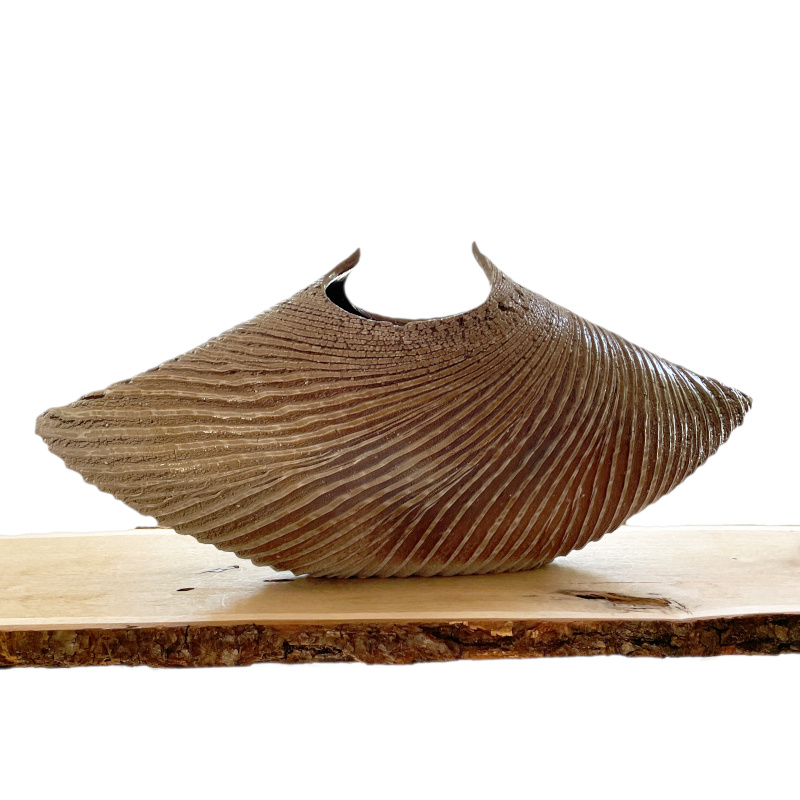
This act of looking—amplified by the elemental materials of ceramics—can also become a meditative and contemplative experience, a kind of return to what is essential. Or, quite simply, a coup de cœur, offering us renewed aesthetic joy again and again.

-
Uniqueness of the creations
Uniqueness of the creations
How fortunate we are that art and craftsmanship exist in our world. The uniqueness and creativity of ceramic works broaden our perspective, spark imagination, and bring a renewed sense of energy. At the same time, the diversity of styles, forms, and colours allows us to choose pieces that resonate with us on a deeply personal level. In this way, these objects become an expression of our own taste, sensibility, and individuality.
They also invite us into conversation and exchange—of impressions, preferences, and experiences—with artists and like-minded enthusiasts. This can, however, become something of a passion in itself, because once you start to understand the world of ceramics a little better, you may suddenly find yourself becoming a collector. Over time, personal collections can take shape, bringing together different styles, techniques, countries of origin, or historical periods—each adding its own layer to a fascinating and evolving story.

-
A tactile experience
A tactile experience
Ceramics, as three-dimensional objects, are made to be touched. It is only through contact that the true character of a piece reveals itself. Its weight or lightness, the roughness or smoothness of the clay, the way it sits in the hand—all of this can tell us something about the artist, the origin of the work, and how it was made.
Touching ceramics is a deeply tactile experience. It leaves a lasting impression and creates a direct, almost intimate connection with the object.
It is precisely this tactile experience—the physical interaction with the object—that sets ceramic art apart from other art forms. By celebrating the many qualities of clay through the concept of tsuchi-aji, the “taste of clay", Japanese ceramics place particular emphasis on this sense of touch.
In Japan, attention is paid not only to the form and decoration of a vessel, but also to its foundation—the clay itself, the earth of Mother Nature. Clay can vary in its character, appearance, and feel depending on the environment in which it is sourced. In this sense, ceramics—much like wine—can also be understood through the idea of terroir. Fascinating, isn’t it?

-
Appreciation of the work and creation process
Appreciation of the work and creation process
Appreciation—an idea increasingly heard in the context of working life these days… but why shouldn’t it apply to objects as well?
In today’s consumer society, it is often difficult to pause for a moment and reflect on how much effort, skill, experience, and time are required to create something.
For makers of handmade ceramics, the process is inherently one of constant challenge. From the initial idea to the finished object, countless steps are required to bring a piece to completion—and just as many stages where something can go wrong.
For many ceramic artists in Japan, this challenge is not only practical or economic, but also deeply philosophical: how does one build on tradition and inherited knowledge while still creating something new? How can technical skill be continually renewed through creativity? And how does one develop a personal language that remains in dialogue with local tradition—or perhaps consciously moves beyond it?
It is precisely these challenges and constraints that define the distinct character of ceramic art.
Sometimes it is worth pausing to reflect on the objects that surround us, and to appreciate their intrinsic value. In the end, doesn’t taking more time for ourselves—and choosing to live with “meaningful” objects—also amount to a form of self-appreciation?

-
Preservation of ancestral savoir-faire
Preservation of ancestral savoir-faire
With every craft that disappears, a part of culture and savoir-faire is lost. Of course, 3D printers can produce remarkable creations, and large gas kilns can fire greater quantities of work more efficiently and reliably. Technical innovations improve efficiency and open up new possibilities, but creative innovation can only truly be achieved when existing savoir-faire and techniques are known, understood, and ultimately transcended.
Earlier techniques are certainly not always the most efficient. When it comes to creative production that aims to enchant and move people, efficiency is probably not the highest priority. Ceramic artists invest an extraordinary amount of effort and cultivate a profound attention to detail—without which their works would not be creations, but mere production.
Techniques passed down and continuously refined over thousands of years represent a cultural wealth that deserves to be preserved and protected. Beyond technique itself, it is ultimately also about an understanding of materials, environment, and people. A good example is the firing of ceramics, which requires precisely this depth of understanding in order to achieve something truly exceptional.
For this reason, I am also deeply fascinated by the history of ceramics. It is closely intertwined with the social and economic history of every country.

But who am I telling this to? If you’ve found your way to the KINTEI Sense website, you probably already know exactly what I mean.
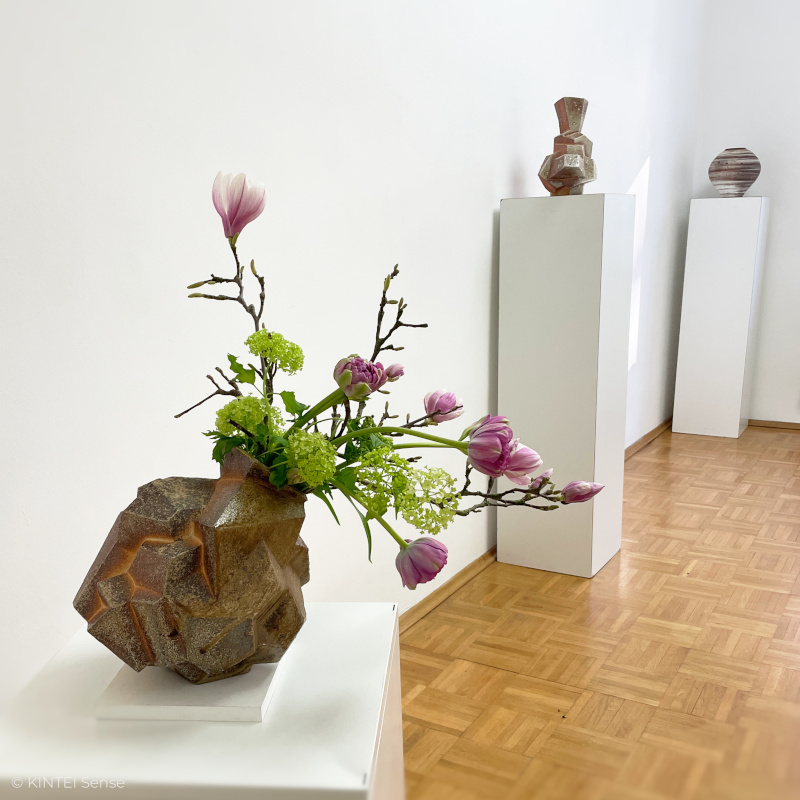
Exhibition Dō – The Way of Clay 2026
Kintei Sense
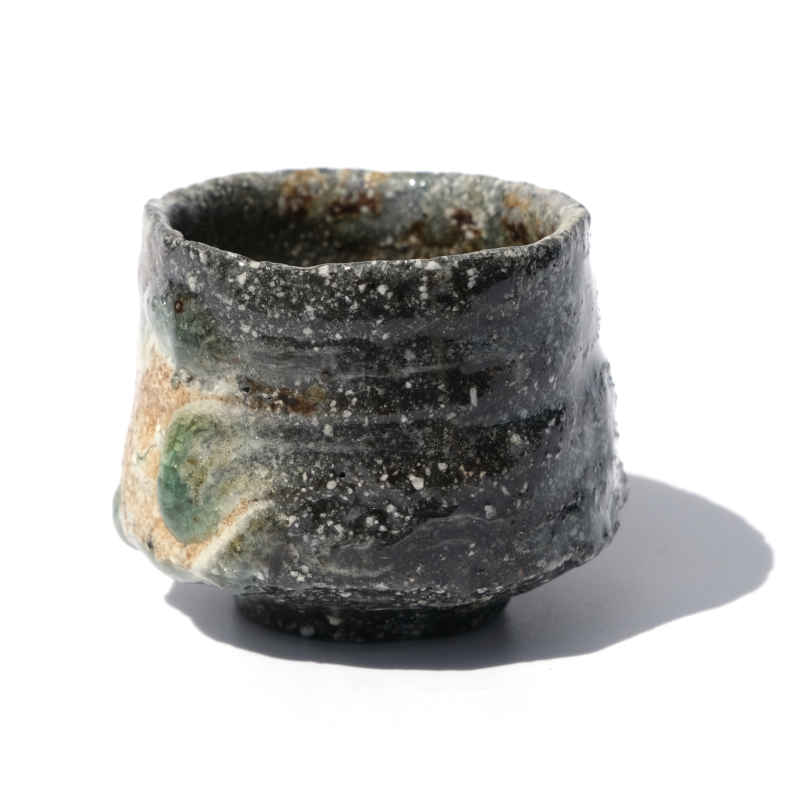
Sake Ceramics
Kintei Sense

Tea Ceremony and Japanese Ceramics
Kintei Sense
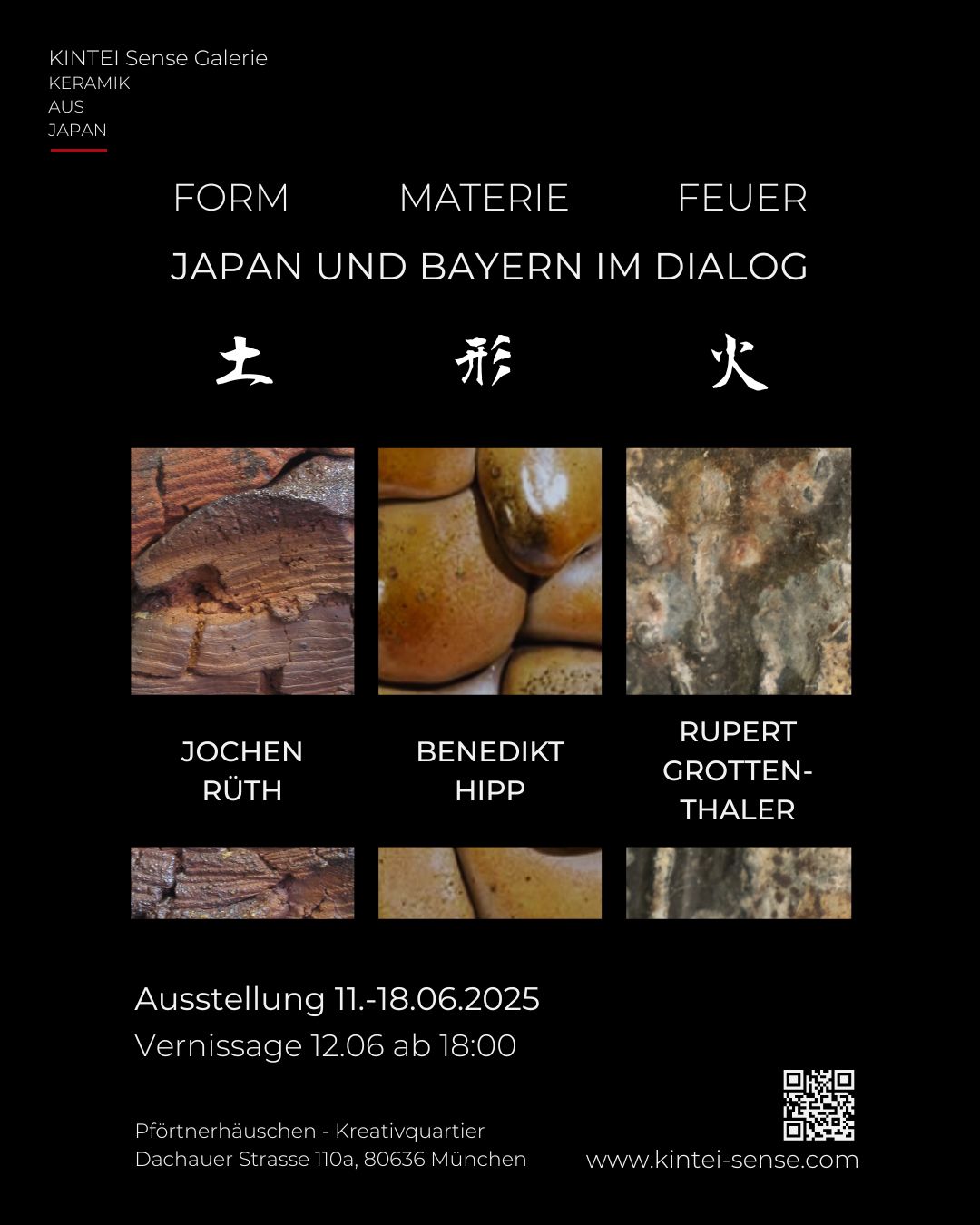
Exhibition Japan and Bavaria in Dialogue 2025
Kintei Sense
Exhibition Nature in Motion 2025
Kintei Sense