TAO AKIRA
田尾 晃
TAO AKIRA
田尾 晃
At a Glance
| Location | Shigaraki, Shiga Prefecture, Japan |
| Founded | Active since 2014 |
| Style | Shigaraki |
| Kiln | Anagama, Itte-koi kiln |
| Clay | Shigaraki |
| Glaze | Yakishime (wood-firing) |
Tao Akira: Avant-garde objects & the power of geometry
Shigaraki, one of Japan’s Six Ancient Kilns, remains deeply shaped by ceramics to this day. Known for its excellent local clay and long tradition, the area is associated not only with its iconic tanuki figures but above all with yakishime: unglazed, wood-fired ceramics.
While many established artists, including Sawa Katsunori, follow a tradition more closely rooted in the tea ceremony, a younger artist deliberately takes an independent position: Tao Akira.
Tao Akira – The Path to Shigaraki
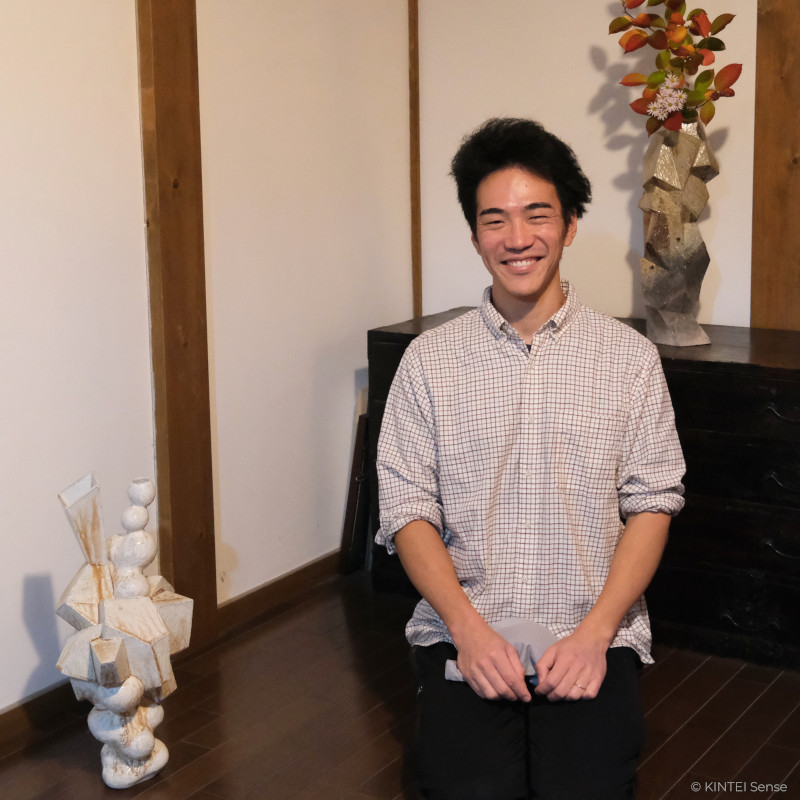
Tao Akira was born in Nagasaki and does not come from a traditional ceramic family, unlike many artists in Shigaraki. After finishing school in the United States, he studied at the New York State College of Ceramics at Alfred University, where he initially encountered ceramics alongside glass. He later remained there as an assistant, further developing his practice.
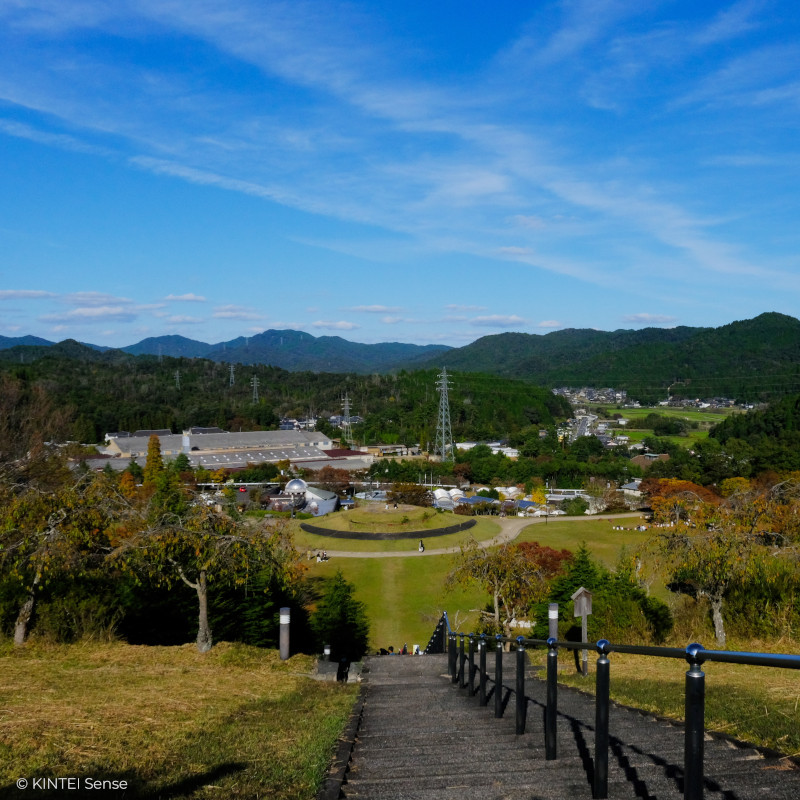
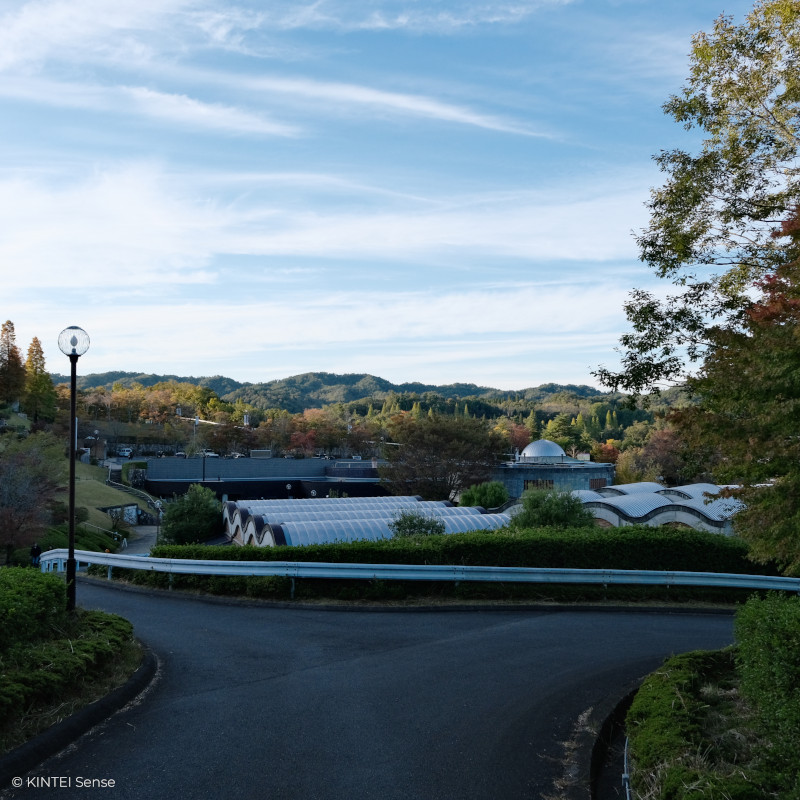
In 2016, he moved to Shigaraki to join the Shiga Prefectural Ceramic Cultural Park. What began as a residency gradually became his artistic base: he remained there as a technical staff member at the Creative Training Center.
Shigaraki also proved formative on a personal level—Tao Akira met his wife, Takahashi Yoshiko, there, who is also a ceramic artist and the daughter of Takahashi Rakusai (fifth generation of a distinguished pottery family in Shigaraki).
Object ceramics – form as a central element
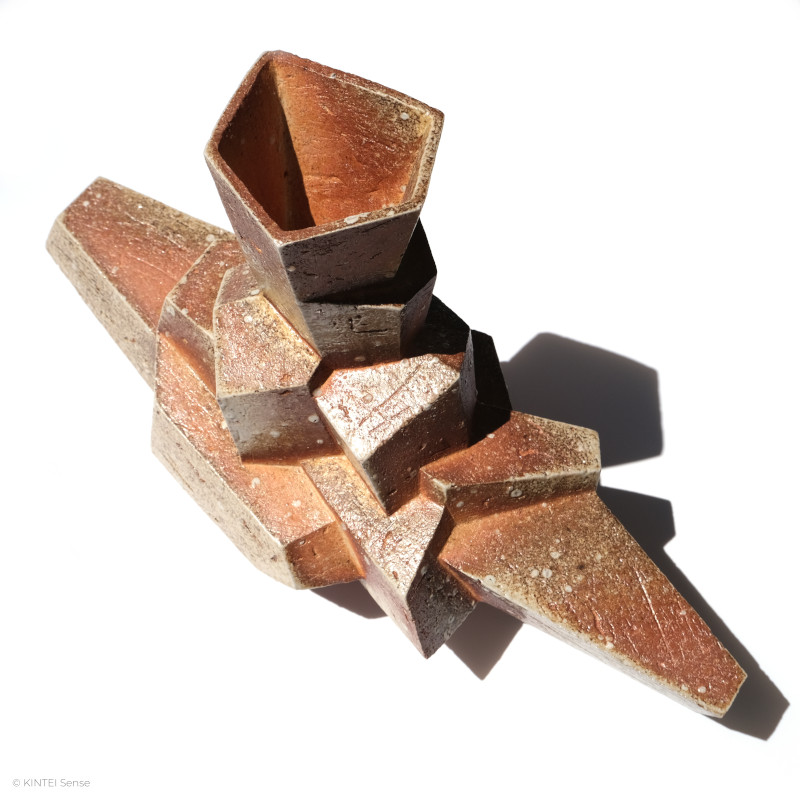
Form is the central means of expression in Tao Akira’s work. His geometric, often seemingly floating structures defy gravity, while appearing at once precise and organic.
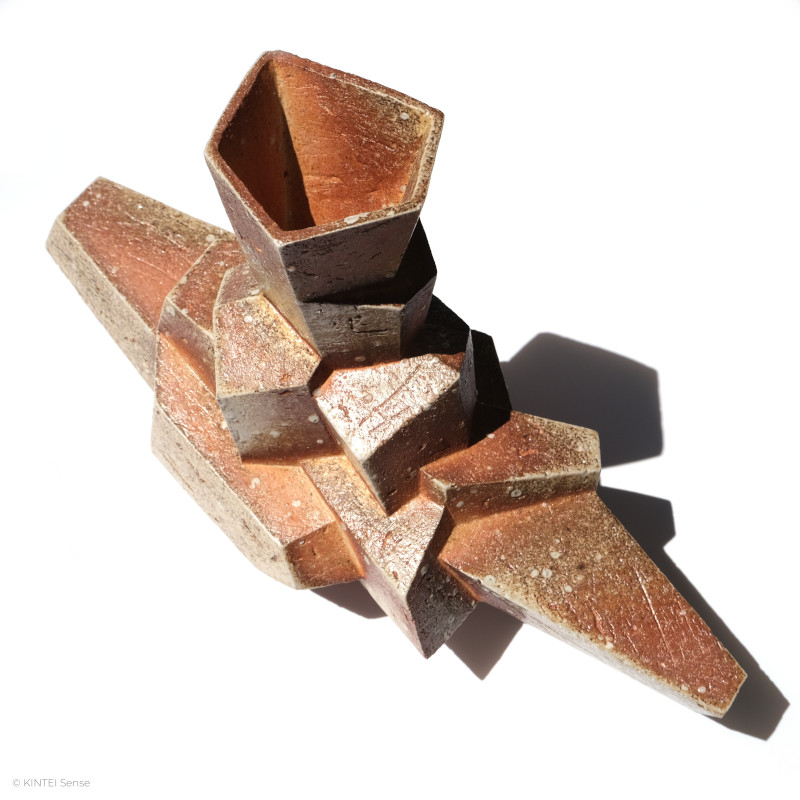
The process begins intuitively: sketches emerge as quick doodles, without fixed plans. From individual elements—prisms, spheres, and planes—Tao Akira builds complex compositions by hand, which reveal themselves differently from each viewpoint. What interests him most are the points of connection and contact between the various elements.
The result is a series of independent sculptural objects that deliberately break with the traditional visual language of Shigaraki ware.
Continuity in rupture
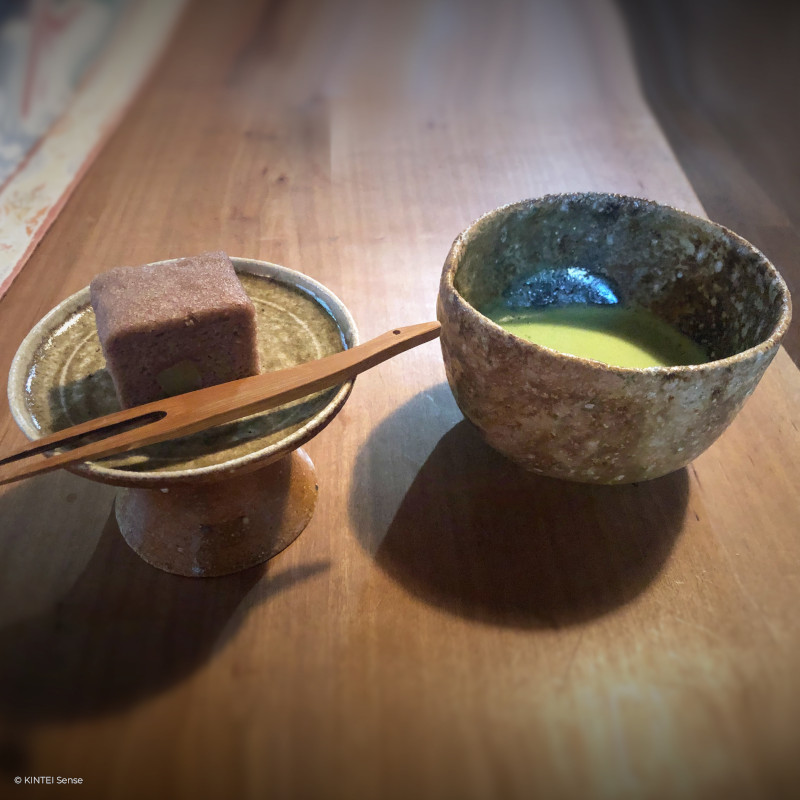
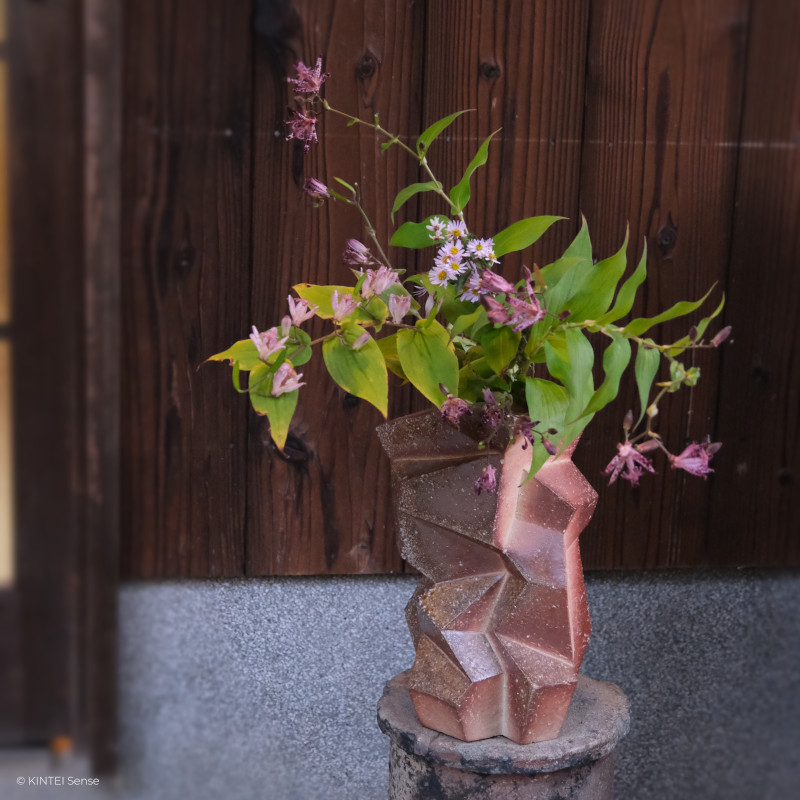
Despite this clearly contemporary stance, Tao Akira’s work remains deeply rooted in Japanese ceramic tradition. Regarding the shape and form, his pieces can be seen in the context of the Sōdeisha movement, which established ceramics as free-standing sculptural “objets” beyond conventional vessel forms. At the same time, many of his works retain a subtle sense of functionality, for example as vases for ikebana within the context of the tea ceremony.
Material and firing methods also anchor his work firmly in the region. He works with local Shigaraki clay as well as clay from neighbouring Iga—another of Japan’s Six Ancient Kilns with a long-standing wood-firing tradition. Rich in grog and feldspar, these clay bodies are especially robust, making them ideal for complex, hand-built forms.
In wood firing in particular, these clays reveal their full potential. They respond sensitively to fire, ash, and temperature fluctuations, making them an essential element of the visual language.
Shigaraki and Iga clay
The light clay derived from the sediments of Lake Biwa can fire to a white surface, but in wood firing it develops warm shades of brown and red.
In Tao Akira’s works, these nuances become particularly pronounced: edges, surfaces, and recesses reveal distinct zones of heat exposure. White areas sit alongside reddish firing marks, complemented by a delicate ash deposition.
The characteristic feldspar inclusions remain visible, lending the geometric forms an earthy, natural depth. In some works, Tao Akira also applies titanium-based glazes to create deliberate colour contrasts.
Wood firing as the final touch
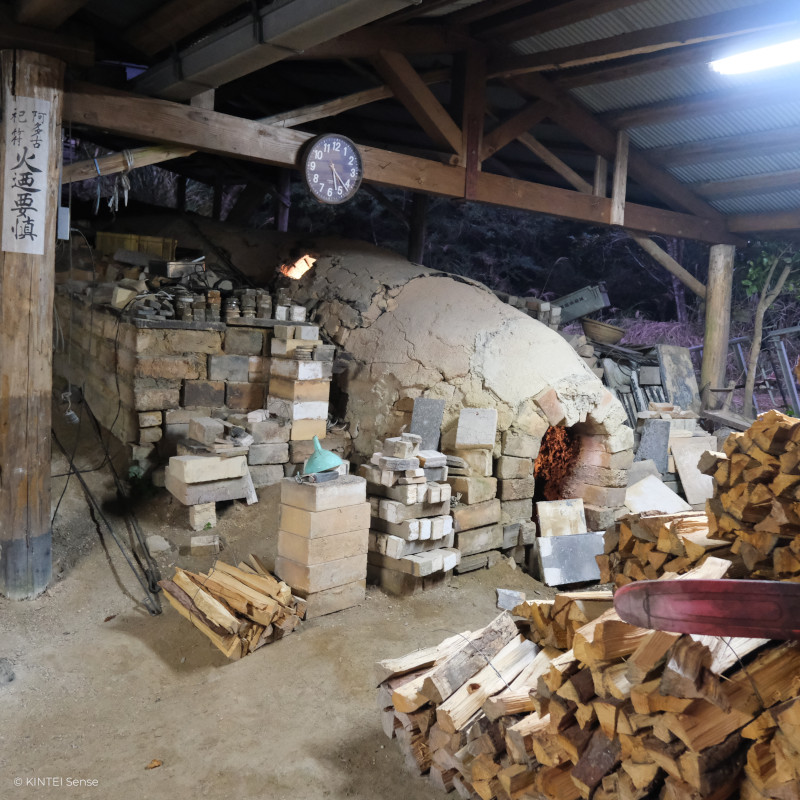
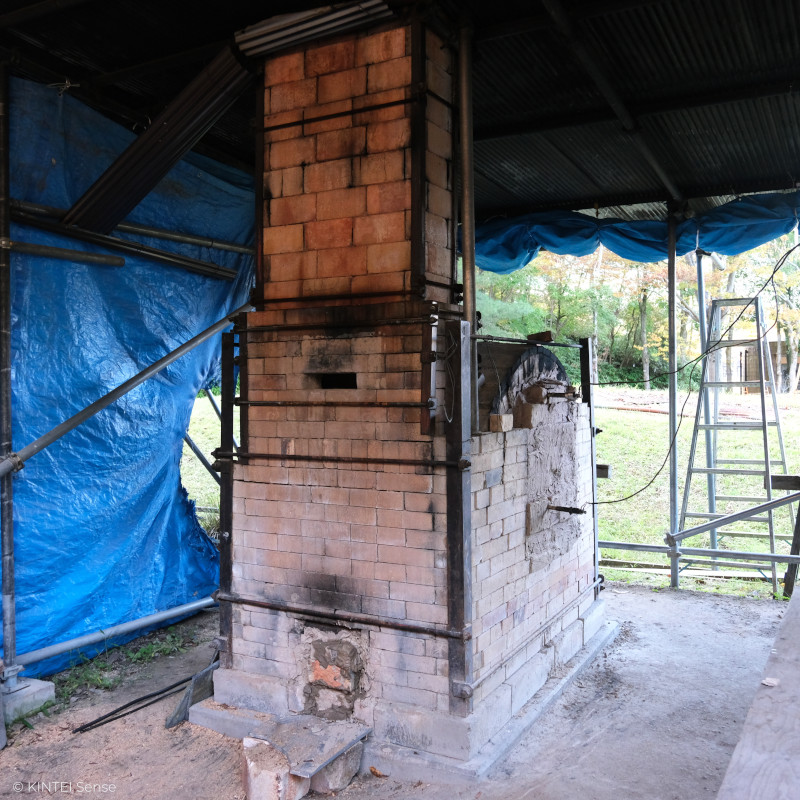
Thanks to the Research Centre, Tao Akira has access to a range of kilns for wood firing. He primarily fires in an anagama kiln or in an Itte-koi kiln.
The anagama produces heavy ash deposition and characteristic koge marks (carbonisation), while the Itte-koi kiln allows for more nuanced colour transitions and so-called “flashes”, as the fire is channelled indirectly beneath the firing chamber, exposing the ceramics to less direct flame. The Itte-koi kiln is also more efficient than the traditional anagama: firing takes around 14–15 hours, up to a maximum of 20 hours, and therefore requires less wood.
Larger works are usually bisque-fired before wood firing to prevent damage during handling or cracking from stress in the kiln. This creates a controlled process in which material, fire, and time are precisely aligned—allowing each piece to develop its own distinct firing trajectory.
TAO AKIRAS PROFILE
1991 Born in Nagasaki, Japan
2014 Graduated from the Art & Design program at the New York State College of Ceramics, Alfred University
2014–2015 Assistant Technician, New York State College of Ceramics, Alfred University
2016–2017 Studio Artist, Shiga Prefectural Ceramic Cultural Park, Shigaraki
2017–present Technical Staff, Creative Training Center, Shigaraki
Various exhibitions in Japan