HAYASHI YUKA
林 友加
HAYASHI YUKA
林 友加
At a Glance
| Location | Toki, Gifu Prefecture, Japan |
| Founded | 1998 |
| Style | Shino |
| Kiln | Gas |
| Clay | Seto and Shigaraki |
| Glaze | Shino, Nezumi Shino |
HAYASHI YUKA: poetic refinement
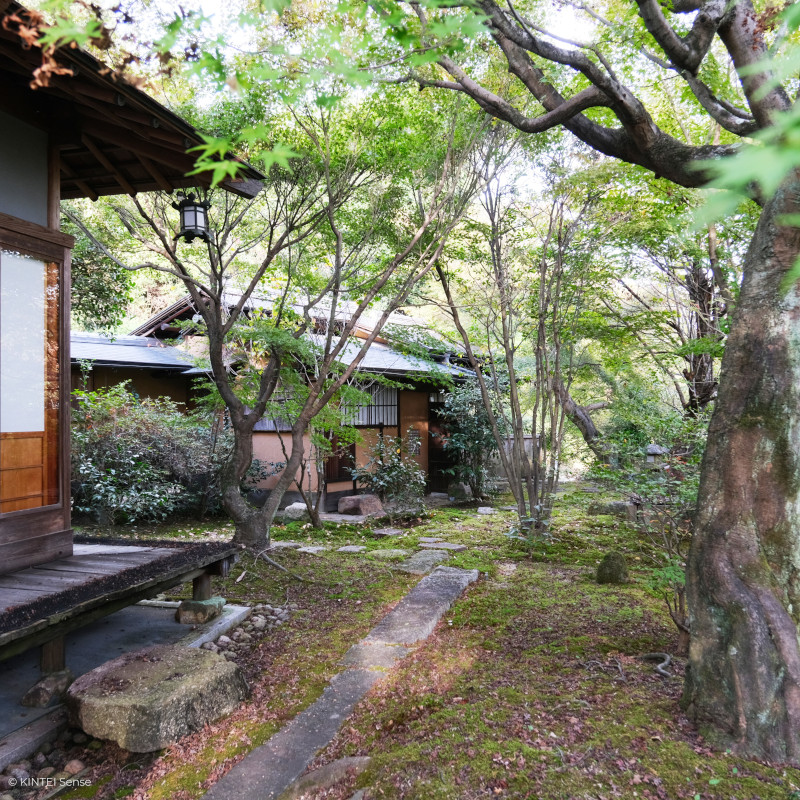
On the northern side of Toki in Japan’s Mino region lies the traditional estate of the Hayashi pottery family. A large wooden gate opens into an almost magical garden, featuring a traditional teahouse and a picturesque Japanese building that also serves as a studio.
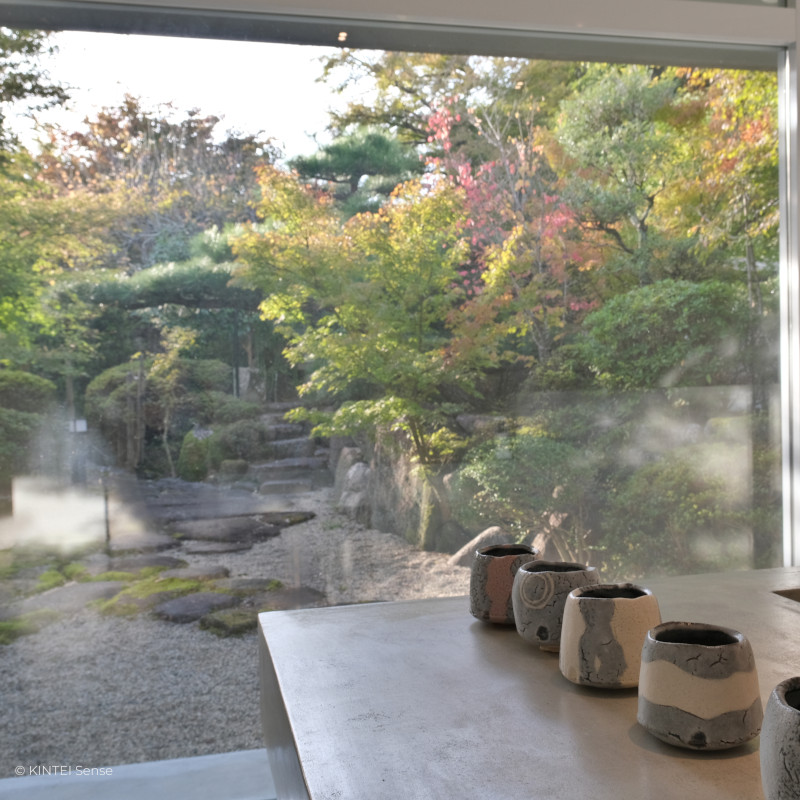
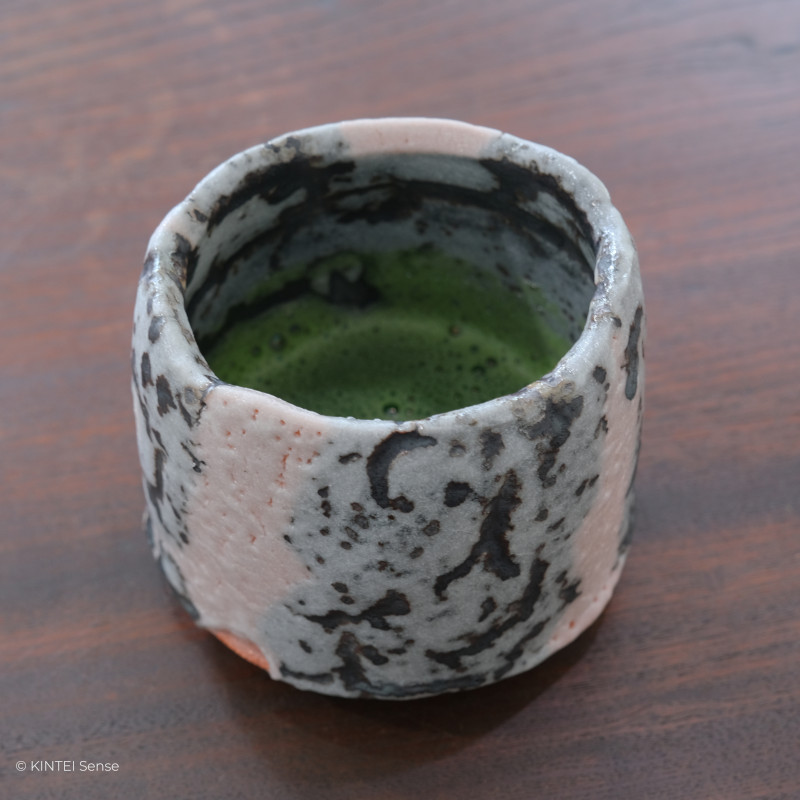
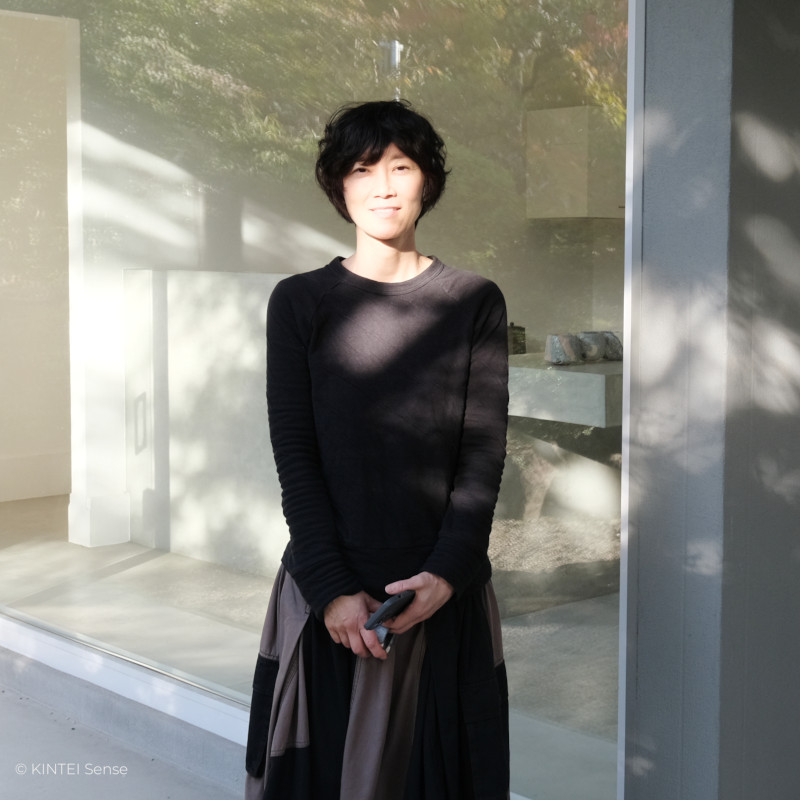
Before entering the studio, Hayashi Yuka invites me to a bowl of matcha in her contemporary exhibition space, where she presents her distinctive tea bowls. The light-filled room opens up an impressive view of the garden—a moment of calm before we later turn to the production process.
SHINO CERAMICS AND THE LEGACY OF THE JAPANESE TEA CEREMONY
Origin in the tea ceremony
Hayashi Yuka’s Shino creations are deeply rooted in Japanese tea culture and the local traditions of Mino ceramics. The Mino region, including Toki, is regarded as the birthplace of the Shino style. Together with Oribe and Seto (Kuro-Seto and Ki-Seto), Shino forms one of the three ceramic pillars of the Mino area. It was the Momoyama period in the 16th century that marked a defining moment in the development and aesthetic consolidation of the Japanese tea ceremony, during which these ceramic traditions flourished.
Shino was particularly known for its organic, generously shaped matcha tea bowls. After the style had long fallen into obscurity, it was revived in the 1920s by Arakawa Toyozō, who brought it back to prominence.
Shino Ceramics
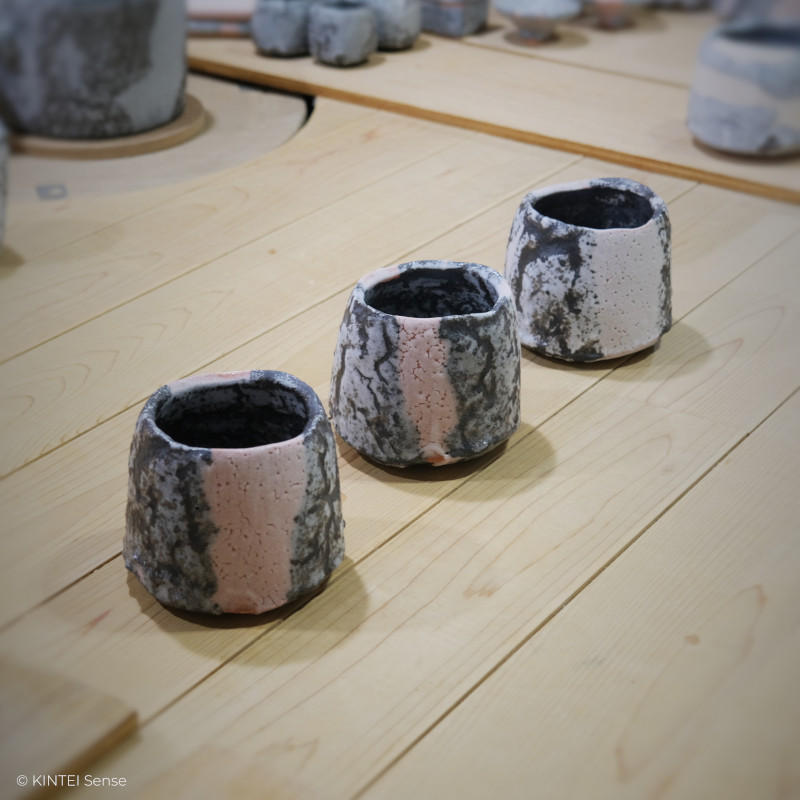
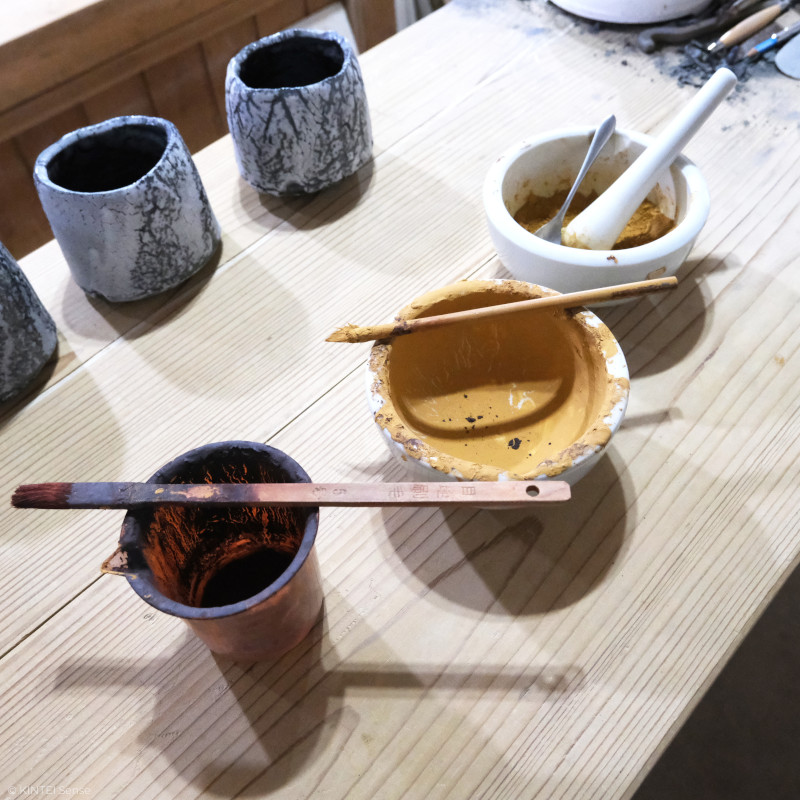
Shino ceramics are characterised by a rich, warm, slightly translucent feldspar glaze. Through its interaction with the iron content in the clay, it often develops the highly valued orange or pinkish tones. Shino was also one of the first ceramic styles in which decoration was painted using iron oxide, rather than being incised or carved into the surface.
Alongside classical Shino, several variants exist, including Nezumi-Shino (“mouse Shino”, a grey-toned style named after its soft, mouse-like glaze colour created by an iron-rich base), Aka-Shino (red Shino), and E-Shino, which is decorated with painted motifs and patterns.
Shino bowls are particularly valued for their lively glaze flows—sometimes abundant, sometimes restrained—where reddish firing marks (hi-iro) also emerge. Equally prized are small, citrus-peel-like glaze textures (yuzuhada) and fine crackle lines. Traditionally, Shino bowls are decorated with spontaneous, light brushwork in iron underglaze. In Nezumi-Shino, however, the motifs are often more complex and clearly defined, such as depictions of seaweed or animals on small plates.
HAYASHI YUKA’s contemporary interpretation of the Shino tradition
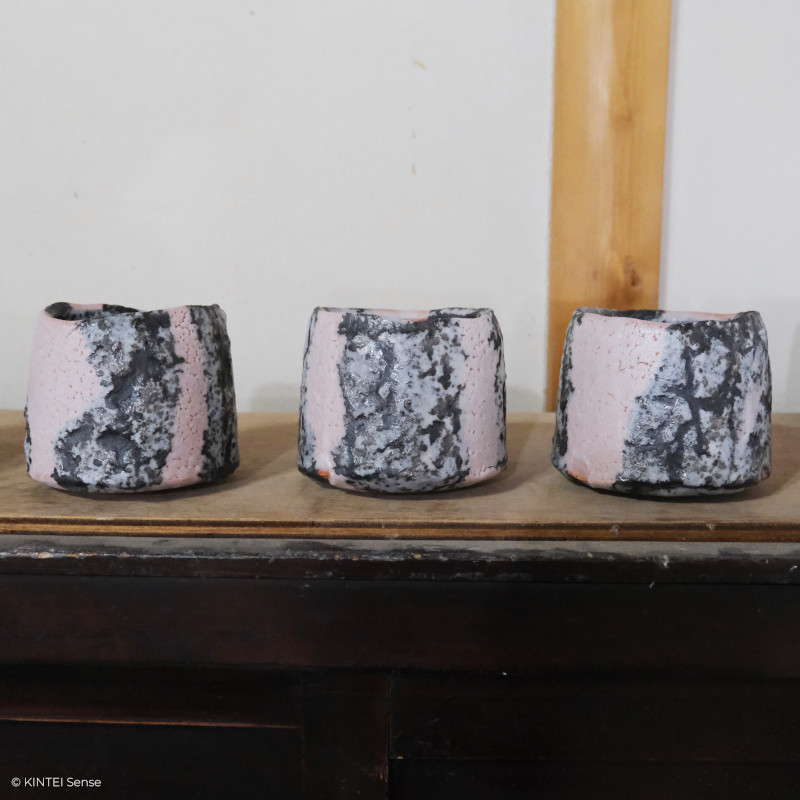
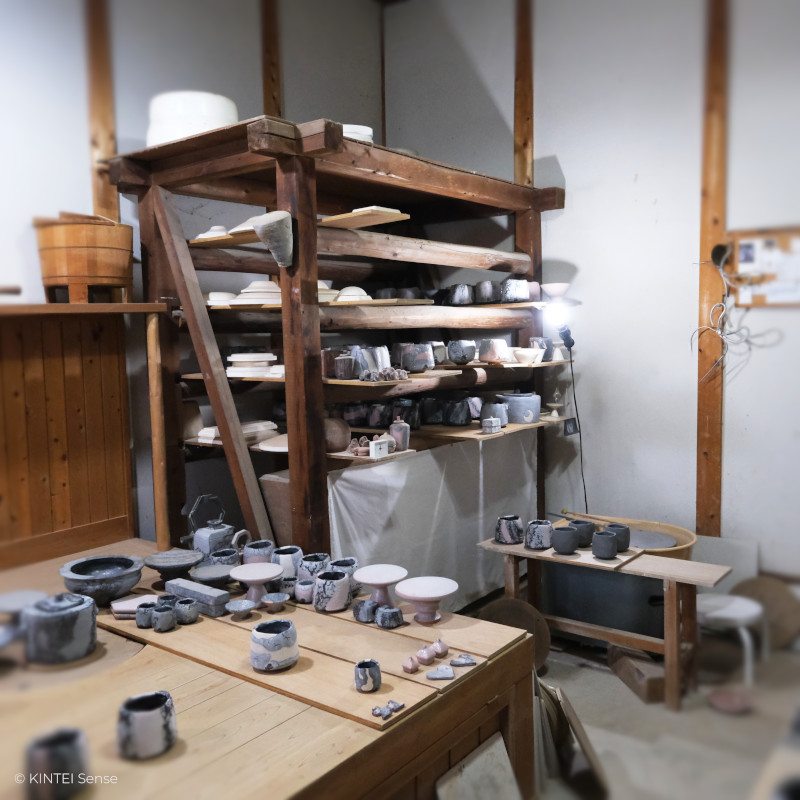
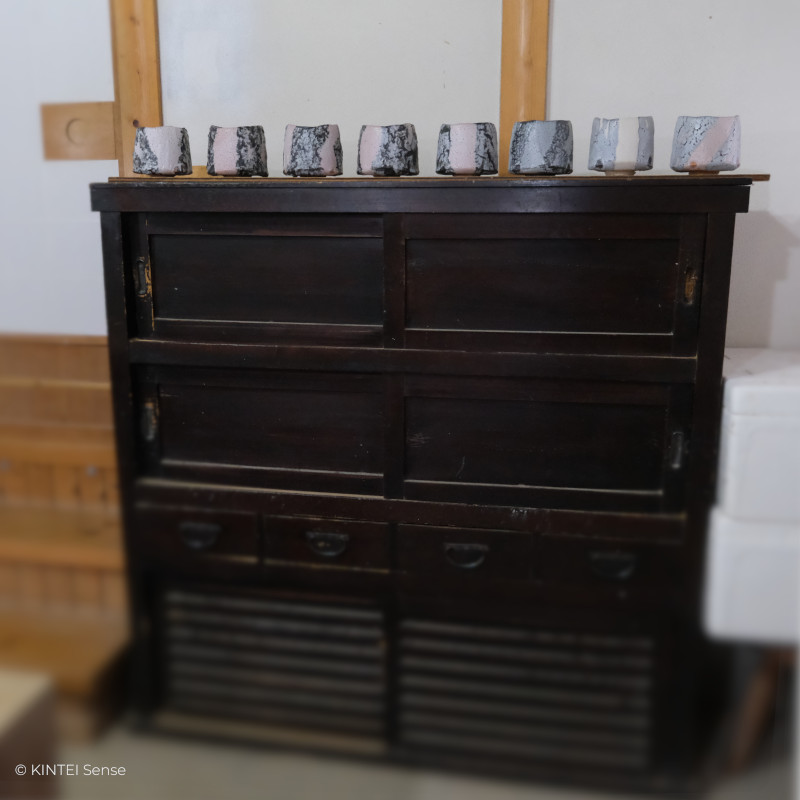
The distinctive style of Hayashi Yuka is defined by a reduced, very pure aesthetic language. Her matcha tea bowls (chawan) and sake bowls are intentionally understated: a broad base meets a narrower rim, allowing the geometrically suggestive glaze patterns in her contemporary interpretation to stand out with clarity. The subtle interplay of glazes in delicate shades of grey and pink lends the works a quiet, elegant aesthetic.
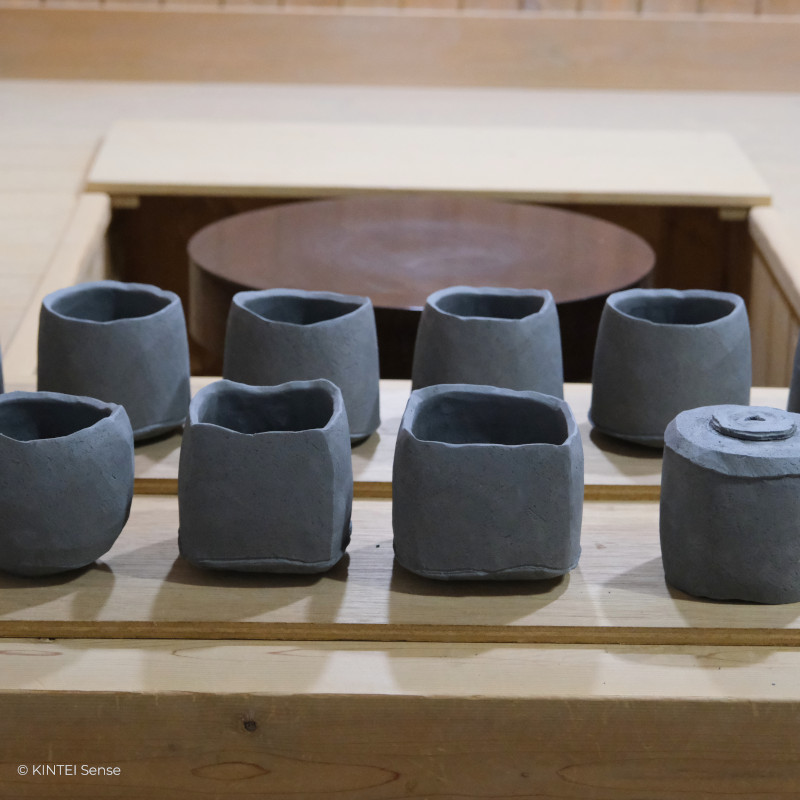
The pieces are made from local, light Mogusa clay, which produces the characteristic pinkish discolouration typical of Shino ceramics. For her monochrome, darker works, Hayashi Yuka uses a specially developed black clay. The Shino glaze is feldspar-based and, in keeping with local tradition, appears rich yet matte in finish.
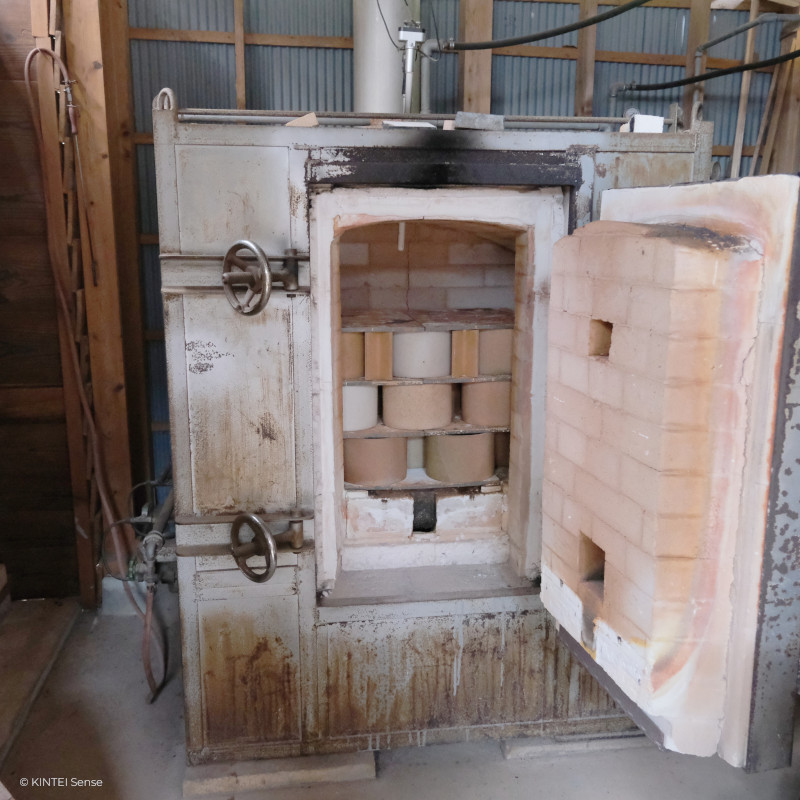
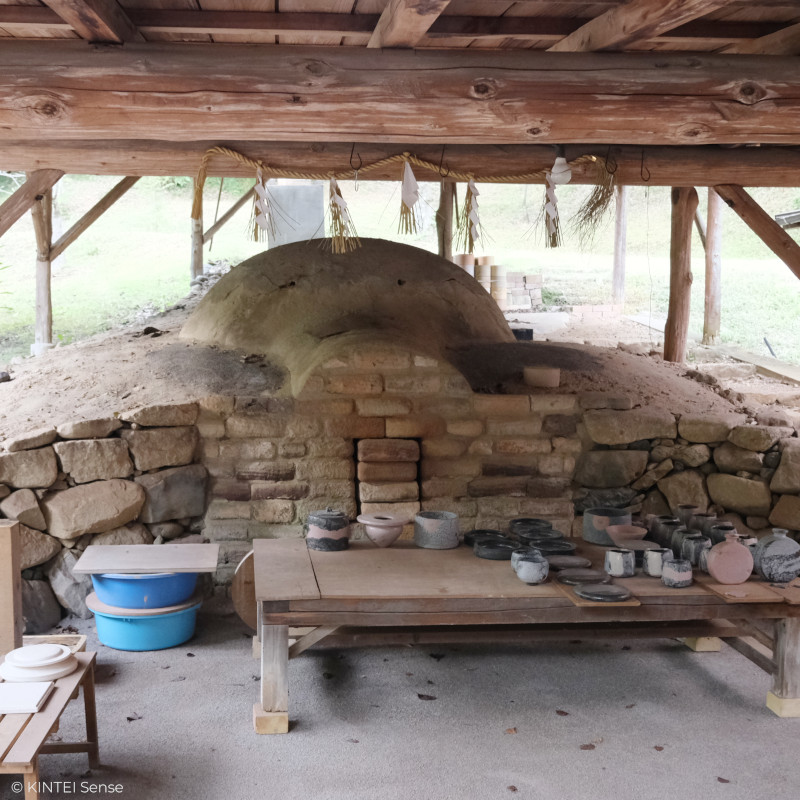
The bowls are fired with great precision in a gas kiln. It is deliberately not fully loaded, allowing for better circulation and thereby enhancing the distinctive effects of her Shino glaze.
Hayashi Yuka’s path to Shino ceramics
For her poetic yet refined Shino ceramics, Hayashi Yuka has received numerous awards, and her works are held in various museum collections. Born into a pottery family in Toki, she initially pursued an academic path in Tokyo before discovering her passion for ceramics. After an early focus on porcelain, she now devotes herself primarily to Shino ware. In doing so, she continually develops the traditional style, aiming to translate the long history of Shino into a contemporary form.
The result is vessels that are deeply rooted in tradition while remaining in tune with the present. Together with her husband, Hayashi Kyosuke—a recognised bearer of the intangible cultural heritage of Toki for his Ki-Seto ceramics—she continues the centuries-old savoir-faire of Mino pottery.
HAYASHI YUKA PROFILE
1971 born in Japan
1994 Graduated from Kansai University, Faculty of Economics
1998 Graduated from the Toki City Ceramics Test Center
Multiple awards at Oribe, tea ware, and Hagi ceramics competitions. Continuous exhibition activity in Japan (department stores, galleries, etc.) and abroad (UK).
Works included in long-term collections of Mino ceramics (e.g. a Shino chawan in the permanent collection of the Toshin Mino Ceramics Museum).
2026 Exhibition, Osaka Takashimaya
2026 Featured in Casa BRUTUS magazine