SAWA KATSUNORI
澤 克典
SAWA KATSUNORI
澤 克典
At a Glance
| Location | Shigaraki, Shiga Prefecture, Japan |
| Founded | 2005 |
| Style | Shigaraki, Oribe |
| Kiln | Anagama, Noborigama |
| Clay | Shigaraki |
| Glaze | Yakishime (wood firing), Oribe |
SAWA KATSUNORI : Shigaraki Tradition & Oribe Creativity
Without realising it at the time, one of the ceramic pieces that had impressed me most was one of Sawa Katsunori’s characteristic Shigaraki vessels. It was only later, when I began researching for the gallery, that our paths crossed. All the greater, then, was the pleasure of visiting his studio and discovering the breadth of his work.
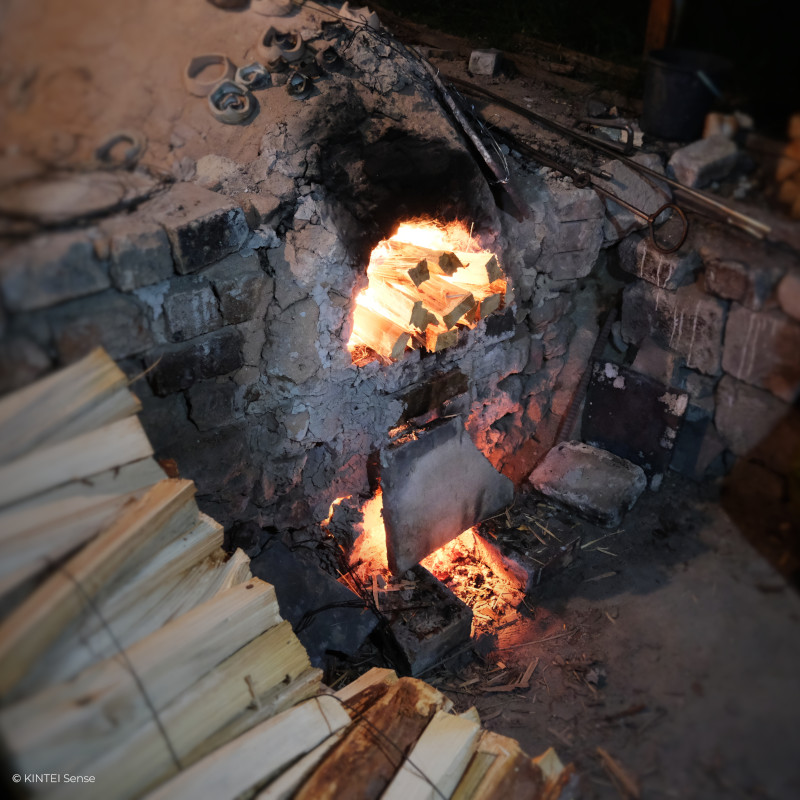
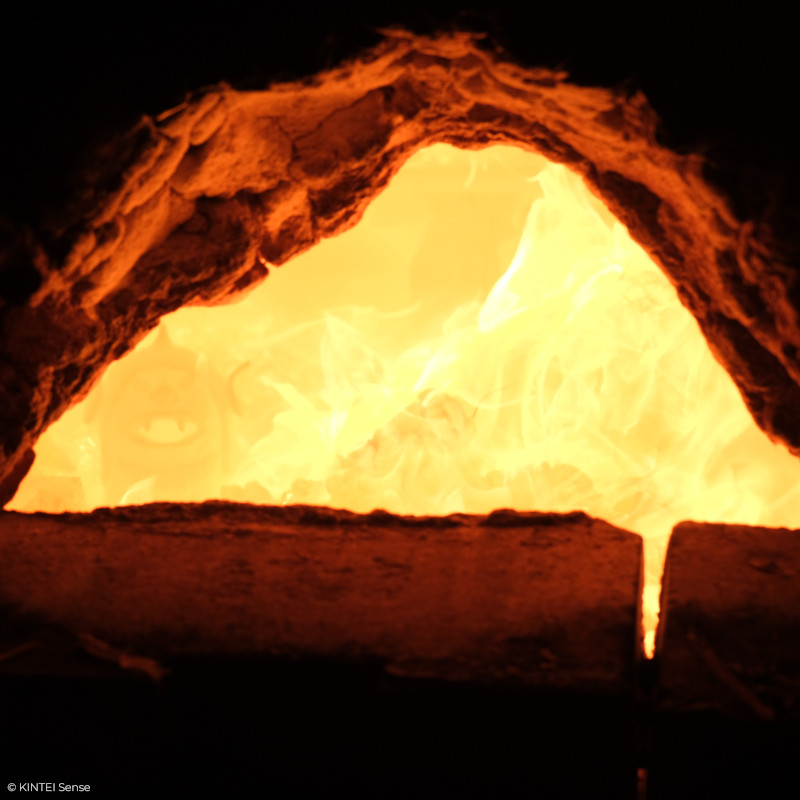
On the day of my visit, the small anagama kiln was being fired for an upcoming exhibition in Tokyo. Despite the intense heat, the atmosphere was marked by calm concentration and purposeful activity. Sawa-san was working alongside his friend Sugimoto Yu, a well-known Shigaraki potter, together with several assistants. The energy and immediacy of the wood firing process were truly remarkable.
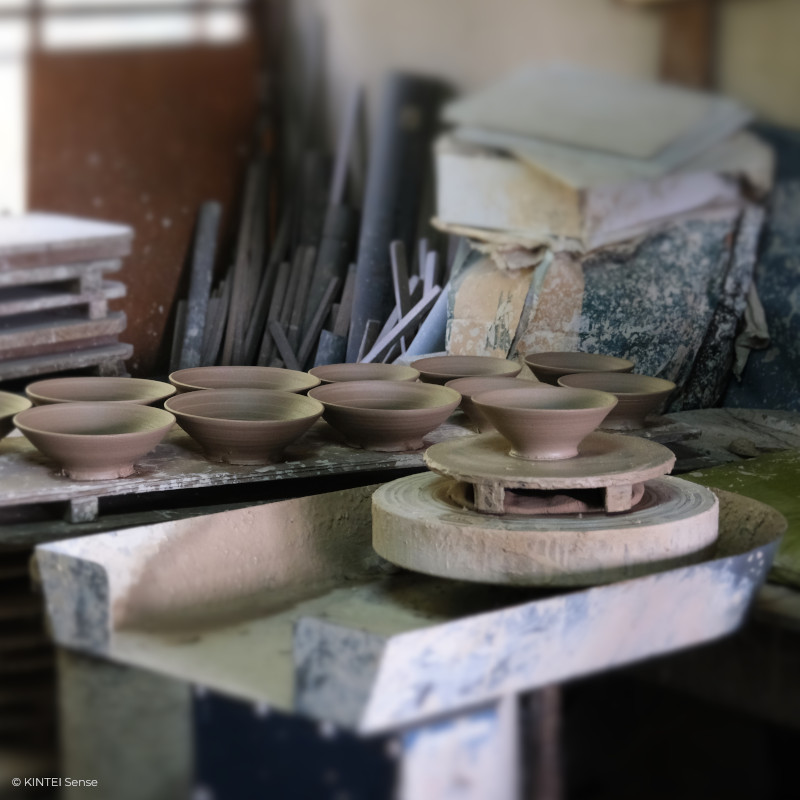
Artistic Background
Sawa Katsunori comes from a pottery family in Shigaraki. His grandfather and his father also worked as a ceramic artist in the same studio. His father’s works embodied the raw power of Shigaraki ceramics, while Katsunori’s own practice is more eclectic in character. On the one hand, he continues to work within the Shigaraki tradition, focusing in particular on the subtle colour variations created by the fire—effects that emerge through the interplay of oxidation and reduction within the kiln.
On the other hand, somewhat surprisingly, he has also devoted himself to a very different style: the Oribe tradition. Sawa Katsunori first encountered this aesthetic as a child while accompanying his father. Fascinated by it, he later trained for three years under Suzuki Goro, a master of Oribe, after completing his studies.
The Oribe style stands in clear contrast to Shigaraki, being strongly defined by glaze and painted decoration, and therefore far less dependent on the direct effects of fire. In his work, Sawa Katsunori thus expresses both the elemental force of fire, clay, and nature, while at the same time allowing his expressive sensibility free rein.
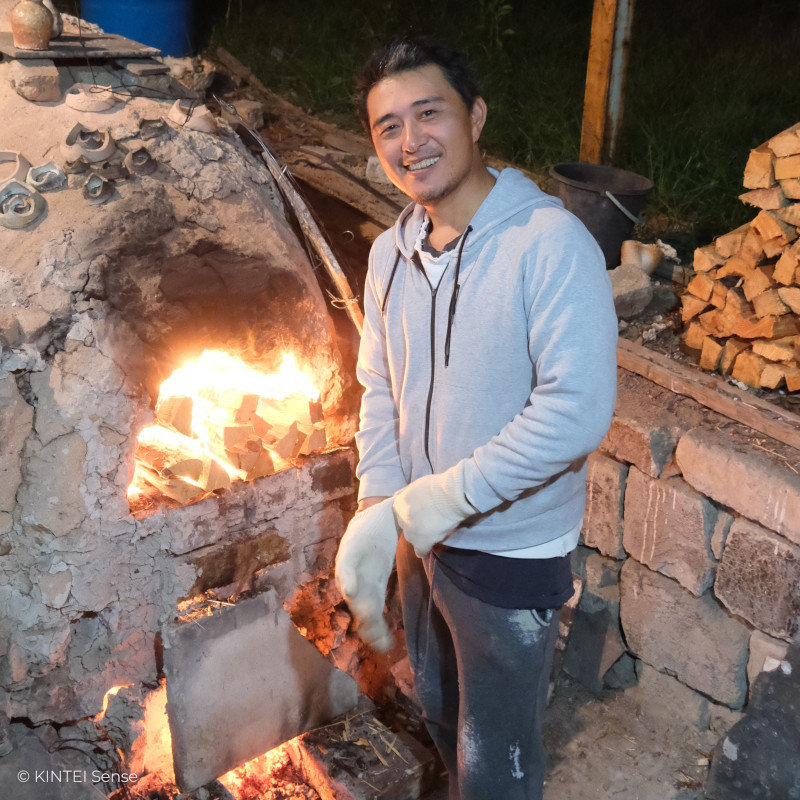
Shigaraki — power of clay and fire
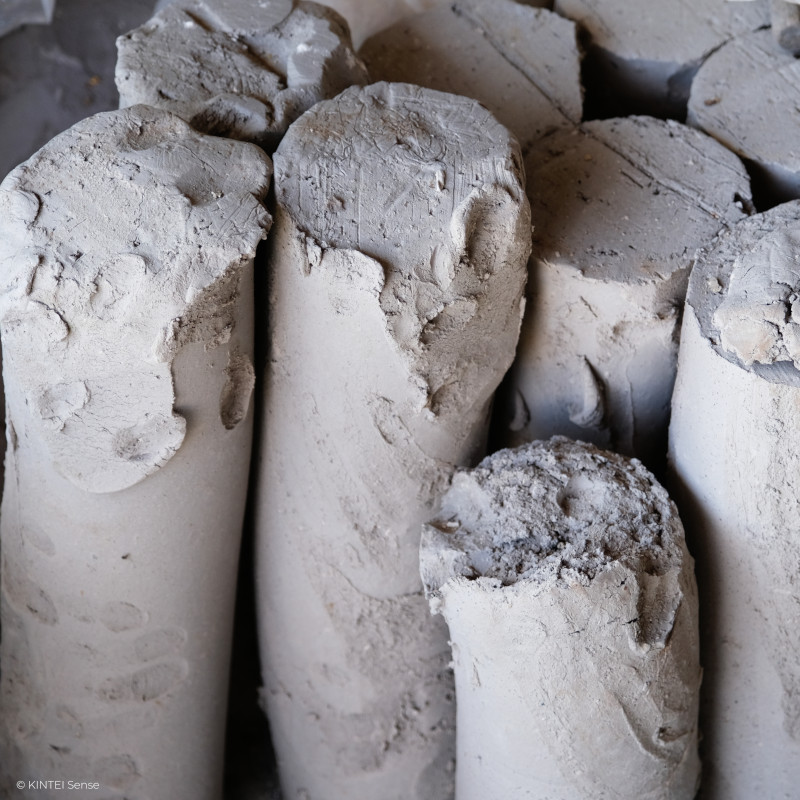
Shigaraki, a small town in Shiga Prefecture, is one of Japan’s Six Ancient Kilns (Nihon Rokkoyō). Its clay is highly plastic, contains feldspar inclusions, and is considered among the finest ceramic clays in Japan. Many artists from across the country source Shigaraki clay for their work, although the natural deposits are gradually running low.
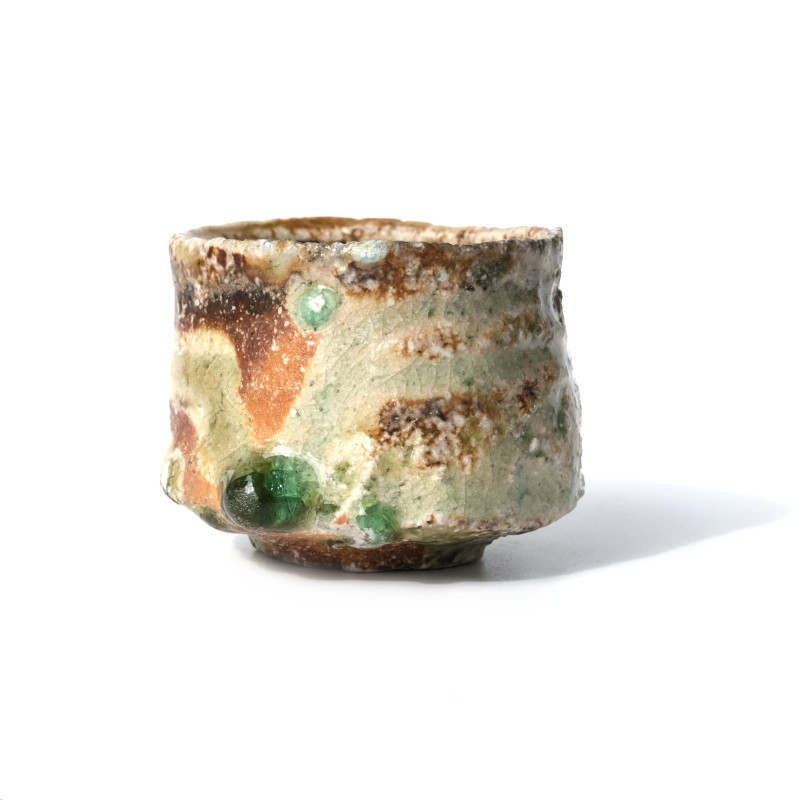
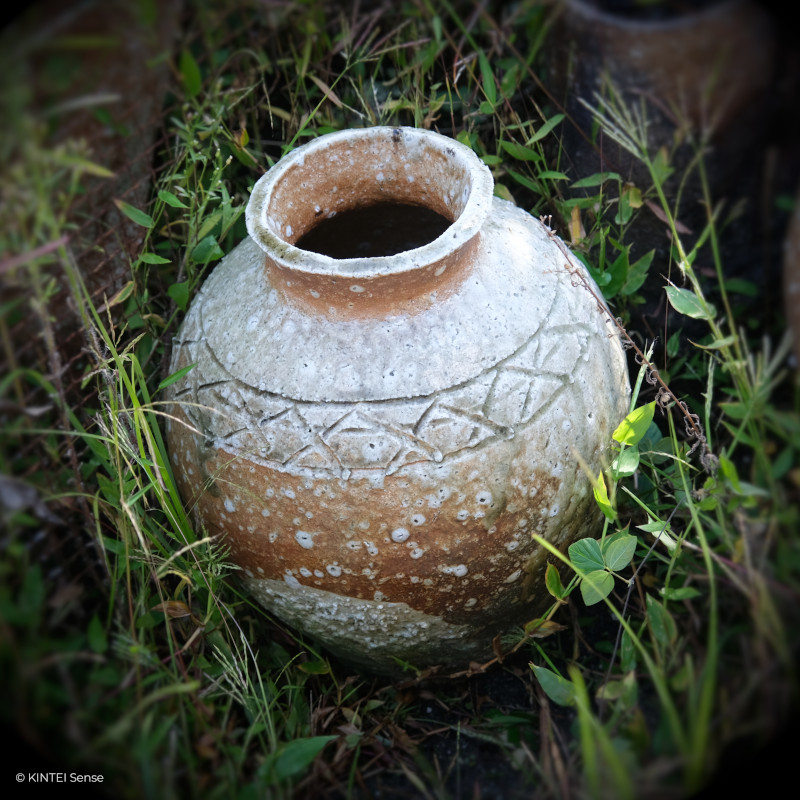
The clay is particularly well suited to yakishime, or high-fired unglazed ceramics. During wood firing, it shifts in colour from a pale white to a range of red tones. At the same time, natural wood ash settles on the surfaces, fusing with the clay or forming fine glass-like beads and translucent streaks. In this way, unique traces of the fire emerge, making each piece entirely distinctive.
Oribe — creative freedom
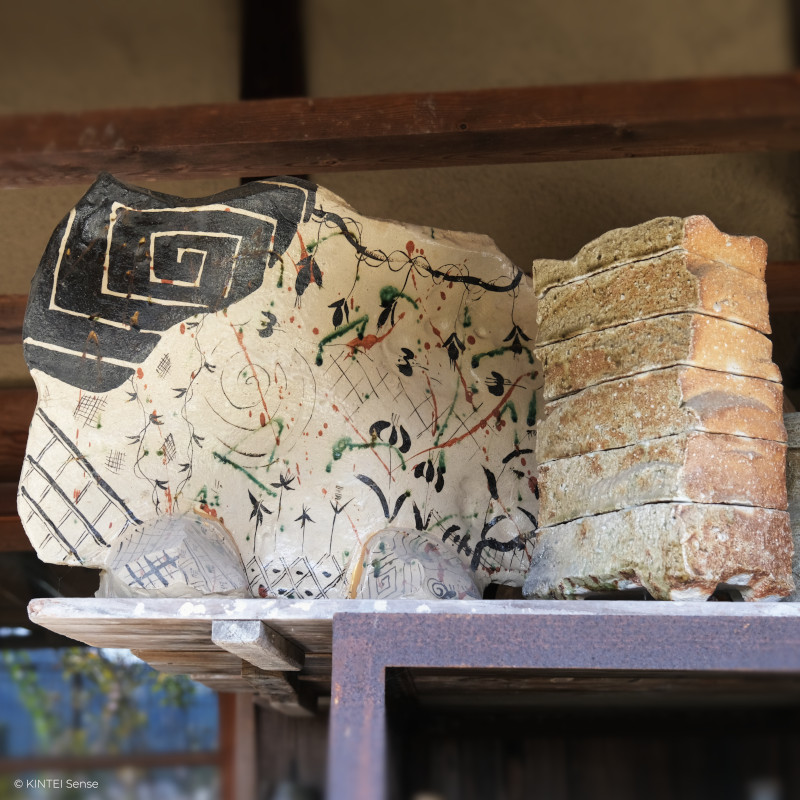
While Shigaraki is strongly shaped by the effects of fire, Oribe relies primarily on glaze and painted decoration. Sawa Katsunori creatively combines these two traditions, allowing his work to express both the energy of fire and the freedom of painted expression.
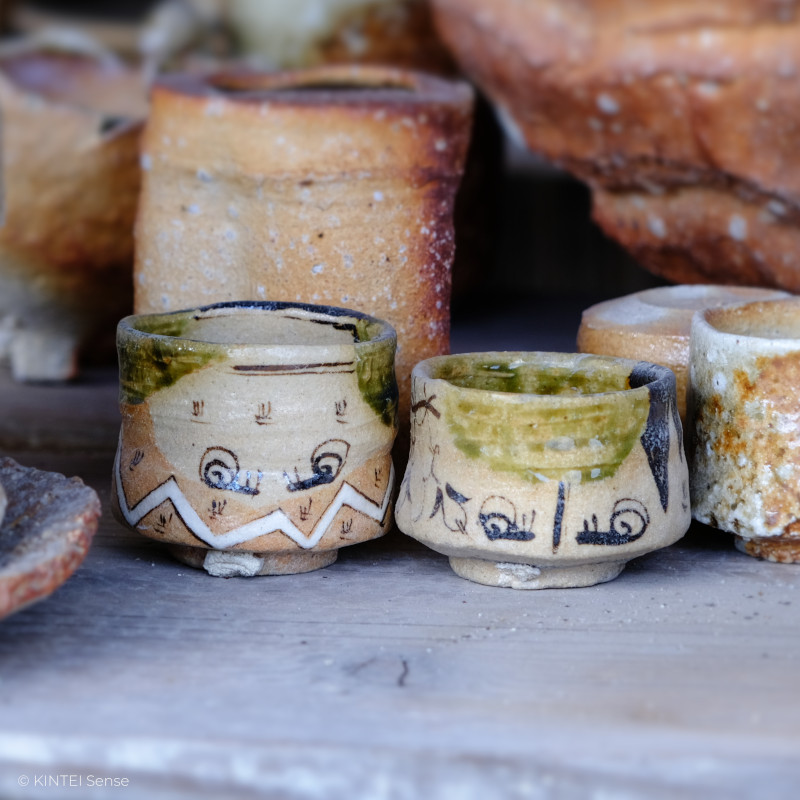
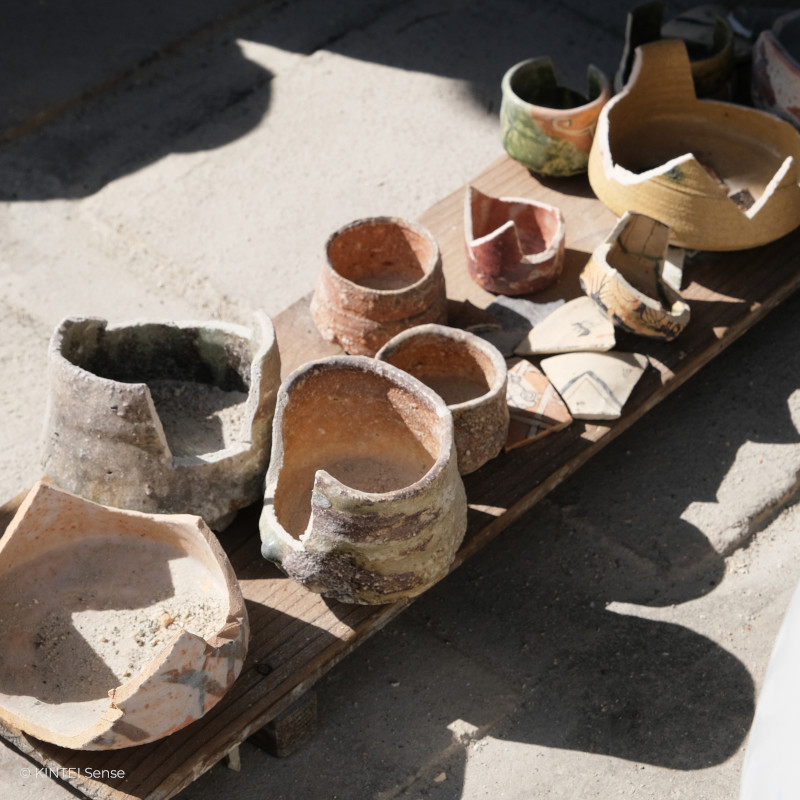
Bridging two styles: Yobitsugi, or the art of joining together
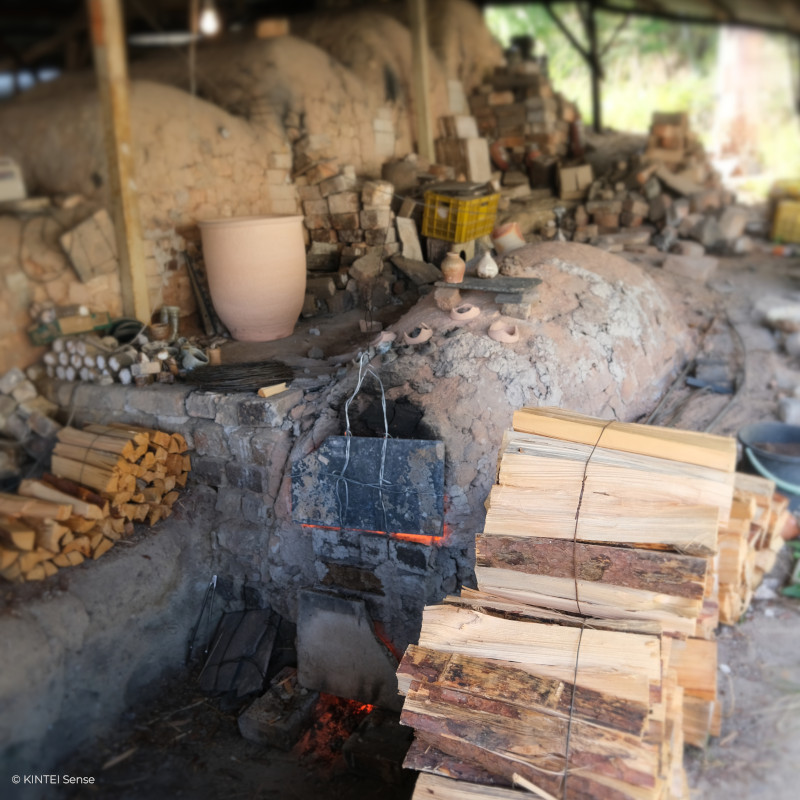
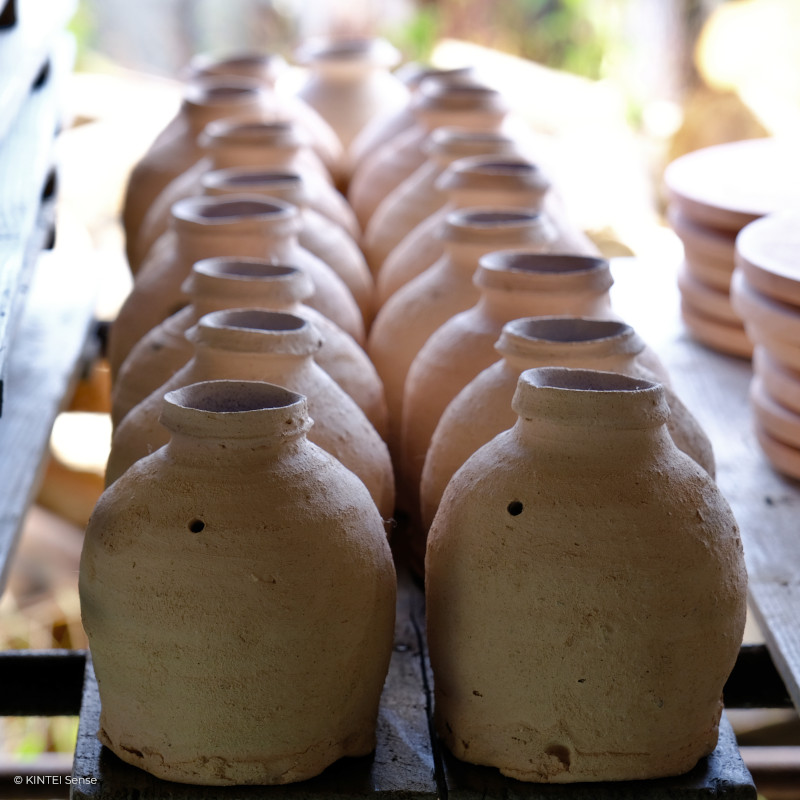
Yakishime and natural plays of colour
During our visit, we focused on Sawa Katsunori’s yakishime works, which are fired in a small anagama kiln that is operated almost monthly, except during the hot summer months of July and August. A firing lasts several days, during which potters and assistants continuously monitor the fire and keep feeding it with wood. A larger noborigama kiln is also available, but is now used only rarely.
Many forms recall classical Shigaraki tea ceramics, including the so-called pail shape. Fired without glaze, the pieces develop a remarkable range of colours—from yellow through blue and grey to black (yōhen)—produced by variations in airflow, temperature shifts, or the hikidashi technique, in which a piece is rapidly removed from the kiln and cooled.
Particularly fascinating are the natural ash deposits, which collect in grooves or fuse into glassy “eyes” on the surface, making the trace of the fire visible. Sawa Katsunori consciously allows this interplay of fire, clay, and nature to unfold, while his father emphasised the raw force of fire even more strongly in his own work. Together, they embody two contrasting yet complementary aspects of the Shigaraki tradition—one forceful, the other more contemplative and poetic.
SAWA KATSUNORI PROFILE
1980 Born in Shigaraki, Shiga Prefecture, Japan, into a pottery family
2002 Graduated from the Shigaraki Ceramic Research Institute; began training under Suzuki Goro, a master of Oribe ceramics
2005 Returned to Shigaraki and began independent practice
Regular solo and group exhibitions in Japan since the 2000s, including Shigaraki, Kyoto, and Tokyo, as well as international presentations in San Francisco and Europe.
2025 HULS Gallery, Singapore; Tokyo
2026 Group exhibition, The Stratford Gallery (UK)