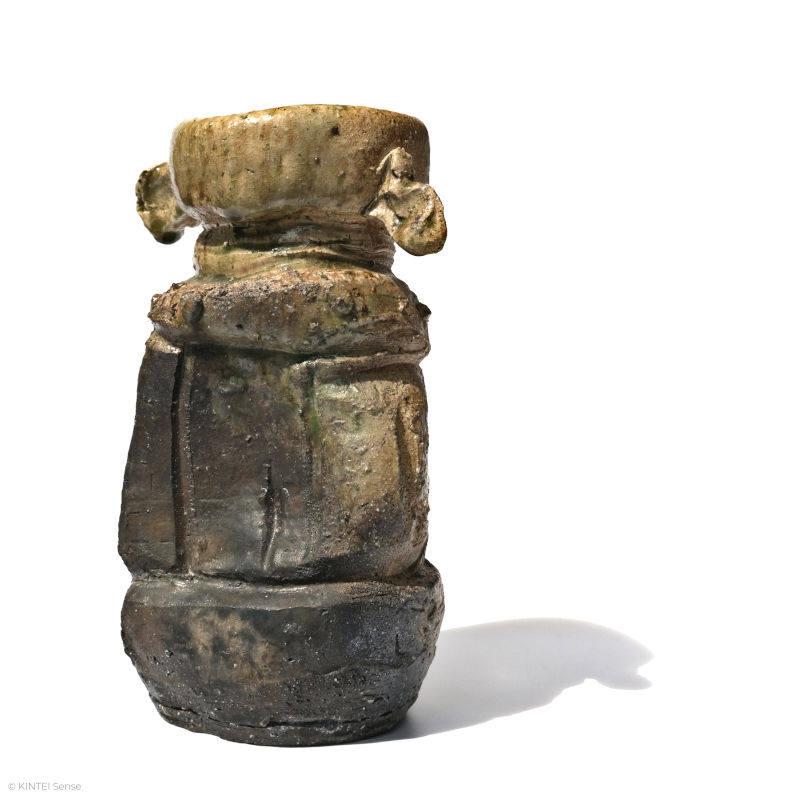
MITA GAMA
三田 窯
TANIMOTO TAKASHI
谷本 貴
At a Glance
| Location | Iga, Mie Prefecture, Japan |
| Founded | Active at Mita Gama since 2005 |
| Style | Iga |
| Kiln | Anagama, various other kilns |
| Clay | Iga |
| Glaze | Yakishime (wood firing) |
TANIMOTO TAKASHI: ARTFUL DECADENCE
The drive from Shigaraki to Iga takes around 20 minutes, winding through a series of valleys. Although they lie in different prefectures, the two regions are closely connected in many ways. Iga—also known as a former stronghold of the ninja—is, like Shigaraki, one of Japan’s Six Ancient Kilns.
Due to their proximity to Lake Biwa, Japan’s largest freshwater lake, both regions benefit from exceptionally high-quality clay derived from its sediments. Rich in feldspar and highly plastic, it is ideally suited to unglazed wood-fired ceramics—a characteristic shared by both Iga and Shigaraki clay.
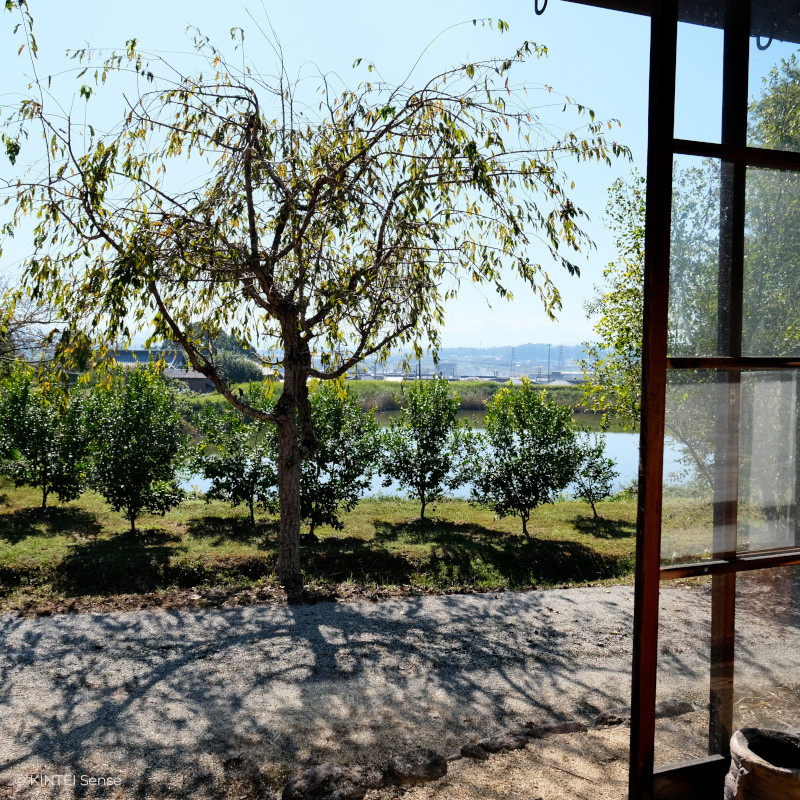
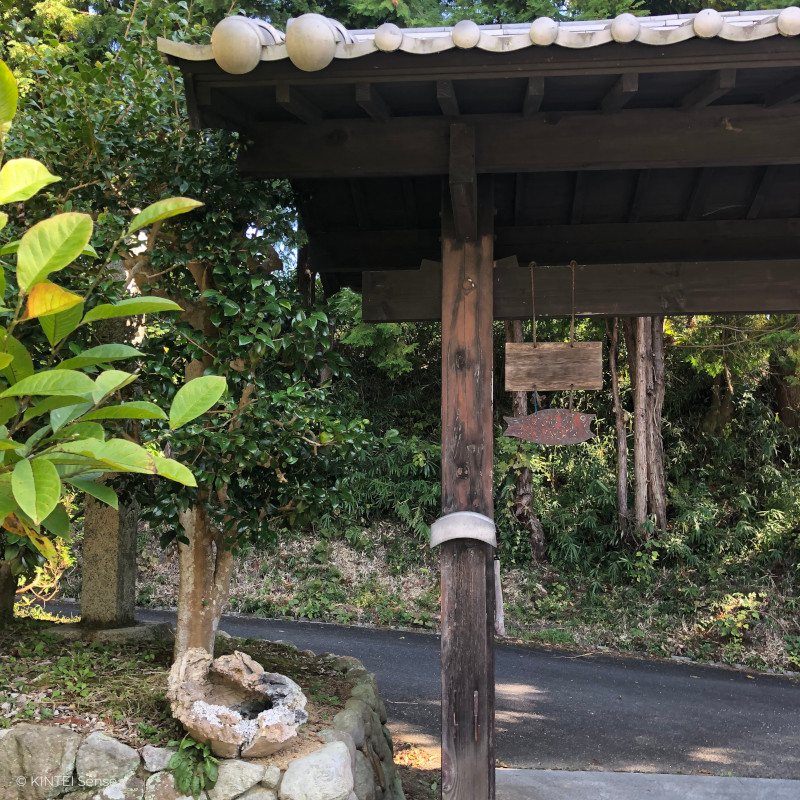
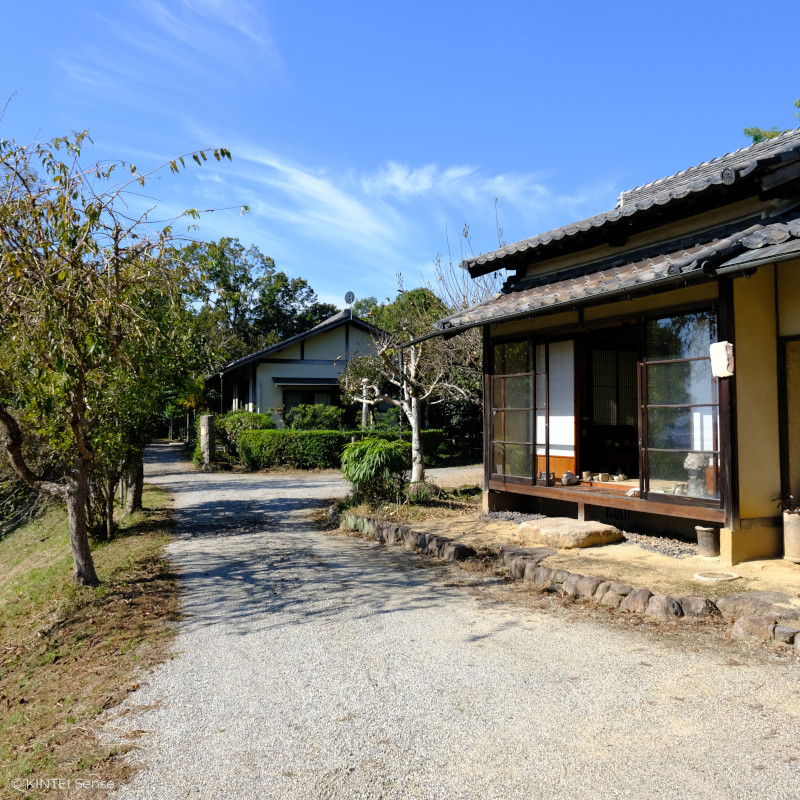
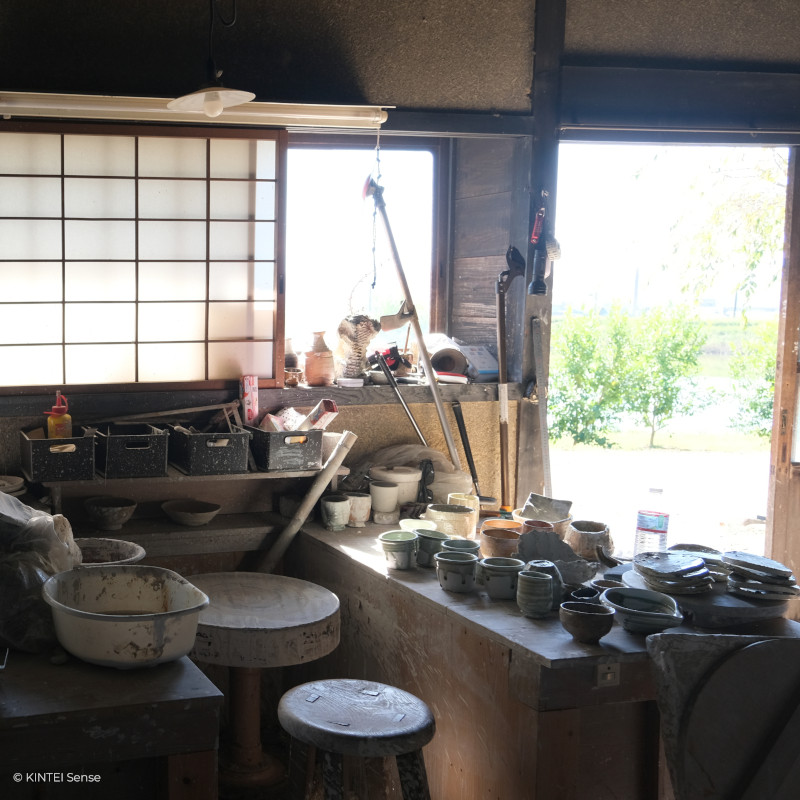
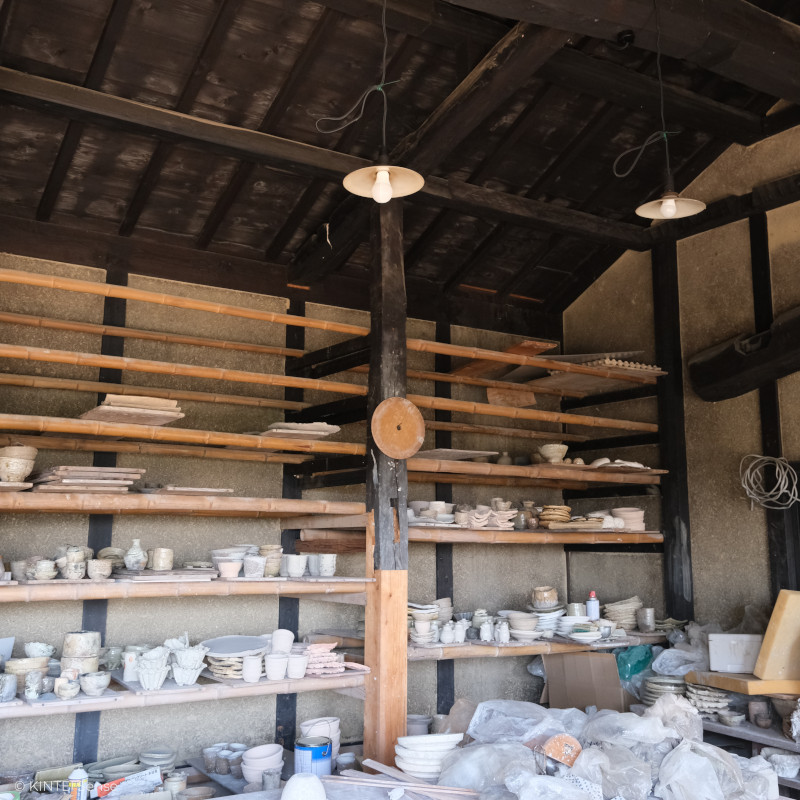
Mita Gama, the Tanimoto family studio where Takashi has been active since 2005, is located just outside the centre of Iga on a small hill overlooking the city. The setting feels almost otherworldly: traditional Japanese buildings, a small pond, and lush, abundant nature. It is a place of quiet intensity, which gained even more presence and clarity under the bright weather on the day of the visit.
Iga ware and tea culture
Tanimoto Takashi comes from a pottery family dedicated to preserving the tradition of Iga ware, closely tied to Japanese tea culture. Iga ceramics reached their peak in the late 16th century during the Momoyama period, when influential tea masters re-evaluated rustic, natural forms and elevated their appreciation of a strong Wabi-sabi aesthetic.
Iga thus developed into a centre of Japanese tea ceramics. In particular, hanaire (flower vessels) used for floral arrangements, as well as tea bowls, are among the characteristic forms of this ceramic tradition.
MITA GAMA: Generations in Dialogue
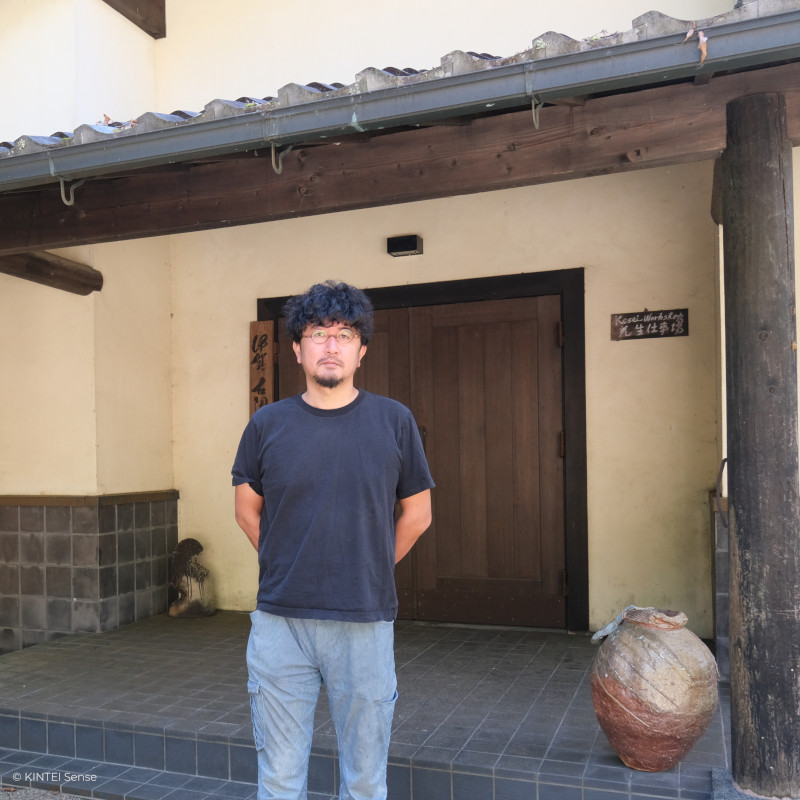
Tanimoto Takashi’s work stands within a clear, multi-generational lineage. His grandfather, Tanimoto Mitsuo, played a key role in the revival of Iga ware. His father, Tanimoto Kei, further developed this tradition into a more expressive, sculptural visual language—drawing inspiration from bronze bells, accidental forms, and deliberate colouration. His mother is also active as a ceramic artist.
Tanimoto Takashi has been working at the family kiln Mita Gama since 2005, bringing together both approaches: classical tea and sake wares as well as more contemporary, free-form works. In doing so, he consistently pushes materials, firing processes, and form to their limits.
Wabi-sabi and the visual language of imperfection
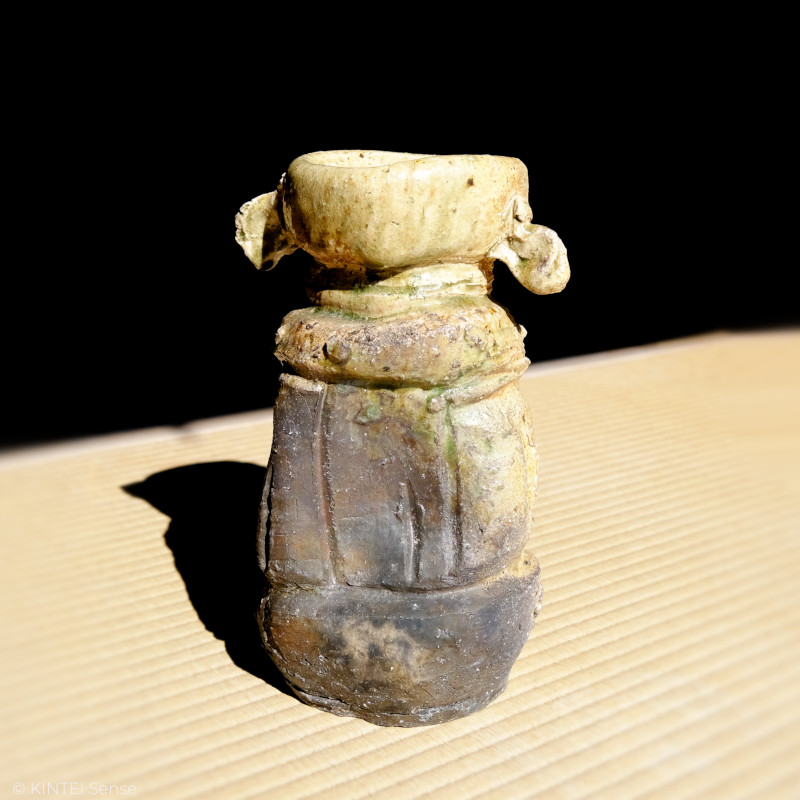
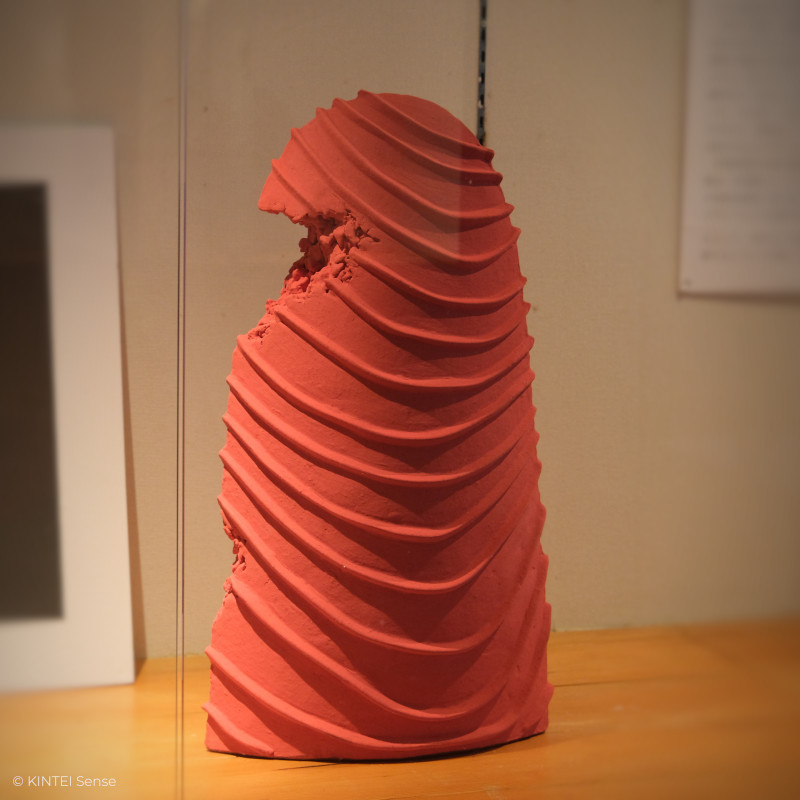
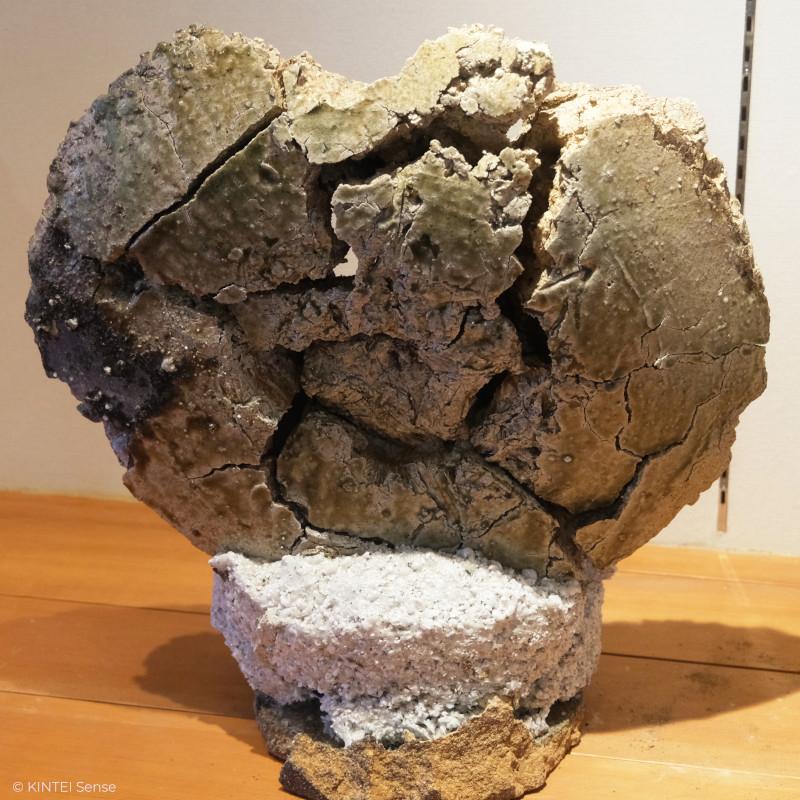
His works appear raw and powerful, at times almost brutal in their naturalness. The forms seem compressed, distorted, sometimes even destructive or decadent, reflecting the unrefined energy and distinctive character of the local Iga clay.
At the same time, this process of distortion and compression gives rise to an unexpected sense of balance. The pieces come together as harmonious wholes, deeply rooted in the asymmetrical aesthetics of Iga ware, which stands as a quintessential expression of Wabi-sabi philosophy.
His tea bowls are often formed entirely by hand, using pinching (tebineri) or coil-building techniques. For other vessels, he works on a kick wheel, a foot-powered potter’s wheel. These methods give his ceramic works a distinctive and unmistakable presence.
Firing processes and wood-fired ceramics
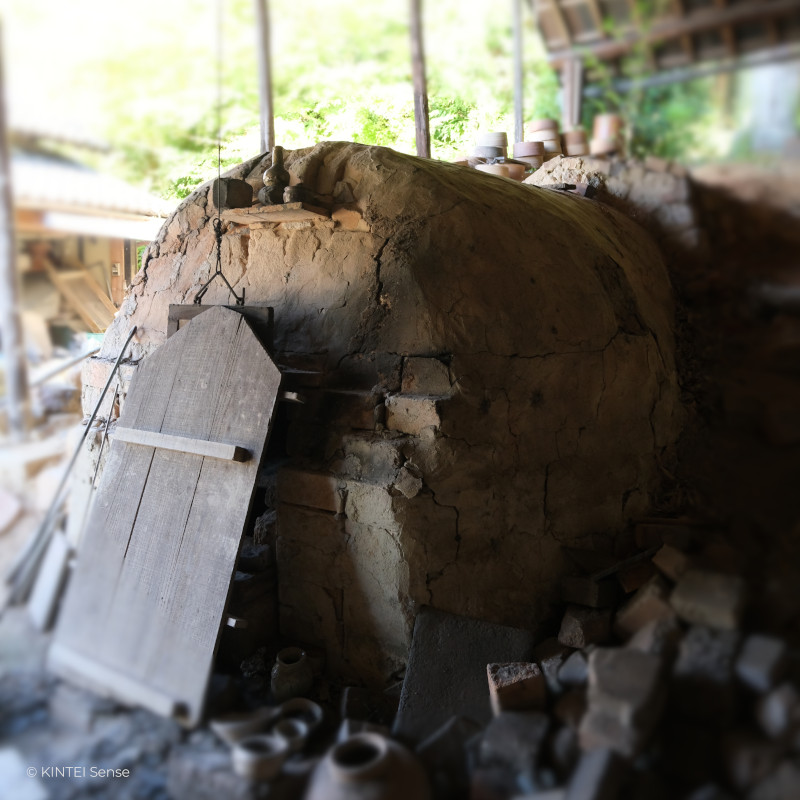
For his work, Tanimoto Takashi uses local Iga clay and relies on complex, often multi-stage firing processes. He frequently works with his grandfather’s traditional anagama kiln, fired with red pine wood, reaching temperatures of approximately 1200–1300°C.
This results in characteristic wood-fired yōhen effects, such as koge (carbonisation) and bidoro (glass-like bead formation). Some pieces are fired multiple times and placed in different positions within the kiln to further intensify these effects.
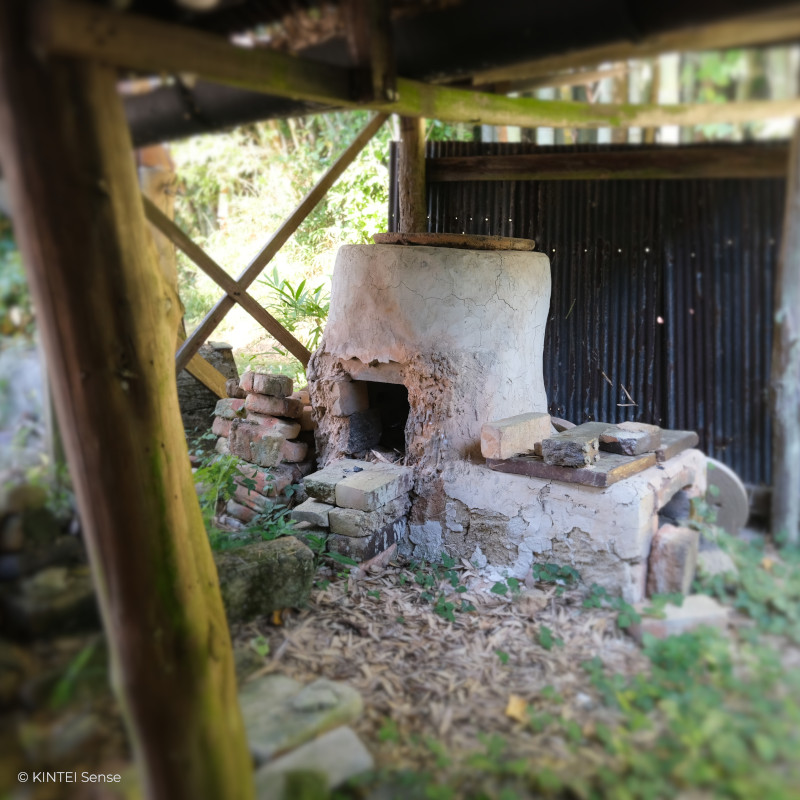
In addition to the anagama kiln, he also works with electric, gas, and oil-fired kilns, as well as an Itte-koi kiln and a raku kiln. This range of firing techniques significantly broadens his ceramic practice.
Tanimoto Takashi’s works embody the spirit of wabi-sabi and express the distinctive character of Iga ware: raw, expressive, distorted, and deliberately asymmetrical.
The result is objects that feel both archaic and contemporary—shaped by a dialogue between material, fire, and the artist’s hand.
TANIMOTO TAKASHIS PROFILE
1978 – Born in Iga, Mie Prefecture
1997 – Studied Aesthetics and Art Theory in the Faculty of Humanities at Doshisha University
2002 – Studied at the Kyoto Prefectural Advanced Technical School for Ceramics
2003 – Apprenticeship under Mori Masashi
2004 – Studied in Italy on a scholarship from the Okada Cultural Foundation
2005 – Returned to Japan and joined the Mita Gama workshop
2006 – First solo exhibition; since then, solo exhibitions have been held at various venues in Japan and abroad, including galleries, department stores, and international exhibitions
Recent exhibitions
2025 Stratford Gallery (UK), Tobetobekusa Gallery (Japan), Daimaru Department Store (Japan), etc.