Sake Ceramics
The Art of Experiencing Sake
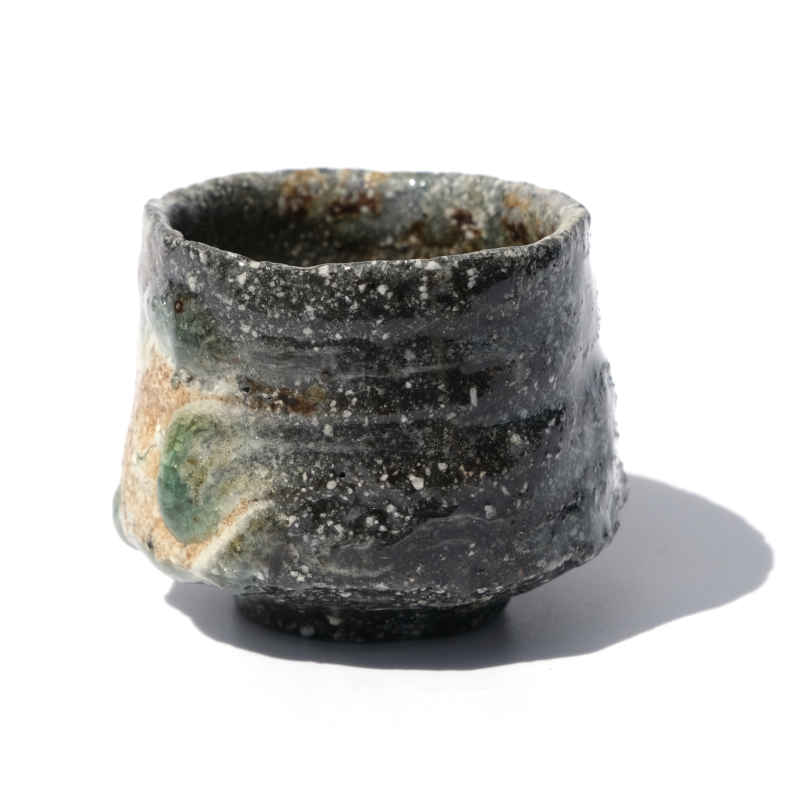
A sake cup is more than simply a vessel for the sake it holds. It becomes part of the encounter with it. Its weight in the hand, the feel of its surface, the shape against the lips—and finally the taste—come together in an experience where cup and sake become almost inseparable.
Wine has long been appreciated through its vessels. There is a glass for Champagne, another for Burgundy, another for Bordeaux; there are decanters, carafes and an almost endless variety of forms designed to reveal different qualities of the wine.
Sake is no different.
In Japan, the vessels used for sake are collectively known as shuki (酒器), and they form a world of their own. Their diversity is remarkable – from guinomi (ぐい吞み) sake cups to pouring vessels, with an almost limitless variety of shapes, materials and decorative approaches.
Sake vessels can be made from glass, wood, metal or lacquer. This article, however, focuses entirely on ceramics—the interplay of clay, glaze and fire. Within this tradition, shuki are far more than functional objects. Small sake cups in particular bring together craftsmanship and artistic expression in an especially direct and tangible way.
This article offers an introduction to this fascinating world—and explores how the right ceramic vessel can transform the simple act of drinking sake into a more profound and memorable experience.
- Sake, Tea and the Culture of the Vessel
TERRIOR AND CULTURAL ROOTS
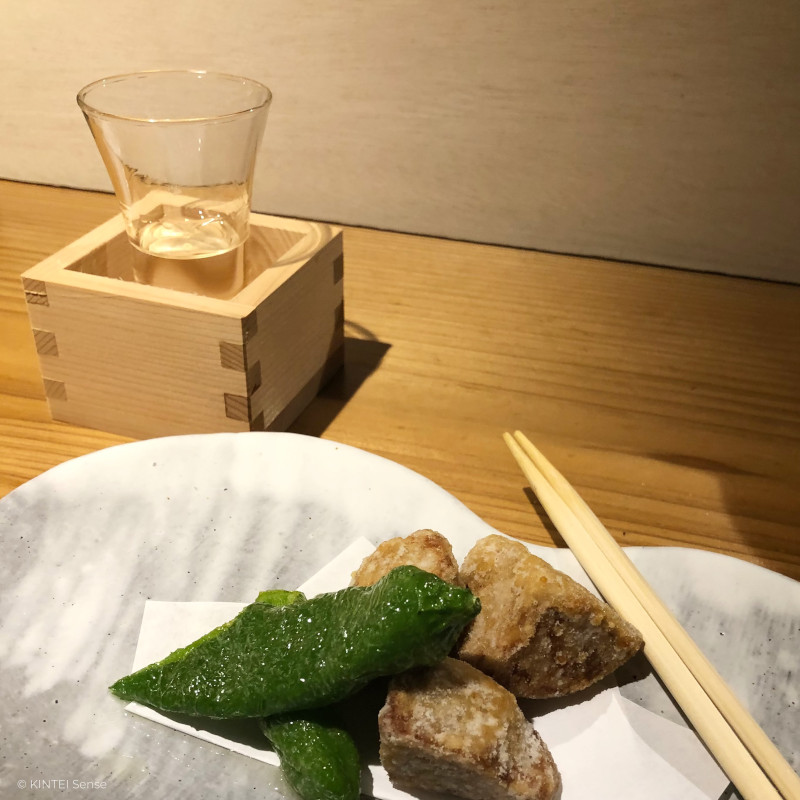
Sake has long been deeply integrated into Japanese cuisine, hospitality and ceremony. What is commonly called sake outside Japan is more precisely called Nihonshu
Its diversity comes from many sources: soil, climate, water, rice varieties, brewing methods and the traditions of individual breweries, reflecting the notion of terroir – just like wine. The result is an extraordinary diversity of styles and flavours.
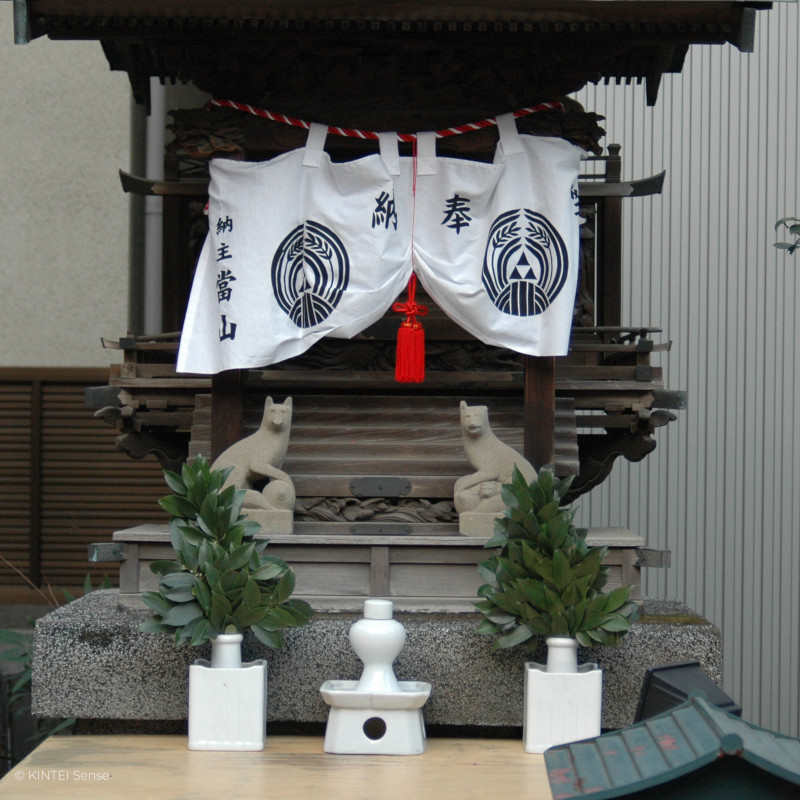
There is also an important cultural dimension to sake. It is not simply a drink, but has traditionally played a role in religious rituals, celebrations and ceremonies. It appears in offerings to the kami
Even the making of ceramics is accompanied by sake. Before an important firing, potters may make a small offering of sake to the deities of the kiln, asking for a successful firing. In this way, sake and ceramics are connected not only through the act of drinking, but also through ritual and tradition.
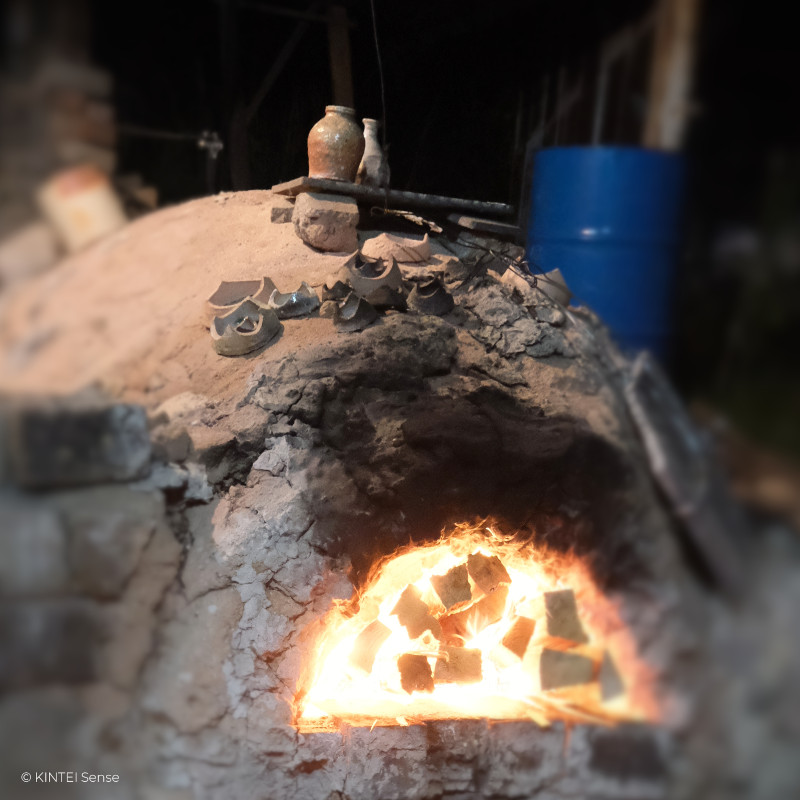
THE INFLUENCE OF THE TEA CEREMONY ON SAKE CERAMICS
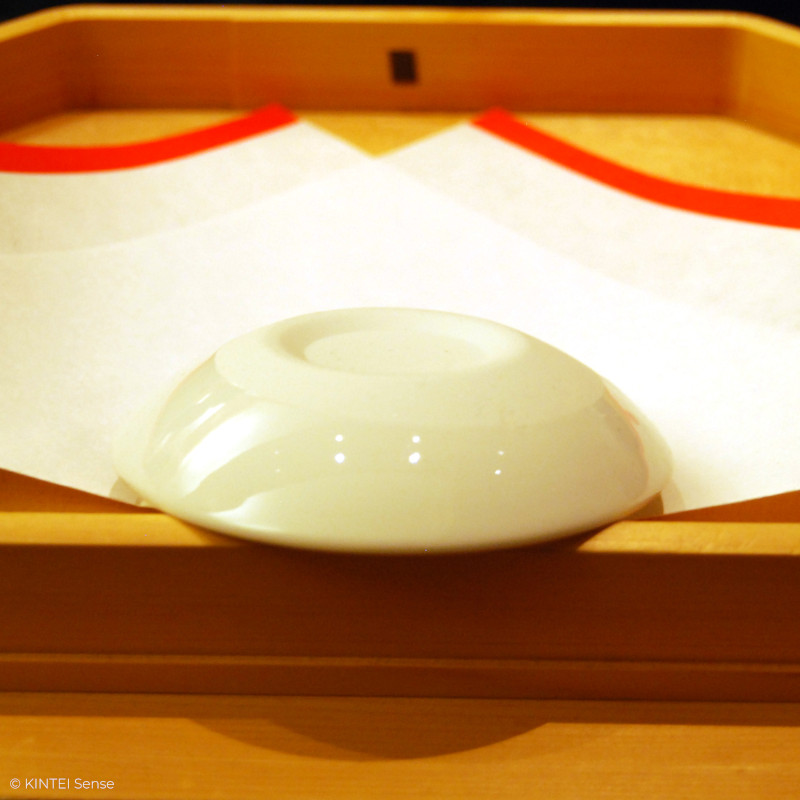
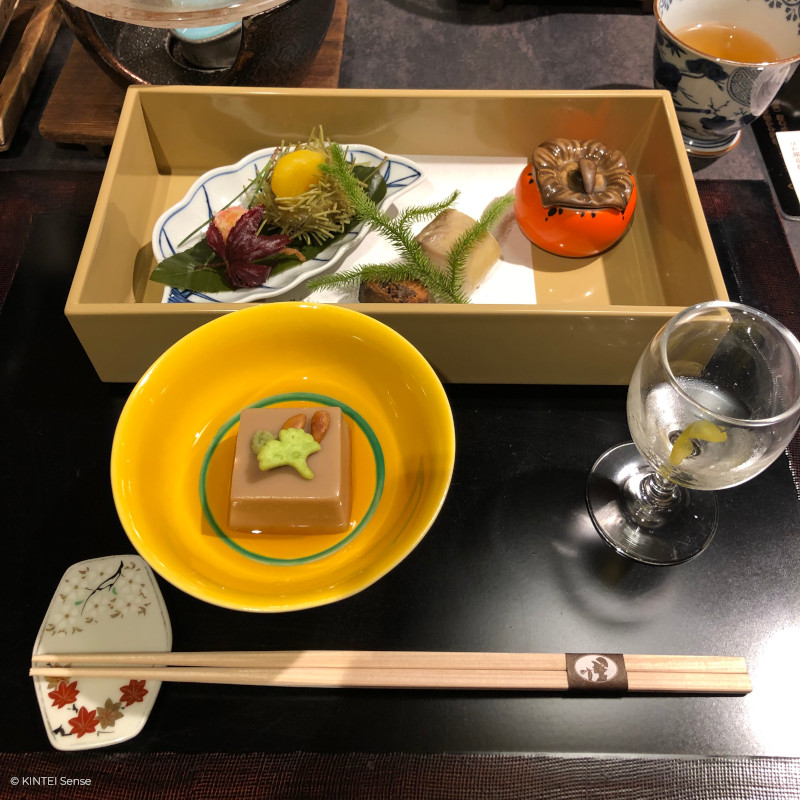
The tea ceremony, Chanoyu (茶の湯), has profoundly shaped Japanese culture since the 15th century. Yet its significance extends far beyond tea itself. Sake, particularly in the context of the Kaiseki meal, has long held an important place. It is therefore no coincidence that sake vessels developed along a path closely intertwined with that of tea ceramics, especially during the formative Momoyama period.
They were valued not only for technical perfection or visual refinement, but equally for their form, clay, glaze, irregularities, weight and tactile qualities. Vessels were chosen according to the season, occasion and setting, becoming part of the carefully composed experience of the tea ceremony. In this context, a tea or sake cup was transformed from a simple drinking vessel into an object worthy of particular attention.
Even today, choosing the right sake cup is a conscious part of the sake experience. It becomes part of the moment, drawing attention not only to the sake itself but also engaging with it through touch and sensation.
-
One Sake, Many Shapes
One Sake, Many Shapes
How Form and Proportion Shape the Experience of Sake
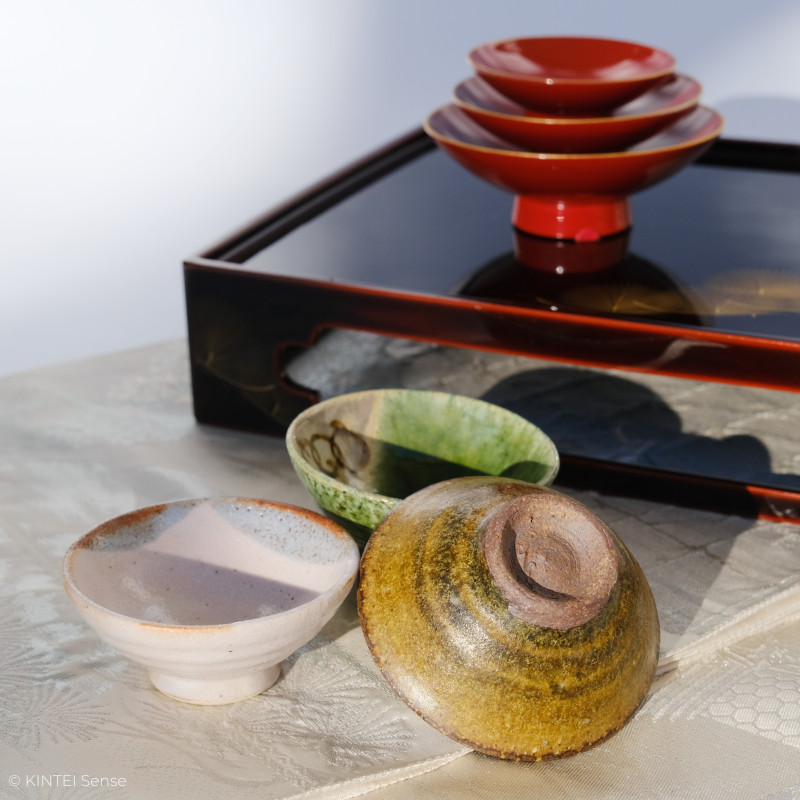
There is no single “right” sake cup. The many forms of shuki include both vessels for serving sake and drinking cups, known as Shuhai (酒盃・酒杯). Their varying proportions influence how sake is presented, drunk and perceived.
A wide, open cup allows the aromas to disperse more freely, making them feel less concentrated than in a narrower form. Taller, narrower shapes are particularly well suited to warm sake, as they retain heat for longer and keep the aroma closer to the rim. Wide, open cups, by contrast, give chilled sake more room to reveal its surface and aromas.
The rim also plays an important role. Its thickness and angle determine how the sake reaches the mouth—whether it lands more toward the front of the tongue or further back on the palate—and can therefore influence how the same sake is experienced. A fine, gently tapered rim can create a more precise, delicate impression, while a thicker or differently angled rim guides the sake differently across the palate, resulting in a softer or fuller experience.
And then there is the most immediate aspect of all: how does it feel in the hand?
These are tendencies rather than fixed rules. They nevertheless point to an important principle of Japanese sake culture: the choice of vessel is closely connected to the sake itself, its temperature, the occasion and even the season.
Pouring Vessels
Tokkuri (徳利) are traditional sake bottles used for serving, and sometimes also for warming sake—often in a hot water bath before the sake is poured into smaller cups. There are countless variations of Tokkuri, such as the elegant Tsuru-bin, with its long, slender neck; the slightly fuller Rakyou; or the Katatsuki, distinguished by its pronounced shoulders.
Then there is the katakuchi (片口), a pouring vessel with a spout. Its open form makes it particularly elegant at the table, turning the act of pouring into part of the experience. As it has a larger opening, it is more suitable for room temperature or cold sakes.
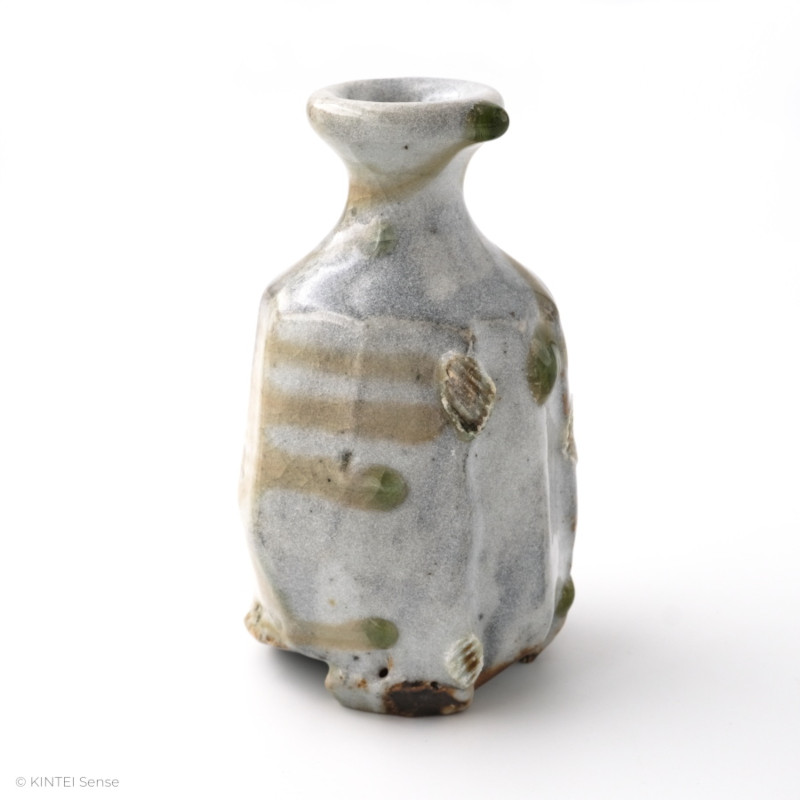
Tokkuri - Shino - Baba Takashi, Bizen
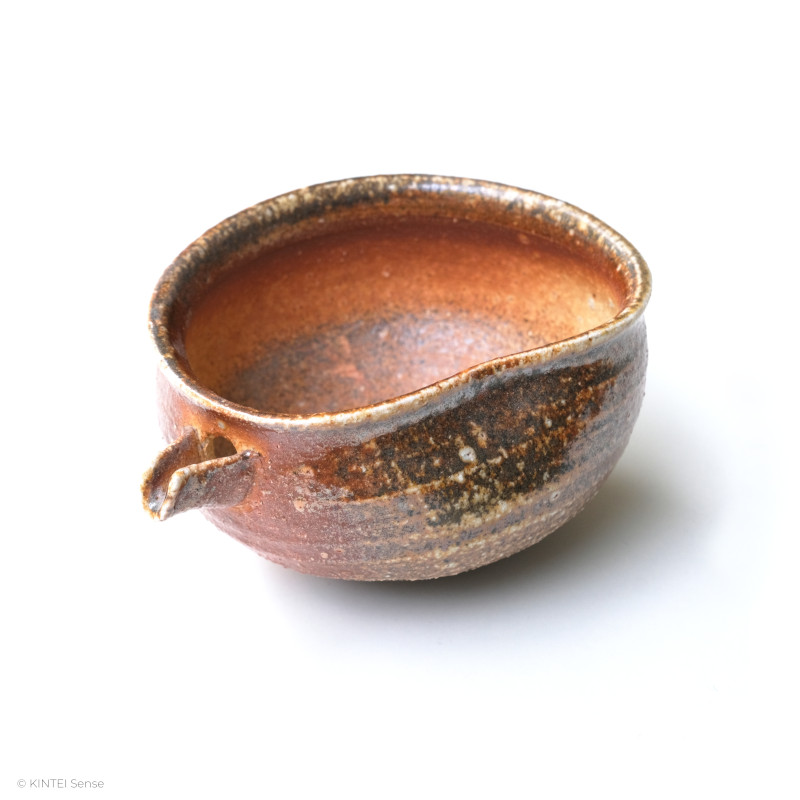
Katakuchi - Bizen
Sake Cup (Shuhai)
Sake cups come in a wide variety of shapes and forms.
Ochoko (お猪口) originally referred to a small, versatile vessel that was also used for drinking sake. Smaller than the widely used Guinomi today, its compact form is suited to smaller amounts and frequent refills, and it is typically characterized by a slightly more open rim.
Guinomi (ぐい吞み) generally refers to a somewhat larger, more substantial sake cup—its weight and form designed to sit comfortably in the palm of the hand. They come in many different shapes, including the bowl-shaped Wan-gata (椀形), the cylindrical Tsutsu-gata (筒形), and the shoe-shaped Kutsu-gata (沓形).
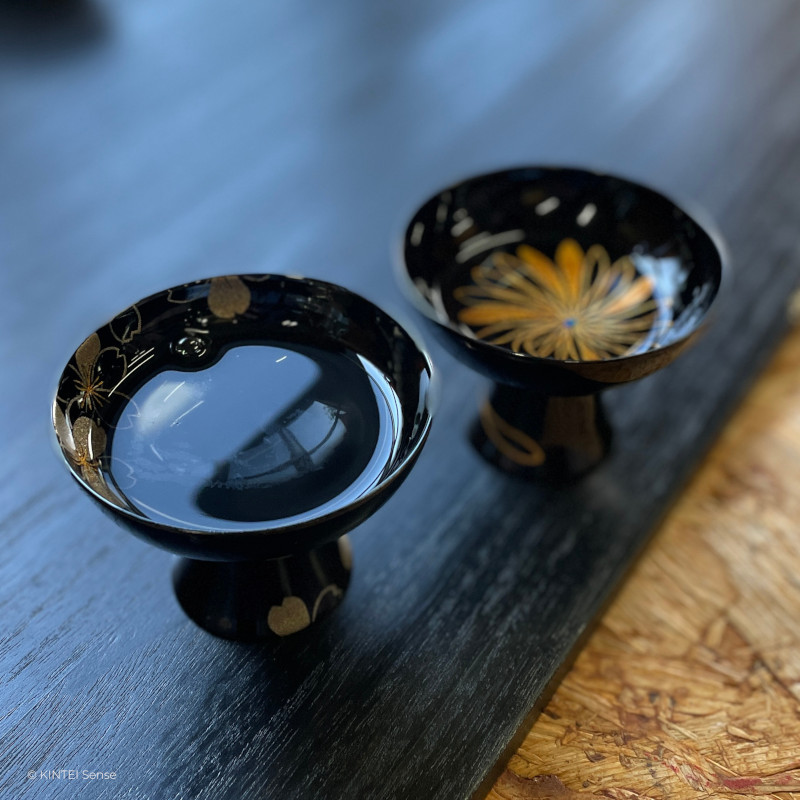
Sakazuki, Hai (盃・杯) are more closely associated with ceremonial occasions. Characteristically broad, flat and open in form, they have traditionally been used for formal exchanges, celebrations and ritual drinking.
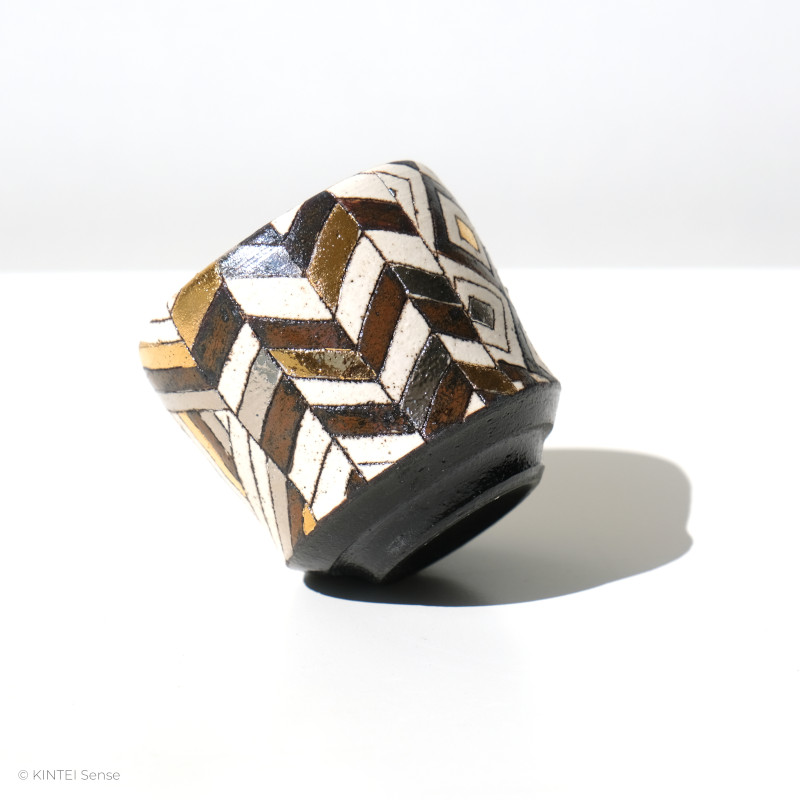
Ochoko - Seto - Ito Chiho
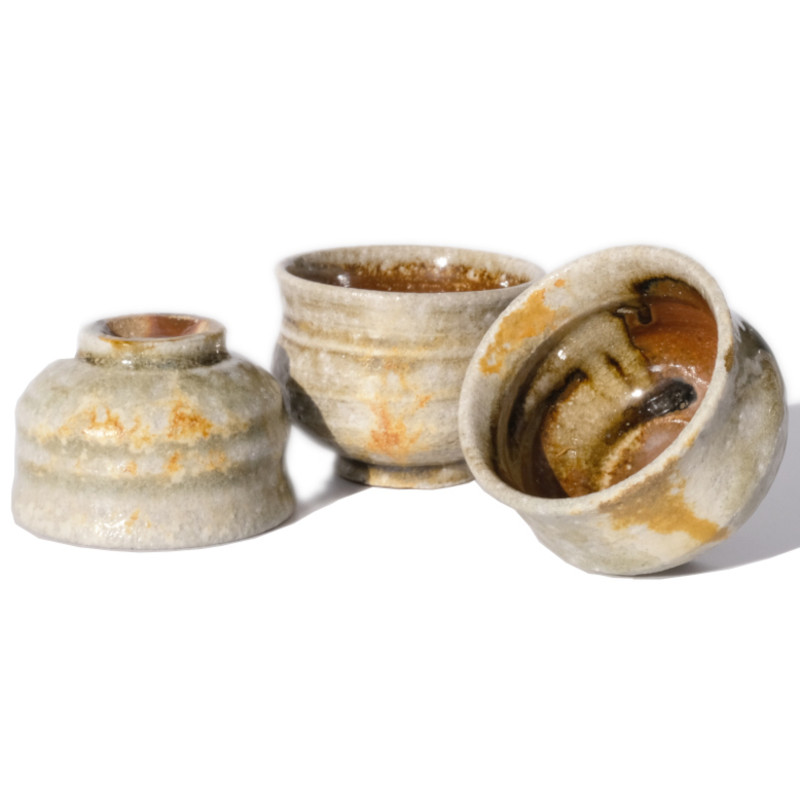
Guinomi - Yakishime - Manpu Gama, Zao
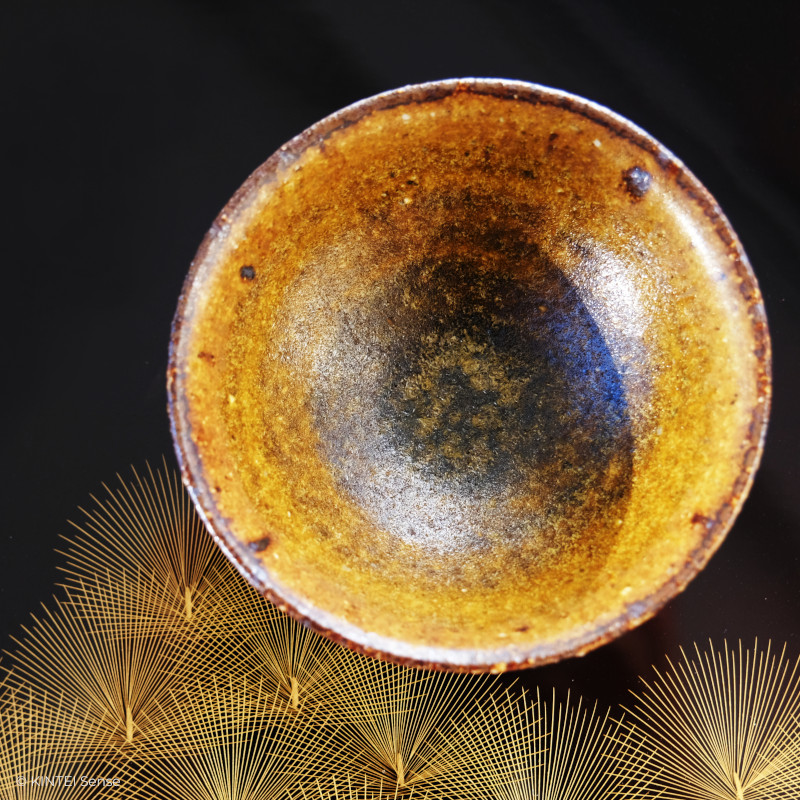
Sakazuki - Ko-Seto - Kimura Hajime, Mino
-
Where Clay Meets Fire: The Material
Where Clay Meets Fire: The Material

Katakuchi - Kaiyu - Suzuki Takashi
Porcelain and glazed ceramics
Porcelain and glazed ceramics can convey precision, a refined tactile quality, and a deliberately crafted visual aesthetic: crisp whites, controlled colours, delicate brushwork or intricate decoration.
As dense materials, they retain the temperature of the sake and can lend chilled sake a particular freshness and clarity. While clay can feel warm, earthy and enveloping, porcelain tends to appear more precise, clear and luminous—making it especially well suited to summer.
Yakishime (焼き締め) – unglazed fired clay ceramics
Yakishime (焼き締め), unglazed fired clay ceramics, by contrast, takes almost the opposite approach.
Unglazed clay can lend sake a rounder, softer and more grounded character. Its porous, tactile surface and gentle warmth create a sense of closeness—as though the sake were brought closer to the earth from which the cup emerged. This impression is reinforced by its natural, earthy tones, making such cups particularly suited to cool autumn and winter days.
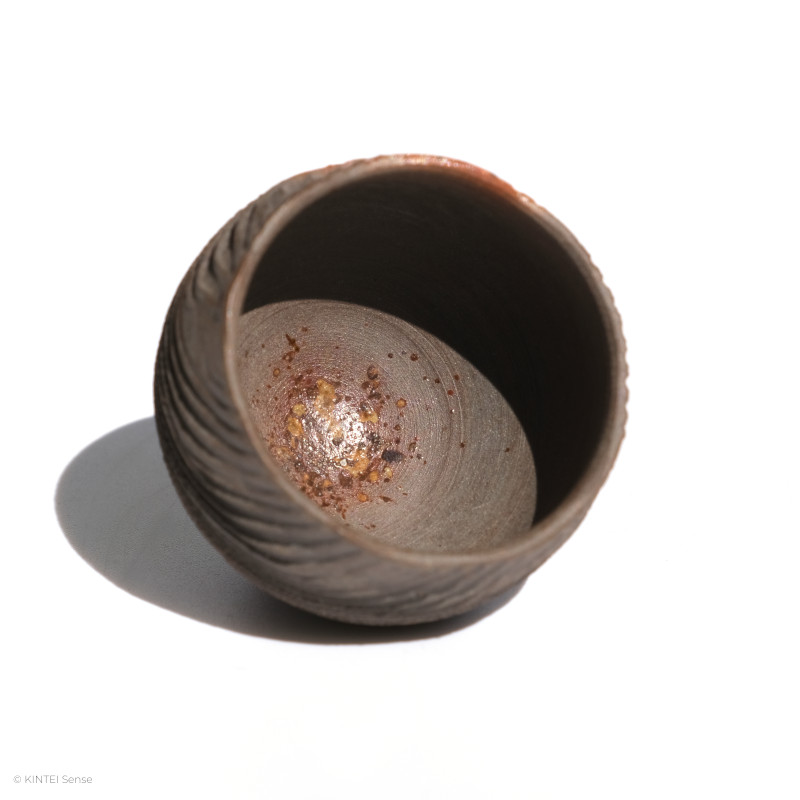
Guinomi - Yakishime - Ishida Kazuya, Bizen
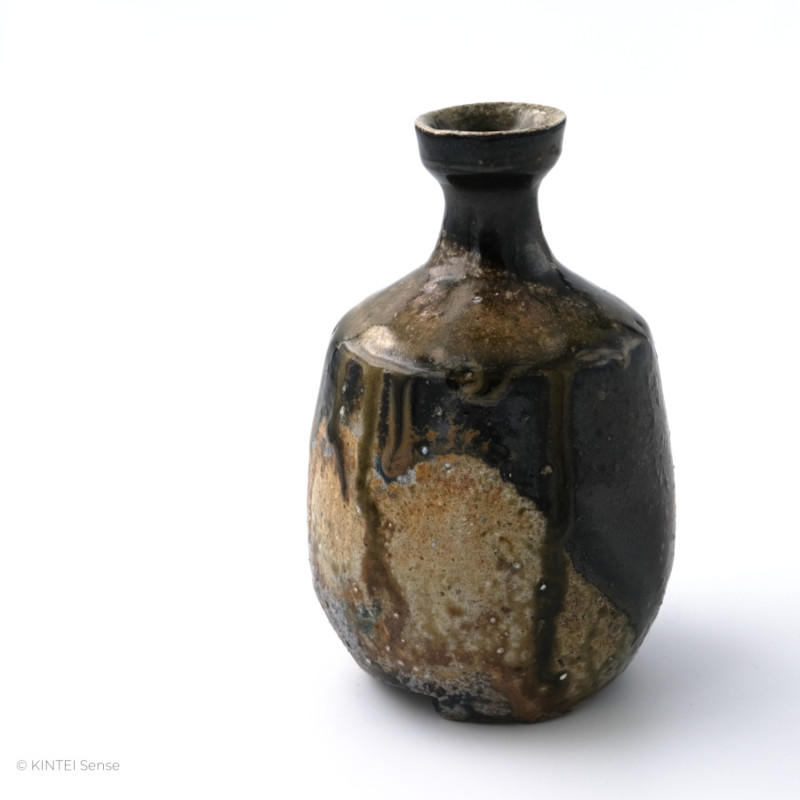
Tokkuri (Katatsuki) - Bizen - Baba Takashi
This direct connection between clay and fire emerges through the firing process without glaze. Ash and flames leave their traces on the surface, while the position within the kiln influences the colour, markings and intensity of the firing. Each piece thus bears the unmistakable traces of its making.
This reflects a central idea of
-
The Story of a Place, of an Origin
The Story of a Place, of an Origin
Japanese ceramics are deeply regional. A piece of shuki can therefore carry the character of the place from which it comes.
Seto and Mino are among Japan’s great historic ceramic centres, with an exceptionally diverse repertoire of glazes and forms. Ito Chiho from Seto draws on traditional forms and reinterprets them in a contemporary way, as seen in her Kutsugata Kuro-Oribe bowls and her reimagined Ochoko with precious-metal accents. Hayashi Yuka, from Toki in the Mino region, highlights the close connection to tea culture through her Shino Guinomi shaped like a Matcha Chawan.
Bizen and Shigaraki, both among Japan's Six Ancient Kilns (六窯 Rokkoyō), are closely associated with Yakishime and the expressive qualities of local clay and wood firing. The distinct character of these regional traditions can be seen in the contemporary work of artists such as Ishida Kazuya from Bizen and Sawa Katsunori from Shigaraki.
Karatsu and Hagi meanwhile, developed a rich tradition closely connected to tea culture, with an emphasis on tactile clay bodies and restrained, often beautifully understated glazes. The slightly porous clay bodies develop a subtle patina over time with use, something highly valued by collectors.
When ceramic is viewed through the lens of region, clay and firing, a sake vessel becomes more than a beautiful object. It becomes a small expression of a distinct ceramic tradition.
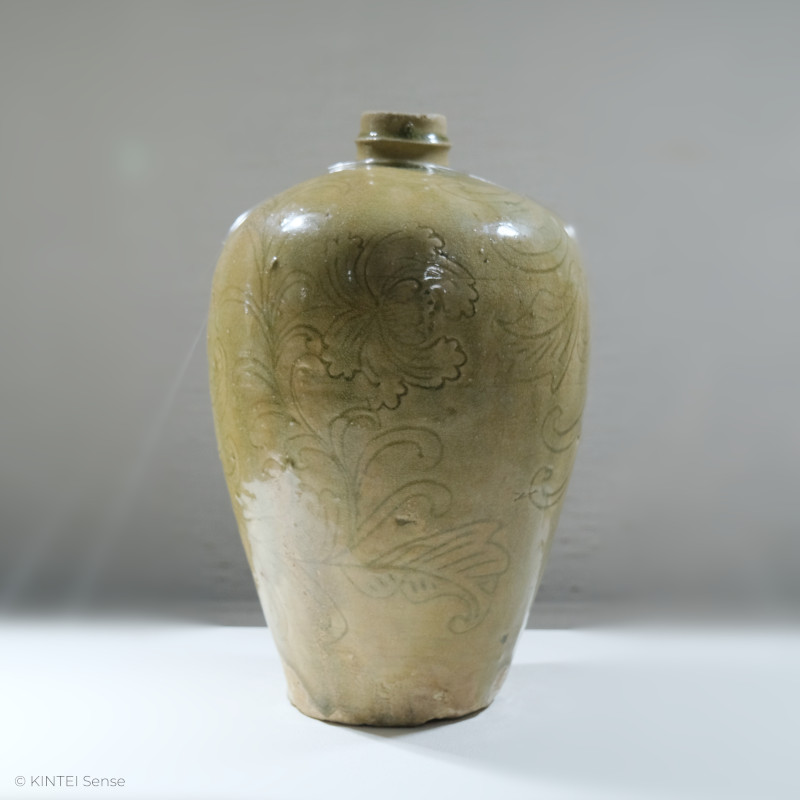
Ritual Sake Flask - Seto - 14. Century, Mino Ceramic Art Museum
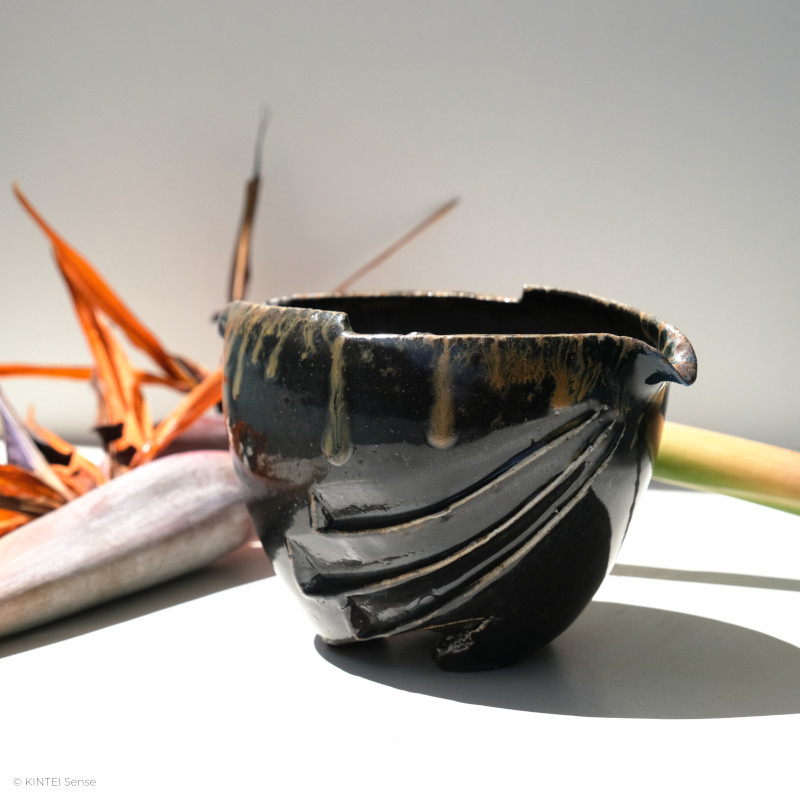
Katakuchi - Baba Takashi, Bizen
-
Collecting Sake Vessels: Why Shuki are fascinating
Collecting Sake Vessels: Why Shuki are fascinating
The Sake Cup as a Potter’s Signature
Someone encountering a fine guinomi for the first time might be quite surprised by its value. Why should a small sake cup cost more than a considerably larger ceramic piece from the same artist?
The answer lies partly in the intensity of the object and its ceremonial character.
A guinomi may be only a few centimetres high, yet its proportions, clay, surface and firing all have to come together. There is nowhere for the artist to hide. Every detail is close to the eye and, importantly, close to the hand. For many Japanese ceramic artists, shuki are also a signature. A potter may explore large vessels, sculptures and functional wares, but the small sake cup offers a particularly direct way to express an individual aesthetic.
For a collector, the pleasure of shuki lies less in assembling a set than in discovering individual pieces.
One might begin with one piece that simply catches your eye. Later, another from a different region. Perhaps a Bizen Yakishime next to a softly glazed Karatsu, or a contemporary interpretation of a traditional form. Over time, these pieces can begin to form a personal dialogue between artists and individual works – just like a sake or wine cellar: each piece has its own character, origin and occasion.
There is no need for uniformity. In fact, the contrasts can be part of the pleasure.
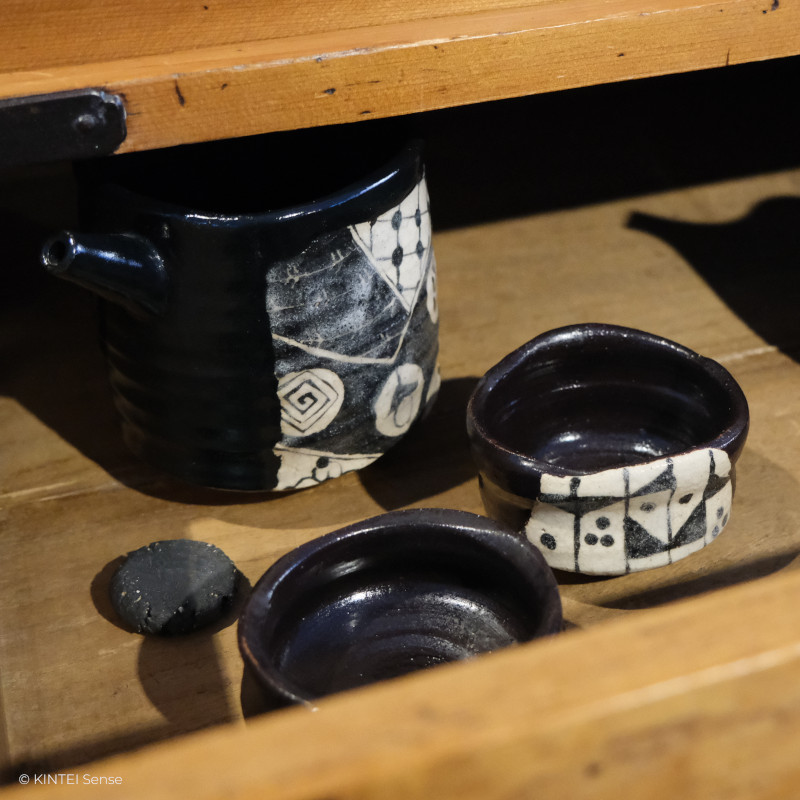
Shuki - Kuro-Oribe - Ito Chiho, Seto
Developing an Eye for Shuki
The quality of a Guinomi reveals itself not only in its form, but also in how it feels in use. How does it sit in the hand? How does its weight feel? How does the rim guide the sake to the mouth? These details shape the immediate experience of the cup.
Craftsmanship reveals itself in the finer details as well. The foot, for example, can become a distinctive signature of a potter. The clay, glaze and firing offer further clues to the material, origin and way of working.
Knowing something about the artist and the ceramic tradition from which a piece emerges opens up another level of appreciation. At the same time, personal perception remains essential. Some cups reveal themselves only with time, while others speak to us immediately. Often, it is the pieces we find ourselves returning to again and again that hold our fascination over time.
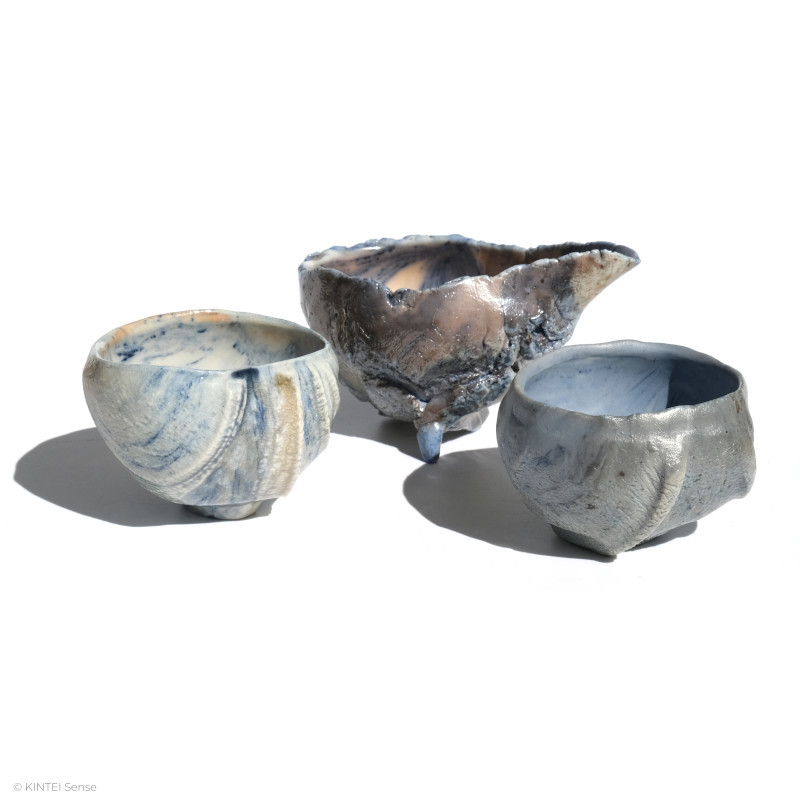
Katakuchi & Guinomi - Porcelain - Ishida Kazuya, Bizen
Tomobako: Part of the Provenance
The tomobako (共箱), or kiribako (桐箱) – the traditional wooden box, mostly made from lightweight paulownia wood and signed or inscribed by the artist – connects the vessel to its maker and forms an important part of its provenance.
The box is not merely for storage. It is part of the work’s identity and should be treated with the same care as the piece itself. It can also add to the value of a collectible, particularly when it has been signed by the artist.
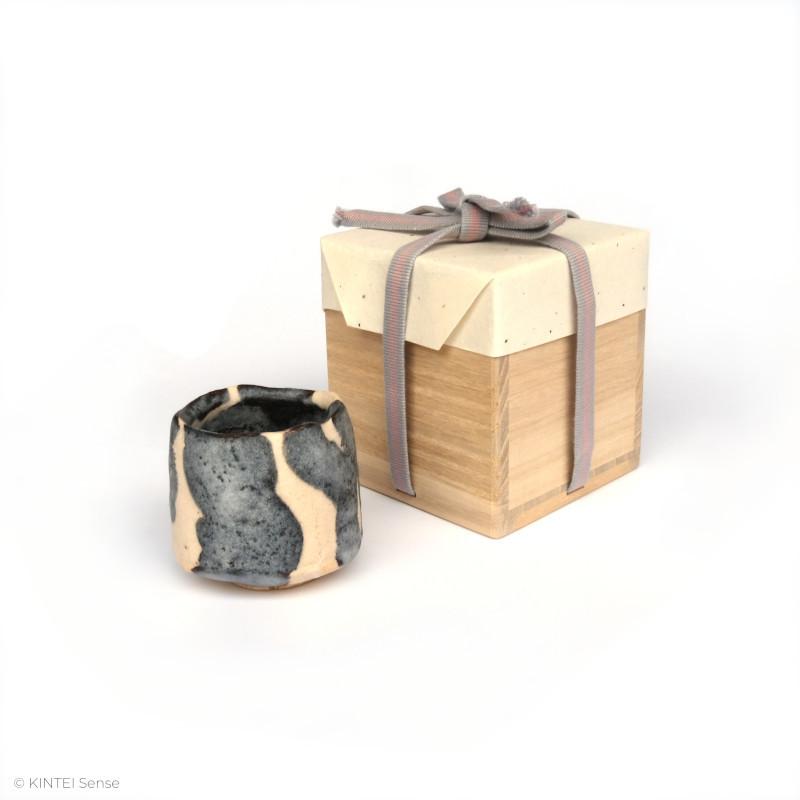
Guinomi with Tomobako - Shino - Hayashi Yuka, Mino
-
Yōnobi (用の美): The Beauty of Use
Yōnobi (用の美): The Beauty of Use
Underlying the appreciation of sake ceramics is a deeper Japanese aesthetic idea: Yōnobi (用の美)—the beauty of use.
Rather than separating art from everyday life, yōnobi finds beauty in objects whose meaning unfolds through their use. A shuki is not simply meant to be looked at. It is held, used, shared and becomes part of life.
Over time, a piece becomes familiar. Its weight, form and subtle irregularities of the surface become part of what makes it feel like your own. Use leaves its traces and allows a personal patina to develop—very much in the spirit of Wabi-Sabi. A particular piece may become associated with a favourite sake or a memorable evening, gradually taking on a meaning that is entirely personal.
Collecting does not end with acquisition. It begins with use.
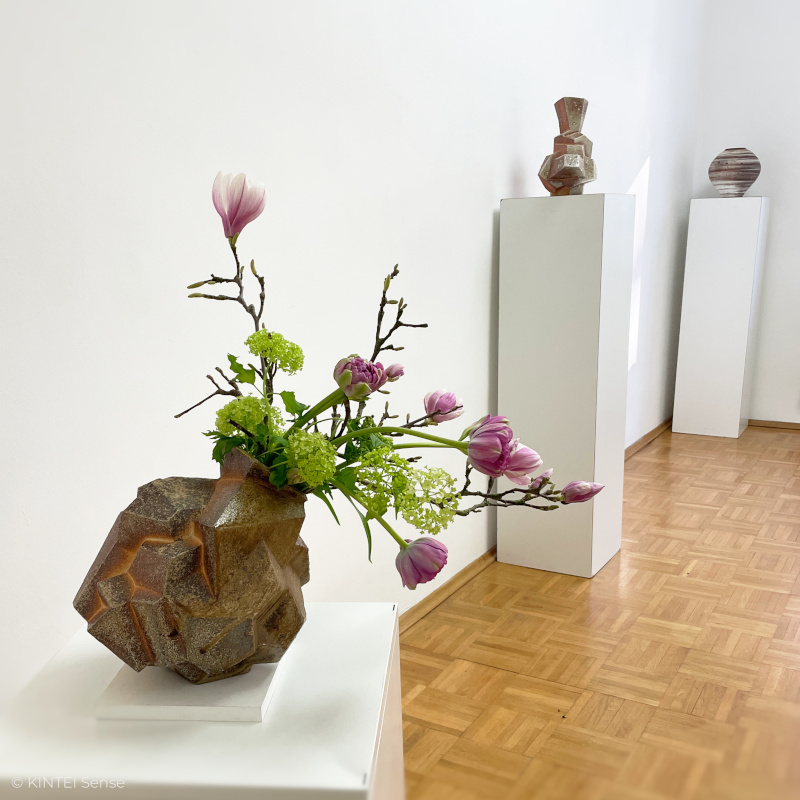
Exhibition Dō – The Way of Clay 2026
Kintei Sense
Sake Ceramics
Kintei Sense

Tea Ceremony and Japanese Ceramics
Kintei Sense
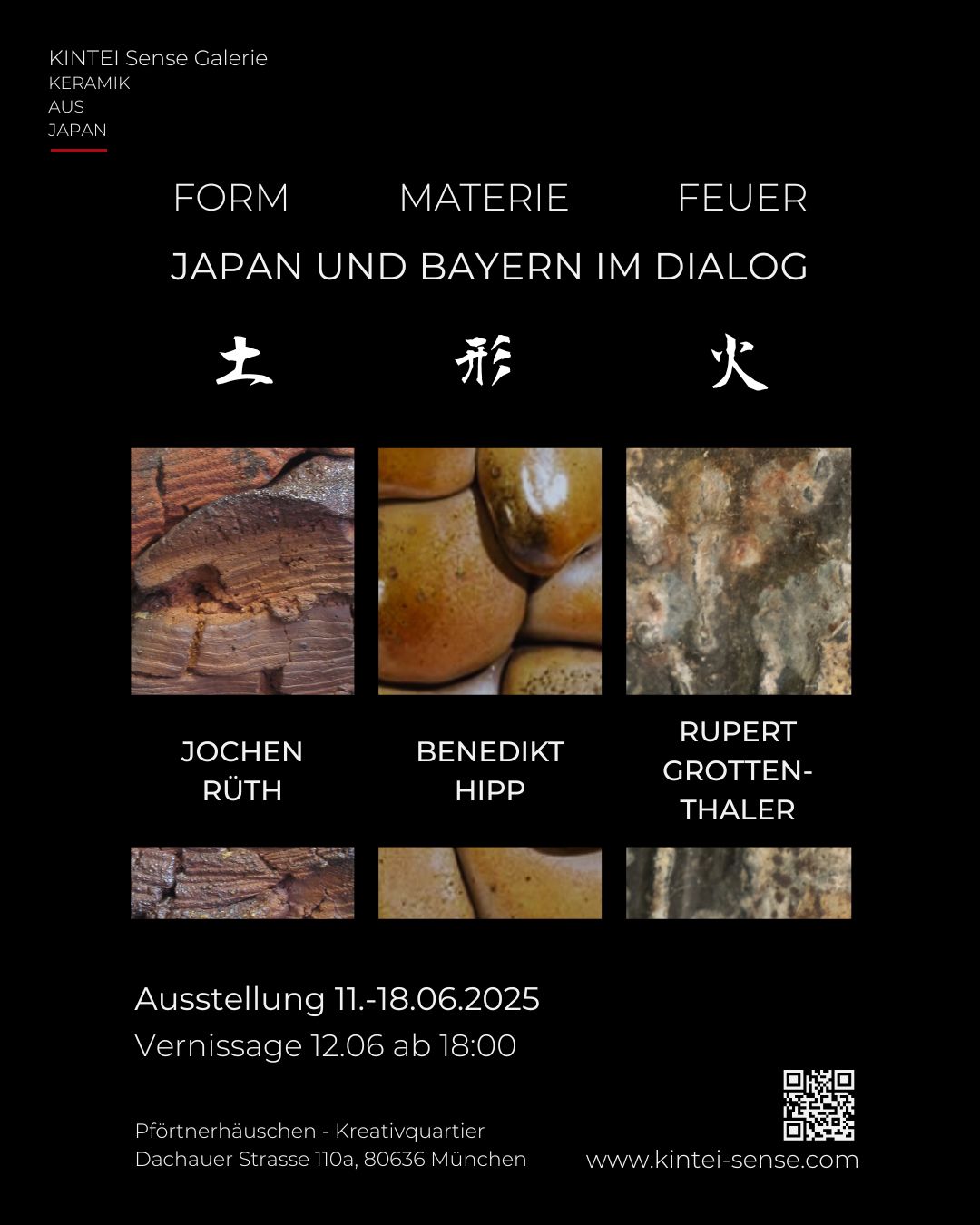
Exhibition Japan and Bavaria in Dialogue 2025
Kintei Sense
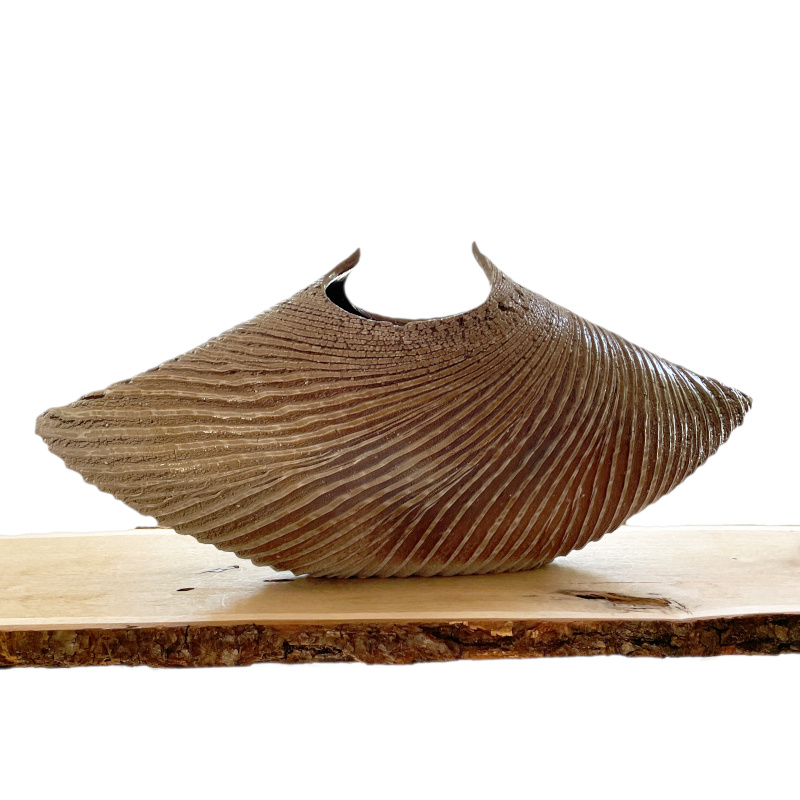
Exhibition Nature in Motion 2025
Kintei Sense
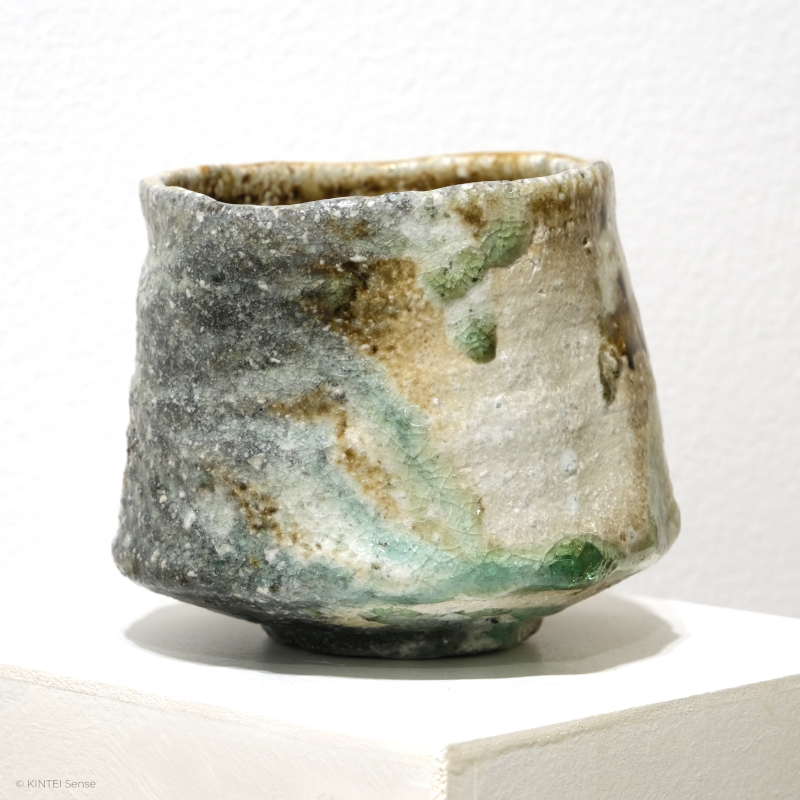
Shigaraki Ceramics
Kintei Sense

Karatsu Ceramics
Kintei Sense